Noboa claims ‘historic triumph’ in Ecuador presidential election amid calls for recount
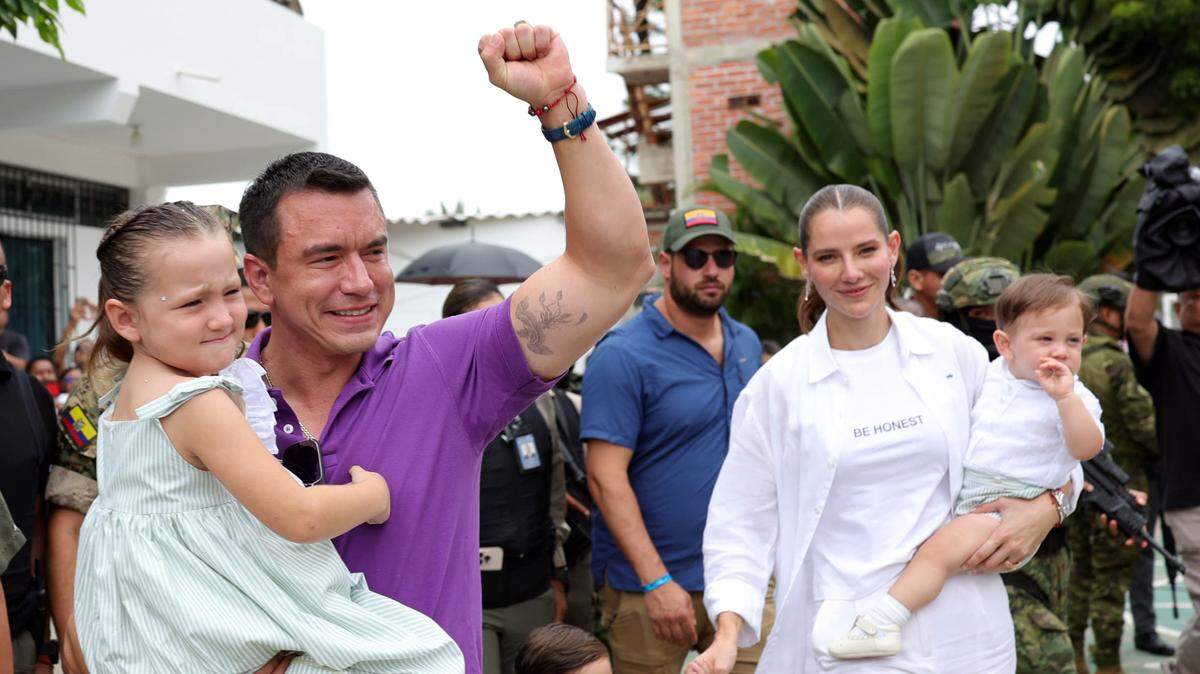
In a night of both celebration and controversy, Ecuador’s President Daniel Noboa declared a “historic triumph” in Sunday’s presidential election, even as his leftist rival, Luisa González, cried foul, claiming the country was witnessing the “worst and most grotesque” electoral fraud in its history.
With nearly all votes counted, the National Electoral Council declared the 36-year-old Noboa the winner after securing 55.88% of the votes, compared to González’s 44.12%.
González, who was backed by former President Rafael Correa, rejected the official count and demanded a full recount, refusing to recognize the results.
Noboa, who is now poised to lead the country through 2029, said the results were decisive and reflected the will of the Ecuadorian people.
“Ecuador wants change,” Noboa told a cheering crowd from a makeshift stage in his backyard, flanked by his wife, Lavinia Valbonesi, and his mother, Annabella Azín, a potential future president of the National Assembly. “It doesn’t want to go backward. It wants to move forward.”
Leading up to the April 13 runoff, polls had shown the race as a virtual dead heat, with González even holding a slight edge at times. More than 13.7 million Ecuadorians were registered to vote, deciding whether to reelect Noboa or return to the leftist “Correísmo” movement, which would have made González the country’s first female president.
Experts noted that the election took place in a deeply divided nation, where citizens were split on how best to confront surging crime and a deteriorating economy.
The night marked a defining moment for Noboa, who first rose to power in 2023 following the unexpected resignation of Guillermo Lasso. He credited his victory to his campaign team and a dedicated voter base.
“Some Ecuadorians, even facing physical challenges, came out to vote with a patriotism I had never seen before,” Noboa said.
From her campaign headquarters in Quito, González emphatically rejected the outcome.
“We do not recognize the numbers” announced by the electoral council, she declared as her supporters chanted “¡No estás sola!” —You’re not alone.
She called for a full recount, describing the vote as “the greatest fraud in Ecuador’s history.” Correa echoed the sentiment on social media: “We got the same 44% as in the first round. These mafiosos could’ve at least tried to make it believable.”
Still, others quickly pushed back against the fraud allegations. Andrea González Nader, a former presidential candidate from the first round, called the claims “irresponsible,” saying the vote margin was “too wide to ignore.”
Electoral council President Diana Atamaint affirmed the results, calling the electoral trend “irreversible” and officially confirming the victory of Noboa and his running mate, María José Pinto.
Ecuadorians went to the polls amid an escalating wave of gang violence, largely fueled by drug trafficking and organized crime. National security remains a top concern, despite Noboa’s hardline response.
In early 2024, Noboa declared an “internal armed conflict” against criminal groups, deploying the military and proposing high-security prisons modeled after El Salvador’s controversial approach. Nonetheless, January 2025 became the most violent month in Ecuador’s history.
González also supports a tough stance on crime but has criticized Noboa’s use of foreign military contractors. She advocates strengthening Ecuador’s own security forces and addressing the root causes of violence through social programs aimed at reducing poverty and unemployment.
The struggling economy is another key battleground. Noboa’s administration secured a $4 billion loan from the International Monetary Fund, implementing tax hikes and cutting subsidies to stabilize public finances — policies that have hurt his approval ratings despite aiming for long-term stability.
González, embracing Correa’s economic legacy, pledged to renegotiate the Fund deal, reduce taxes, and expand social welfare programs. Critics argue her approach risks destabilizing Ecuador’s financial standing, while supporters see it as a necessary pivot for economic recovery.
Analysts say the next president will face major political challenges. Ecuador’s National Assembly remains fractured, with no party holding a clear majority. González’s Citizen Revolution Party has 67 seats out of 151, while Noboa’s National Democratic Action Party holds 66.