Ortega suddenly frees 222 political prisoners in Nicaragua and sends them to the U.S.
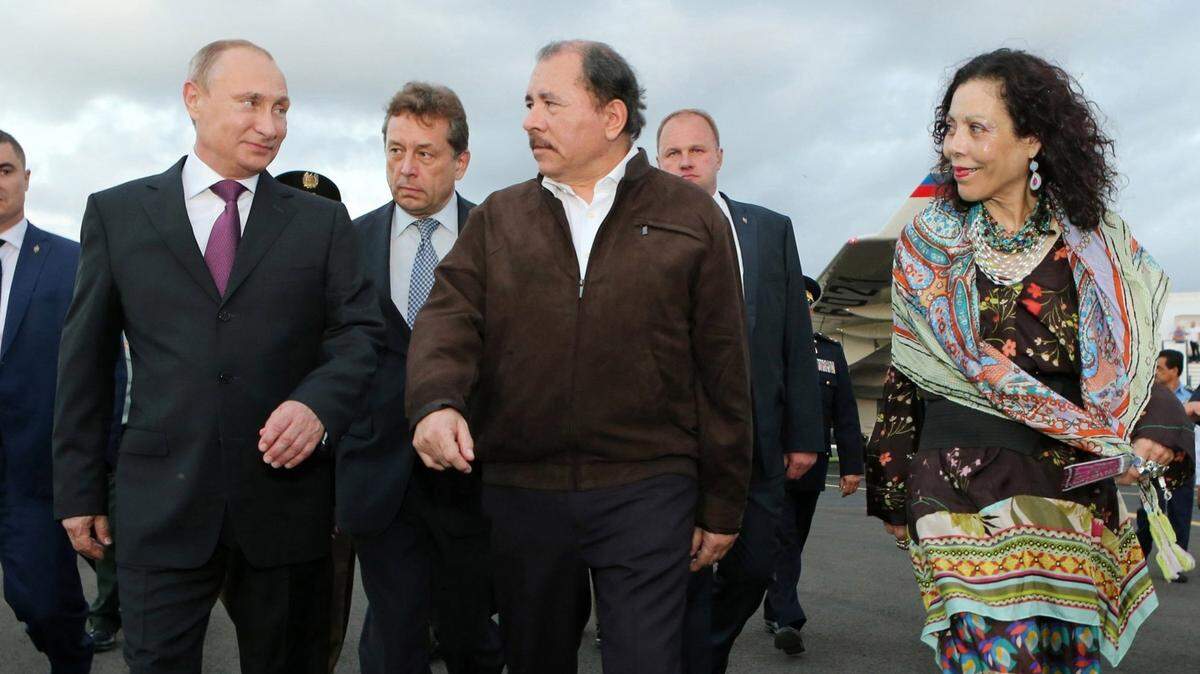
Declaring them traitors to the fatherland, the Nicaraguan government sent 222 political prisoners into exile in the United States on Thursday, including a number of presidential hopefuls who were arrested so they would not compete against ruler Daniel Ortega in the 2021 presidential election.
The former political prisoners were placed on a plane Thursday bound for Washington, D.C., where it landed at Dulles International Airport around noon. The prisoners had been found guilty by the Managua Court of Appeals of having committed a number of crimes, including plotting against the Nicaraguan state and the Nicaraguan people. They were barred from holding public office during their lifetime.
Emphasizing that the 222 Nicaraguans had been jailed solely for exercising their fundamental freedoms, Secretary of State Antony Blinken celebrated their release, saying it could become a stepping stone from which Managua and Washington could improve relations.
“The release of these individuals, one of whom is a U.S. citizen, by the government of Nicaragua marks a constructive step towards addressing human rights abuses in the country and opens the door to further dialogue between the United States and Nicaragua regarding issues of concern. Today’s development is the product of concerted American diplomacy, and we will continue to support the Nicaraguan people,” Blinken said.
The individuals released from Nicaraguan custody include political and business leaders, journalists, civil society representatives and students. The United States facilitated their transport to Washington, where the U.S. is providing medical and legal support, Blinken said.
A State Department official confirmed that the political prisoners would be paroled for humanitarian reasons into the country for a period of two years. The Biden administration last month announced an immigration parole program for nationals of Nicaragua, Haiti, Cuba and Venezuela.
While the Nicaraguan regime did not release a full list of those released, Nicaraguan activists said they represent the bulk of those imprisoned by Ortega for political reasons, which previous estimates placed around 245.
“All of the presidential candidates who were arrested are coming in this group,” said Muñeca Fuentes, president of the Nicaraguan American Republican Alliance. They include Cristiana Vasquez Chamorro, Pedro Joaquín Chamorro, Michael Gil Lacayo and Felix Maradiaga, the activist said.
Fuentes said the people released Thursday were forced to sign documents in which they agreed not to run for public office and not to participate further in Nicaraguan political affairs.
According to regime officials, those sent to the United States were behind the 2018 street protests and participated in a plot to overthrow Ortega. Thousands of dissenters were forced to leave the country following the violent government crackdown.
In early 2021, Ortega ordered the arrest of potential rivals in the presidential election set for later that year, placing seven opposition hopefuls behind bars. Ortega won a fourth term that year, but the vote was called fraudulent by the United States and other countries.
Experts in Washington celebrated Managua’s decision to free the political prisoners.
“They should have never been held to begin with, but they are now thankfully freed and can be reunited with their family and friends,” said Eddy Acevedo, chief of staff at the Wilson Center in Washington and former senior foreign policy adviser to former Florida Republican Congresswoman Ileana Ros-Lehtinen.
“It is important not to forget the inhumane and cruel treatment they received in Ortega’s gulag. We must redouble our efforts now more than ever to assist and support Nicaraguans still living under this murderous tyrannical regime,” added Acevedo, who is of Nicaraguan descent and had led efforts in crafting sanctions legislation against the Ortega regime.
This story was originally published February 9, 2023 at 10:57 AM.