As protests in Peru intensify, few see a way out of political crisis
Peruvians are no strangers to political turmoil, having seen a number of presidents impeached or forced to step down amid massive demonstrations and accusations of corruption in recent years. But social unrest seems to be reaching new heights in the South American country as recent clashes between protesters and security forces have left at least 48 dead and more than 500 injured.
The protests, which started a month ago, have spread through 41 southern provinces, with demonstrators closing down main roads and attempting on Wednesday to take the airport at the tourist city of Cusco, a common destination for foreigners wanting to visit the nearby Inca citadel of Machu Picchu. Local health officials said that 37 civilians and six police officers were injured in the raid.
Some of the worst violence came on Monday, when 17 people were killed in clashes with police in the city of Juliaca near Lake Titicaca and protesters later attacked and burned a police officer to death.
The violence is not likely to end soon, experts warned.
“It is only getting worse,” said Benjamin Gedan, acting Director of the Latin American Program of the Wilson Center in Washington, D.C. “The protests are being met with a very heavy-handed response from security forces which is only adding more fuel to the fire.”
The protests are being led by supporters of recently impeached president Pedro Castillo, who was removed from office and arrested in December after attempting to dissolve Congress to avoid his impeachment for alleged corruption.
While most analysts believe that Castillo’s arrest and impeachment appears to have been made on firm legal and constitutional grounds, the issue is seen very differently by his supporters, most of whom are members of the often ignored rural and indigenous population in the south that saw in the former president their great hope for finally addressing the country’s chronic inequality and social exclusion.
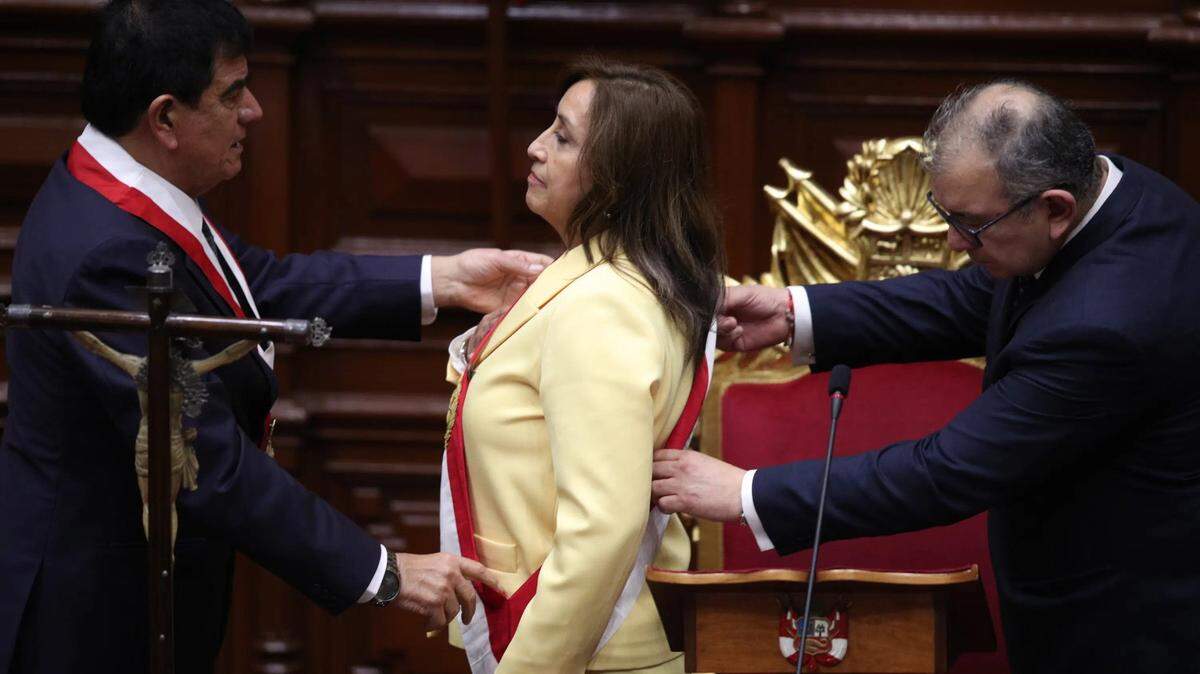
While Castillo was replaced by his own vice president, Dina Boluarte, the new head of state has failed to gain the trust of Castillo’s supporters and the clashes between protesters and the police are only making it harder.
“One would hope that the reaction to the protests from the new president would be a new commitment to meet the expectations that Castillo’s elections created... and to reassure Castillo’s supporters that her administration would take their legitimate demands seriously. But instead, what you see is a heavy-handed response by the security forces, which always makes things worse,” Gedan said.
So far, the protests have been held outside Lima and the coastal regions, which suggest the discontent derives from the rural and indigenous population, which for years have felt neglected by the political and economic power held at the capital.
Many of the protesters have an emotional connection with Castillo, feeling that he is one of them, said Nicolas Saldias, analyst at Economist Intelligence Unit, the policy research firm of the British magazine The Economist.
“He looks like them, he talks like them and he was very much anti-Lima. He does not sound like someone from the capital, nor does he look like someone from there either,” Saldias said. “So now that you have what they perceive to be a coup against Castillo, and that you have a usurper, who they see in Dina Boluarte, they want her gone.”
The protesters also want Castillo freed, but just like their demand for immediate elections, that is very unlikely to happen. In the case of choosing a new president, the soonest elections could be held is December.
Given that the protesters’ demands are not likely to be met, it is likely the protests will intensify in the coming days, creating more problems for the Boluarte administration amid warnings that if they continue it could affect the nation’s economic growth.
Boluarte’s problems grew this week with the announcement from the nation’s attorney general of an investigation into her actions to put down the protests and the possibility that she committed acts of genocide.
While the alleged charges are seen by experts as an overreaction, the emerging threat of facing jail time provides an additional incentive for Boluarte to stay in power, Saldias said.
It also provides an additional incentive for the opposition-controlled Congress to keep her in power amid the risk of whoever is leading the country having to use force to put down the recurring protests and of later facing charges for human-rights abuses.
“I don’t think she’s going to be impeached because I don’t think that Congress wants her job. If she’s not president, the speaker of Congress becomes president, and I don’t think they want that responsibility,” Saldias said. For Congress, Boluarte has an important role to play as a sacrificial lamb, he added.
This story was originally published January 13, 2023 at 4:10 PM.