
A monkey in San Juan has eluded capture. He’s become a Puerto Rican national icon
A monkey has been on the loose for a week in San Juan’s populous Santurce neighborhood, stumping authorities who have tried to capture the wandering primate with cages and bananas as crowds of spectators — many who are rooting for the animal — witness the wild pursuit.
“We are working on it,” said Ángel Atienza, head of the Wildlife Unit of the Puerto Rico Department of Natural and Environmental Resources, of government efforts to nab the elusive male rhesus macaque.
Since being spotted on Nov. 2 in a treetop along one of San Juan’s main avenues, the simian has garnered a national following from local media and island residents. It has been dubbed “el mono de Santurce,” the Santurce monkey, and has become a pop culture symbol of humor and resistance as the island experiences multiple overlapping crises.
“People are saying that it’s better if they don’t capture him. They want to keep being entertained by the monkey,” said Aura Jirau, a historian who specializes in modern Puerto Rican history. “The monkey is part of the Santurce community.”
The Miami Herald visited confirmed locations where the monkey has been sighted to spot the macaque, but the reporter was unsuccessful in the wildlife expedition.
Jungle music and bananas galore
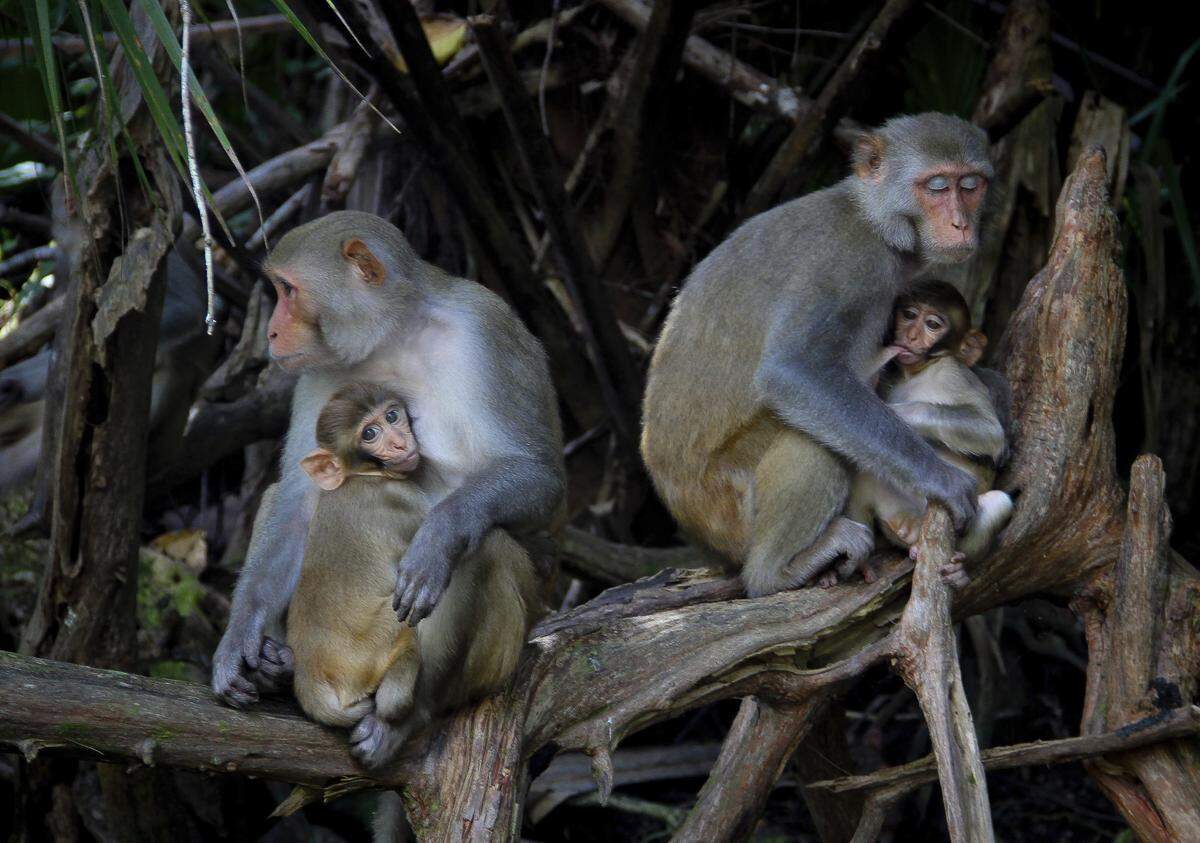
Rhesus macaques, sand-colored primates with furry tails and red-orange butts, are native to Asia. There is a large, free-ranging colony of them in Cayo Santiago, an uninhabited cay off Puerto Rico’s eastern coast. The monkeys, which have been vital for scientific research, have lived there since the late 1930s, when an academic collaboration between the University of Puerto Rico and Columbia University imported hundreds of them from India by boat.
Decades ago, rhesus monkeys settled in southwest Puerto Rico after escaping from local research facilities. The Department of Natural and Environmental Resources has captured over 5,200 since starting a monkey-nabbing program in the area in 2008. However, the monkeys are a rare sight in San Juan, which is inhabited by wild iguanas, pigs, and chickens, but not primates.
Once the department became aware of the monkey “in the middle of the Ponce de León Avenue” last Tuesday, said Atienza, officials paid a visit to the tree he was in. But the monkey’s location, 130 feet above the ground, in a busy San Juan road, made logistics difficult. The urban setting likely frightened the animal. They could not shoot the monkey with tranquilizer darts because the uncontrolled, anesthetized fall would kill him. And the road could not be shut down. Only the bus lane was closed.
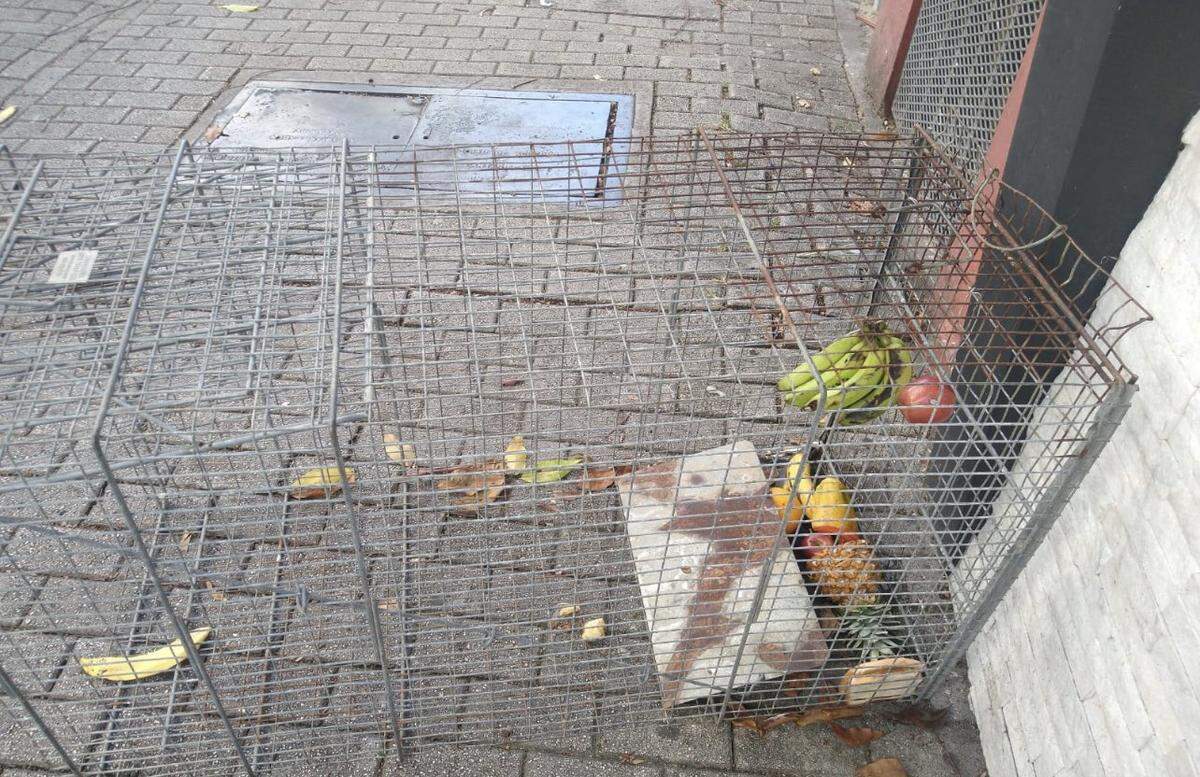
Officials placed “flashy fruits” like bananas and oranges in cages. They set up a firefighter ladder between the tree and the rooftop of a nearby building that had a trap filled with even more fruit. Members of the wildlife unit spent overnight shifts near the animal’s chosen tree to watch its movements.
But perhaps nothing made the operation more challenging than the throngs of people who have come at all hours to watch the rangers and the monkey in their game of cat-and-mouse.
The department has repeatedly instructed Puerto Ricans to not get close to the mono de Santurce. But people have ignored the pleas. The tree became a destination for santurcinos as well as Puerto Ricans from all over the island. Some have come with equipment that plays jungle and monkey sounds over loudspeakers. Even worse for the monkey’s would-be captors, they have brought the now-beloved simian food.
“People began to bring him fruit because they think he has not eaten,” he said. “We told them we don’t want them to give him fruit because then he won’t get into the trap. They started leaving it in the surroundings.”
In one now-viral video the animal carefully looks behind his back, and extends one arm into the cage to grab a banana. He runs with the fruit in his mouth and speeds along the tree trunk, until he finds a branch where he can enjoy his snack. Laughter from spectators thunders in the background.
Atienza said the banana the monkey grabbed was not on top of the part that activated the trap. And at least on three occasions that he tried to get down, people honked and cheered at him, sending him right back up to his tree home.
Over the weekend, the Santurce monkey dashed off and disappeared from the treetop. A dead monkey, the victim of a hit-and-run, appeared in the city of Guaynabo Sunday. The development prompted widespread coverage from local media and caused worry amongst Puerto Ricans who feared the Santurce monkey had met an untimely demise.
Authorities said it was not the same monkey. The mono de Santurce appears to be alive and well, and has been sighted near a local hospital in the neighborhood. Atienza said the area — which has shorter trees, residential homes and limited access — was better suited for capture, and potentially enabled the use of tranquilizers through both food and darts.
“We stayed until nightfall visiting the areas, but obviously without making a lot of fuss because if you make a lot of fuss, people are going to move to that area to see if they can see it,” said the top department officer, adding that they hoped he stayed in that area.
Once the department captures the animal, it will go to either the national zoo in Mayagüez or to DRNA facilities.
A new national icon
El mono de Santurce has caused a viral uproar across Puerto Rican society, dominating the local news cycles. People have posted their sightings of the animal, climbing up trees and walls, on San Juan streets. Artists have unveiled works inspired by the macaque. Puerto Rico’s Academy of the Spanish Language made “monear,” or monkeying around, the word of the day on Nov. 6.
And pages impersonating the simian have also popped up on Twitter. They have become fertile ground for political satire, as people comment on the seeming inability of the government to capture a fugitive macaque as an allegory for struggling public services.
“Are you really surprised they haven’t captured me yet?” taunts @MonodeSanturce, an account with over 1,300 followers.
One Twitter poll on the account asks who would win the governorship if the elections were held today. “El Mono de Santurce” earned about 90% of the 450 votes, while Gov. Pedro Pierluisi only captured about 2.2 percent. The macaque has since announced its run for governor in 2024, and already has a campaign logo.
“It is a way of channeling dissatisfaction due to the ineptitude of politicians in Puerto Rico, of corruption,” said Jirau. “The monkey is cunning, which benefits him and entertains us.”
It’s not the first time that a loose animal in Puerto Rico has captured national attention. In April, an adult aoudad escaped from Puerto Rico’s largest zoo. The brown, shaggy antelope was “nicknamed” Rayo Veloz — Fast Lightning — because of how quickly he sped away from those who saw him.
But the most famous of all runaway creatures in Puerto Rico might be Yuyo, a chimpanzee who escaped in the 1980s from his exhibition at the now-closed El Monoloro Zoo in the San Juan area. The animal earned “write-in” votes in the 1980 election, according to outlet Noticel, and evaded capture for years. Yuyo became part of Puerto Rican folklore, and his sightings and references became commonplace. When he died in 2012 at a science park in Bayamón, many mourned his death.
That the Mono de Santurce, along with his wayward predecessors, has captured the hearts of so many is indicative of how Puerto Ricans process trauma, said Jirau, the historian. The island — which has been devastated by hurricanes and earthquakes in recent years as it manages the coronavirus pandemic — is at a critical point in its bankruptcy process.
At a time when the island’s future feels uncertain for many, a monkey evading government authorities has served as both a humorous release valve and an emblem of Puerto Rican resistance.
“Our way of resisting or processing trauma and crisis is by laughing,” she said. “Puerto Ricans are people who fight to live and survive. And the fact that they want the monkey to survive has to do with that. We are interested in life and living it well.“