Venezuela’s border dispute with Guyana just got even testier
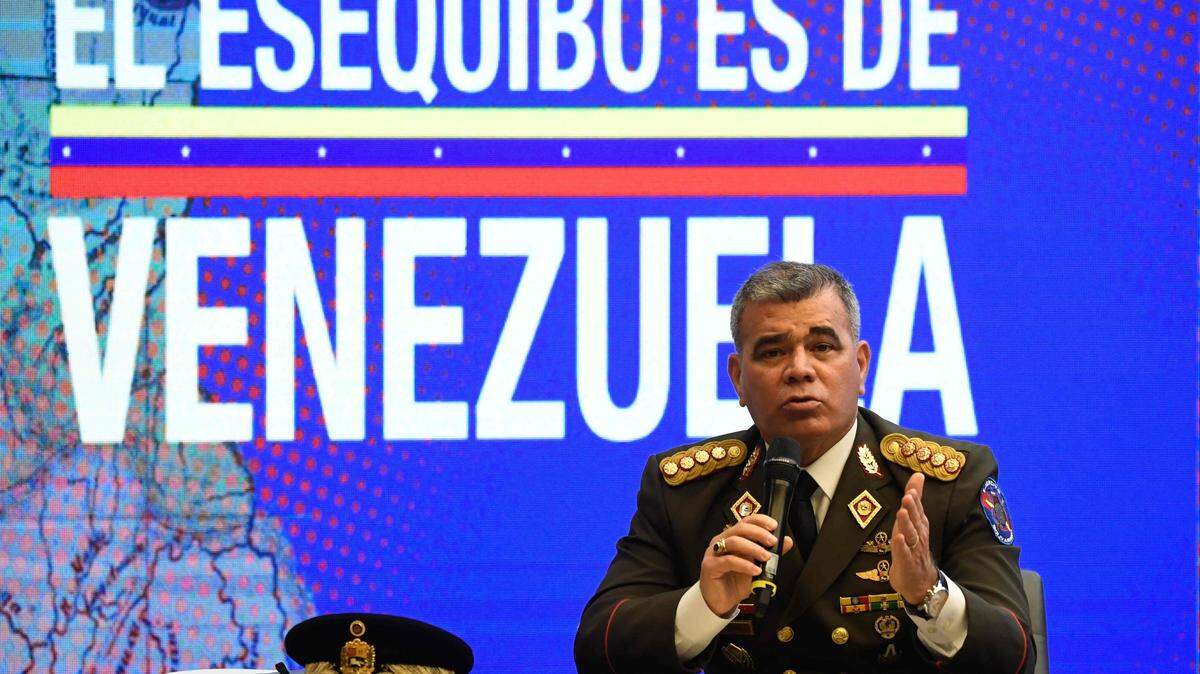
A longstanding, high-stakes border dispute between Guyana and Venezuela has gotten even testier, with the United States and the Organization of American States stepping into the fray.
OAS Secretary General Luis Almagro is condemning what he calls the illegal detention of two Guyanese-registered fishing vessels and their crew by “the Venezuelan dictatorship” in Guyana’s exclusive economic zone.
“The General Secretariat demands that the Guyanese citizens are released promptly and safely to Guyanese authorities, as well as the two detained vessels,” he said in a written statement.
The Biden administration echoed the Washington-based regional bloc’s remarks in a tweet Wednesday evening.
“The U.S. supports a peaceful resolution of the maritime boundary controversy between Venezuela and Guyana and condemns Maduro’s intimidation through the seizure of fishing vessels and detention of crew,” wrote Julie Chung, acting assistant secretary of the Bureau of Western Hemisphere Affairs.
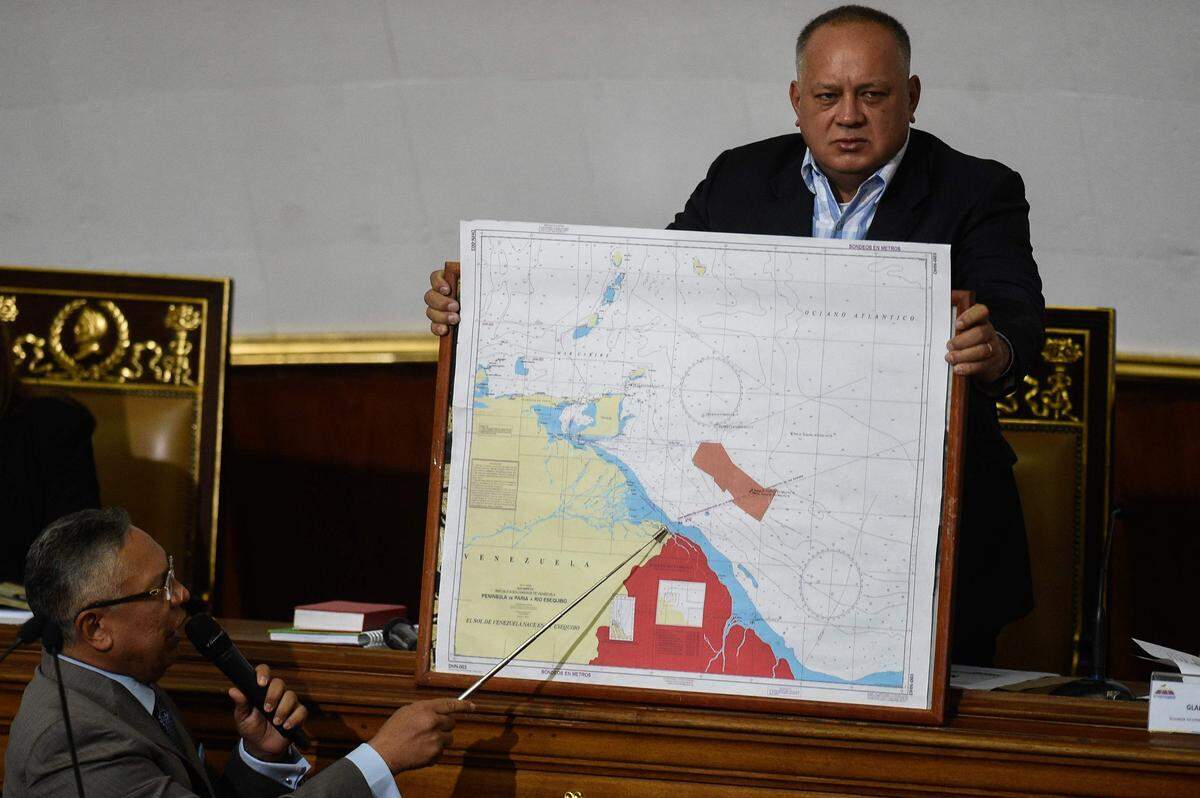
Earlier this month, Venezuelan leader Nicolás Maduro issued a presidential decree establishing a new so-called “Atlantic facade” reasserting his Spanish-speaking nation’s claim to parts of Guyana’s maritime waters in what’s known as the Essequibo region. The disputed territory is rich in gold and other minerals as well as valuable oil fields that would be a boon to either distressed nation.
Located west of the Essequibo River, some claim the disputed region consists of 61,600 square miles. Former Guyana Foreign Minister Carl Greenidge, who is representing the country before the International Court of Justice, said it accounts for over 70% of Guyana.
He said that Maduro’s new decree builds on previous ones, including a 2015 order that laid claim to the exclusive economic zones of Colombia and nine Caribbean territories.
“It is not a little piece and it is the largest claim any country is making at this point in time in regards to all of the border claims in terms of the proportion of the land,” he said. “It is absurd because Venezuela has never controlled this territory.”
The disputed Essequibo region is one of the few issues that divided Venezuelans agree on, with the country’s opposition at times being even more militant about Venezuela’s rights over the area.
Guyana OAS Ambassador Riyad Insanally told the organization’s permanent council Wednesday that Venezuela’s latest actions “not only pose a threat to our peace and security, but the peace and security of our entire region.” His government, he said, was disturbed by Maduro’s latest attempt at a show of force.
“Guyana rejects entirely the decree issued by Mr. Maduro,” Insanally said.
The matter is currently before the International Court of Justice, which ruled late last year that it has jurisdiction over the boundary dispute first decided by an arbitration court in 1899. The court at the time, and under pressure from the United States, which threatened war with Great Britain if it didn’t go to arbitration, awarded the area to then-British Guiana.
Shouldering the Atlantic on the north coast of South America, Guyana is bordered by Venezuela to the west, Suriname to the east and Brazil to the south and southwest.
Not wanting to be bound by an ICJ ruling, Maduro, in announcing his new decree reinforcing Venezuela’s claim to the area, also announced that he had asked United Nations Secretary-General António Guterres to arbitrate the dispute, rather than the ICJ.
Stéphane Dujarric, Guterres’ spokesman, confirmed that the UN had indeed received a letter from Maduro but he said he could not go into details.
There is a previous offer, Dujarric noted, from the secretary-general to assist in the controversy over the matter or any other issues regarding the two countries’ bilateral relations. But “such an effort would not, in any way, undermine the judicial process before the ICJ,” Dujarric said.
Caribbean observers and others say they see the latest aggression by Maduro as not just his attempt to gain favor at home by arousing nationalist sentiments, but to show his unhappiness with the United States’ increasing presence in Guyana.
Two weeks ago, U.S. Navy Adm. Craig Faller, commander of U.S. Southern Command in Doral, visited Guyana for several days. During the visit, Faller met with government and defense leaders, and discussed the bilateral security partnership between the United States and Guyana. The Guyanese and U.S. military also conducted a military training operation in the disputed region.
“That was a signal that Maduro obviously was not impressed with,” said José Cárdenas, who served on the National Security Council under President George W. Bush and currently lobbies on behalf of the government of Guyana in the United States. “It’s something the United States has to take a very strong stance and discourage any bad decisions or mistakes by the Maduro regime.”
Faller’s visit followed that of then-U.S. Secretary of State Mike Pompeo, who traveled to Guyana in September after the Trump administration intervened in the country’s electoral dispute. Washington pushed former President David Granger to accept the results of the country’s disputed election and a 33-day recount by canceling the visas of several members of his government. During the visit, Pompeo met with newly sworn-in Guyanese President Irfaan Ali and held talks with representatives of oil companies.
In a statement to the Miami Herald, a State Department spokesperson from Western Hemisphere Affairs said: “We have been in touch with the Government of Guyana on this issue and we are working with our regional partners to conclude a peaceful resolution to the situation.”
The Caribbean community has been divided on Venezuela’s political turmoil, with several nations reluctant to step into a feud with a country many had economic ties with. Until a few years ago, Venezuela supplied several CARICOM nations with oil as part of its PetroCaribe oil program.
On the Essequibo dispute, however, they have shown considerable unity. CARICOM, a 15-member regional bloc, condemned Maduro’s decree earlier this month.
“CARICOM reiterates in the strongest possible terms its firm and unswerving support for the maintenance and preservation of the sovereignty and territorial integrity of Guyana,” the bloc headquartered in Guyana said earlier this month. “CARICOM firmly repudiates any acts of aggression by Venezuela against Guyana.”
On Wednesday, members at the OAS once more came out in support of Guyana over Venezuela during the permanent council meeting with Trinidad and Tobago’s representative, reminding all of CARICOM’s position. Trinidad shares a maritime border with Venezuela. CARICOM later expressed its “grave concern” at the escalation of tensions between the two countries.
The fishing vessels, the Lady Nayera and the Sea Wolf, were seized a week ago Thursday off the coast of Guyana’s Waini Point by a Venezuelan naval ship. The ship and its crew remained detained Wednesday, Guyana Foreign Minister Hugh Todd confirmed to the Herald.
On Monday, Todd dispatched a note of protest to Venezuelan authorities. In it, he condemned the illegal detention of the captains and crews of the fishing vessels, and demanded their immediate release.
So far, Venezuela isn’t relenting. Maduro is claiming that the boat was in its “undisputed territorial waters.” While his “Strategic Zone for the Development of the Atlantic Facade” asserts his nation’s claim to the Essequibo region, Guyana said it encompasses its economic zone and territorial waters.
The long-running dispute between English-speaking Guyana and Venezuela over where each of their nation’s begin was supposed to have been settled in 1899. But the spat was later revived in 1962, on the eve of Guyana’s independence from Britain. The boundary dispute is a legacy of British colonialism.
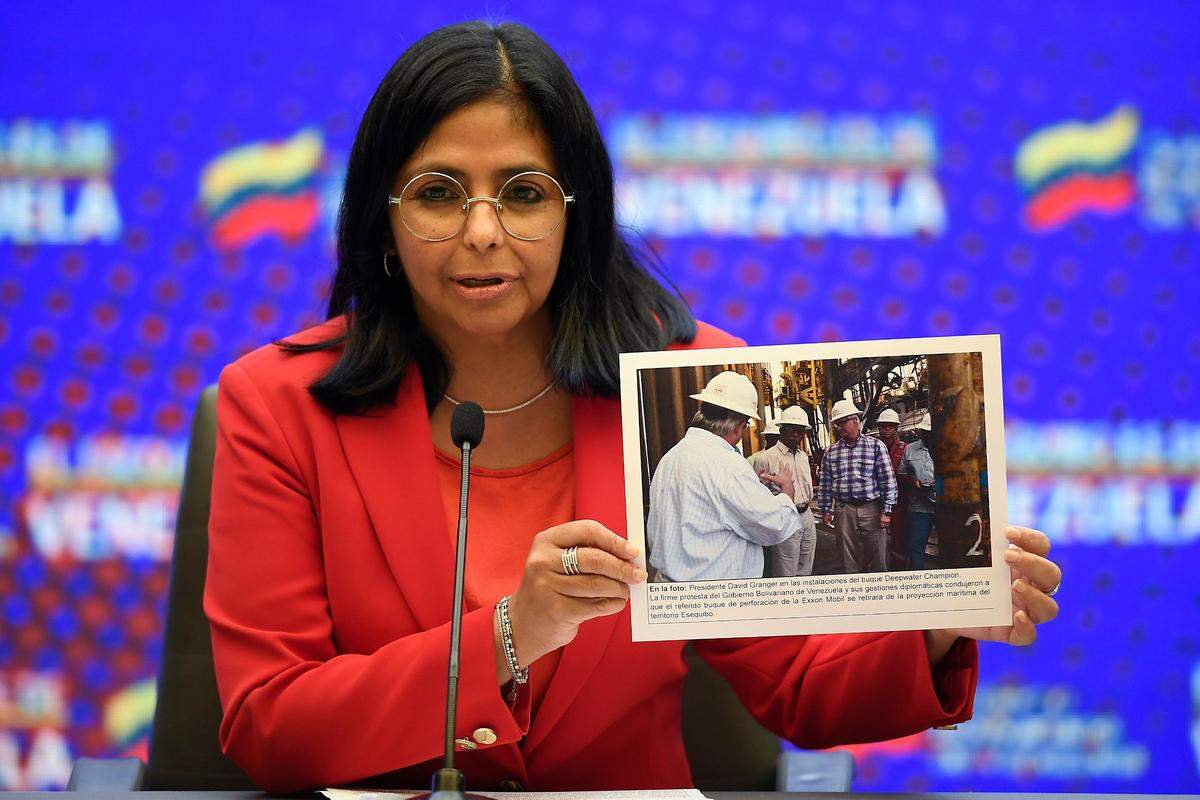
Five years ago, it gained new steam with the discovery of oil off Guyana’s Atlantic coast by ExxonMobil, which Maduro has laid claim to. The discoveries stand to take Guyana from one of the region’s poorest countries to one of its richest.
Despite Maduro’s resistance to letting the ICJ decide the territorial dispute, the case is moving forward and the court has a case management hearing scheduled for late next month, Todd, the foreign minister, said.
This story has been updated since it was last published to reflect the comments of Guyana’s counsel in the border dispute, Carl Greenidge.
El Nuevo Herald reporter Antonio Delgado contributed to this report.
This story was originally published January 28, 2021 at 7:00 AM.