
COVID outbreak in Chile, Argentina shows challenges facing Latin America as it reopens
When Chile confirmed the first cases of COVID-19 in early March amid ongoing violent protests and social unrest over inequality, one of Latin America’s fastest growing economies appeared to have everything in its arsenal to combat the deadly respiratory virus.
A three-month “state of catastrophe” was declared. Test kits were put into production, thousands of ventilators were purchased and, within days, the number of available hospital beds countrywide increased from 37,000 to 42,000 while a hospital ship was deployed to move around the coastline as needed.
Meanwhile, residents living in mostly middle- and upper-class neighborhoods in the hard-hit capital of Santiago were ordered to remain indoors and told they needed a pass issued by police to go out — even to buy groceries.
“We have not established yet a total quarantine of the country, but we have divided the country in zones, and we established a customs border situation to provide that only the people who have to transport supplies can reach some areas of the country, but the rest of the mobility has been locked,” Chile’s ambassador to the U.S., Alfonso Silva Navarro, said during a March 23 video conference on Latin America’s response to the pandemic.
For a while, the country’s strategy appeared to be working. But six months after the World Health Organization was alerted that “a pneumonia of unknown cause” in Wuhan, China, was making people ill, Chile has one of the world’s highest per capita infection rates and one of the worst outbreaks in Latin America, after Brazil and Peru, with 1,700 infections for every 100,000 people.
“The situation here is not good,” said Mary Kalin Arroyo, a Chilean resident and recipient of the government’s Science Prize in 2010 who has been quarantined at home for the past four months. “Why? That’s the real question.”
Covid’s new epicenter
Across the hemisphere, countries from the United States to Mexico to Brazil and Chile are struggling to control the deadly contagion as governments ease restrictions and reopen their economies amid spiking infections and deaths.
The pandemic’s new epicenter, the Americas region this past week reported 60 percent of the world’s new coronavirus infections and 64 percent of its deaths, the Pan American Health Organization said Tuesday during its weekly press briefing with regional journalists.
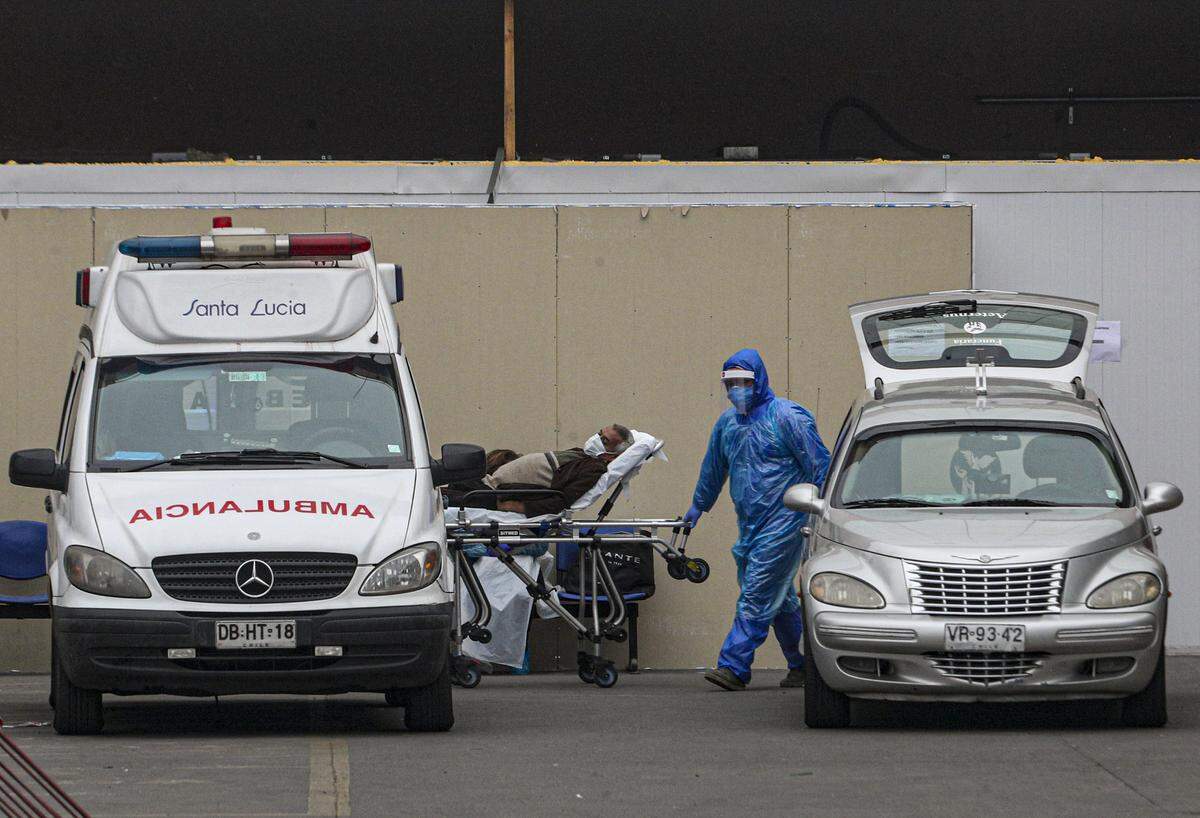
In Latin America, where the outbreak has rivaled that of Italy and France and the number of COVID-19 deaths this week surpassed those in the United States and Canada, countries in Central America and South America are continuing to see spikes.
Not only is there no indication that the pandemic has reached its peak, according to PAHO, but the virus is also rapidly moving from overcrowded urban cities to communities in the rural interior and outskirts that had previously seen a limited number of infections.
And those who are being hit the hardest, say public health experts, are those most vulnerable: migrants in border communities, working-class and poor people living in overcrowded quarters, and indigenous communities along the Amazon basin. The latter, which encompasses nine countries in South America, is seeing cumulative incidence rates up to five times higher than the general population, PAHO says.
“You can lock down the countries, but once you open the economies, COVID-19 impacts the poorest communities and this is what we have seen today in Colombia, Argentina and Chile,” said Carlos Espinal, director of the Global Health Consortium at the Robert Stempel College of Public Health at Florida International University in Miami.
Regional experts say the surge in new infections is being fueled by the precarious conditions of Latin America’s poor, many of whom live in overcrowded conditions and are dependent on informal, day-to-day work for their daily survival, and the growing restlessness among the population after months of quarantine.
As of Wednesday, Chile had 321,205 confirmed cases of COVID-19 and 7,186 deaths, with another 3,102 suspected but unconfirmed deaths from the virus, according to the health ministry. The vast majority of confirmed cases have been in Santiago and its metropolitan region.
“Chile is not the Chile we used to know four or five years ago,” Espinal said. “Chile has a very high concentration of poverty and immigrants as well, and the population is very much affected these days by COVID-19.”
In recent days, Chile has started to see a decline in new infections. But the cases are still worrying after the Mining Ministry earlier this month reported that the infection rates were soaring in mining regions like Tarapacá, which borders Bolivia, and Antofagasta in the north. The Valparaíso region, which has a high poverty rate and is home to the country’s Congress, is also badly hit with 19,000 confirmed and suspected cases to date.
Despite the overall rise in cases, the government on Monday began lifting restrictions in two of the country’s 16 regions — Aysén and Los Ríos in the south — after the number of people testing positive fell below 5 percent for 14 days. Movie theaters, restaurants and coffee shops were given permission to operate at 25 percent of capacity.
The phased reopening will be a test for the country, which back in May attempted to reopen some businesses, like a mall in the wealthy Las Condes district, only to quickly reverse the decision after infections surged.
By Wednesday, after political and social chaos reemerged in the capital — supermarkets were ransacked and police stations attacked by frustrated and angry protesters the night before — the question was whether the government would lift the remaining quarantine measures or keep them in place.
Critics say President Sebastián Piñera’s mismanagement of the pandemic can be blamed for the spiking numbers. The country’s management has led to a false sense of security, critics say, with the rolling lockdowns across the capital forcing some residents to flee to their country and beach homes, where they unwittingly spread the virus.
At the same time, the economy, which has about 30 percent informal workers, never fully closed down. Slaughterhouses, food processing centers, salmon farming plants and mines were allowed to operate and count today among their workers some of the newly infected, as the virus spreads out of the Santiago metropolitan area to poorer communities.
Implementation not always easy
“Even governments that adopt measures formally, to guarantee social distancing, quarantine and lockdowns — sometimes the implementation in the long run is not easy for them,” said Dr. Jarbas Barbosa, the assistant director of PAHO. “The poorest of families sometimes need to leave their houses, to go to the market, to go find a job. We are now experiencing this situation in the region and we are calling attention to it with the countries.
“If you don’t have a very strong social protection policy, if you don’t have fiscal and economic measures and policies to implement in the country, it’s very hard to keep the stay at home policies and to keep the quarantine and lockdown measures,” Barbosa added. “The government can announce them but the real implementation probably will be jeopardized by the economic situation that the poor population suffers.”
Despite its robust economy, Chile has taken a huge hit with the coronavirus, which has left about 2.5 million Chileans unemployed.
Many today are now dependent on voluntary food kitchens and handouts for their daily survival despite several government financial assistance plans. The country’s finance minister last month announced a two-year, $12 billion citizen support and economic stimulus package to help Chileans get through the rough times.
Meanwhile, the country is on its second health minister, after Jaime Mañalich resigned last month over criticism that the government failed to issue lockdowns sooner. At the same time, Chile continues to face political and social unrest.
“I think the country simply was not prepared for this pandemic. That was shown very clearly when we had the first cases. They started doing partial lockdowns in parts of the cities and as a consequence, people were moving out of part of the city to other parts and probably carrying the virus with them,” Arroyo said.
“Chile is a very connected country and so the virus was also taken out of Santiago and up and down the country very quickly. In fact it’s now believed that the virus was in Chile before the first case was reported.”
Unlike neighboring Argentina, which closed off its provinces and issued tough lockdowns, Chile did not.
Argentina
In Argentina, the initial response to the pandemic was swift and very strict in comparison with its neighbors.
On March 20, President Alberto Fernández ordered a mandatory quarantine, which was enforced by security forces. Residents could leave their homes only to buy groceries or for essential work. Even taking children out for a walk around the block was restricted in the greater metropolitan area of the capital, Buenos Aires.
The country had already closed its borders a few days before the lockdown and enacted a strict travel ban, suspending flights from highly affected countries.
“I’m going to be inflexible on this,” Fernández said during the announcement about shutting down the country. “Anyone who has to be in quarantine is going to respect it, and if they don’t, we’re going to pursue them criminally.”
In sharp contrast to other regional leaders, the Argentine president explained in televised addresses that the goal of the measures was to forestall a sudden spike in new cases that could overwhelm the country’s hospitals, and that dealing with the inevitable economic fallout from the pandemic was not a priority at that moment.
“You can recover from a drop” in the gross domestic product, Fernández said. “But you can’t recover from death.”
For a while, it seemed like the Andean nation was keeping the COVID curve under control. Most cases were registered in the largest urban areas like Buenos Aires, and hospital bed occupancy stayed low during the first two months of the lockdown. Fernández’s popularity ratings soared, and for the first time in many years Argentina enjoyed a period of rare political harmony, with leaders from fiercely opposing political factions coming together to fight a common enemy.
In mid-May, the government started to reopen some businesses. That was the green light that hundreds of thousands of informal workers living in poor slums in and around the capital were waiting for to resume their daily struggle to go out and make some money to put food on the table.
But as confirmed cases surpassed 50,000 in late June, panic set in. Doctors feared the peak would strain hospital intensive care units.
The sudden increase in movement in Argentina’s densely populated areas has meant that the early success it had in keeping the transmission of the virus in check is now fizzling out, with new cases soaring in recent weeks.
On Sunday, Argentina passed the mark of 100,000 cases, and the death toll inched closer to 2,000. On Wednesday, the Health Ministry said 1,987 people had died from COVID-19.
More than 90 percent of Argentina’s confirmed cases are in the Buenos Aires metropolitan area, where there are pockets of poverty like in Chile.
Carla Vizzotti, the ministry’s Health Access secretary, said the rise was partly explained by increased testing, while the mortality rate remained low at 1.8 percent compared with 4.5 percent globally.
Still, Vizzotti said public health managers are confident the gradual reopening that’s scheduled to continue through July won’t strain the country’s hospitals, where occupancy rates hover around 60 percent.
“We have more people circulating, especially in greater Buenos Aires, so it’s more important than ever to remain vigilant, practice social distancing and inform health officials of any symptoms,” Vizzotti said in daily comments broadcast through the health ministry’s channels on social media. “With more people starting to move around the country now, we must watch very closely for any outbreaks in rural areas that have not yet been touched by the virus.”
People are growing restless
But Argentinians are growing restless, as stay-at-home orders drag on amid rising unemployment and uncertainty over the country’s ability to put its chaotic finances in order and claw its way out of recession.
“The prolonged mandatory quarantine in Buenos Aires and in the suburban areas around it has caused psychological and economic stress, and society is now demanding a more flexible approach,” said Eva Bejerman, a retired architect who lives near downtown Buenos Aires. “That’s a problem, people are no longer respecting these measures, and transmission will probably worsen.”
Juan Fernandez, a sociology student at the Catholic University, is equally frustrated by the country’s delayed reopening.
“Only government officials and the elite who have absolutely no connection to what’s happening on the streets and in the slums are still talking about quarantine. It’s very hypocritical because they can stay home, they don’t need to go out and make a living every single day,” he said.
Argentina’s Independence Day last week was marked by large anti-government demonstrations and protests against the prolonged mandatory quarantine.
Compounding the country’s stress is a public debt crisis that predates the pandemic, and an economic outlook that was already discouraging. Argentina is expected to enter its deepest multi-year recession since the 2001-02 financial crisis.
“The country has made progress in negotiations with creditors, and we expect external debt to be successfully restructured. For as long as default persists, however, Argentina will face the prospect of a recovery weighed down by a lack of access to dollar financing,” said Abhijit Surya, an analyst at the Economist Intelligence Unit.
Barbosa and others at the Pan American Health Organization, which is the Americas office for the World Health Organization, say there is a “mosaic of situations” that exists within the region, one of the world’s most unequal in terms of wealth and poverty gaps, and within individual countries.
But the region’s deep inequality, large urban cities surrounded by slums, weak health systems and informal economies that have prevented tough lockdowns or made them difficult are huge challenges to bringing the virus under control.
“Our high inequality rate means we are facing economic, social and public health issues,” said Barbosa. “But also our health services, with their strength and weaknesses, an informal economy that prevails in some of the countries which have made many of them reopen their economies.”
The large swaths of informal economies, which are as high as 50 percent in some countries, and the confined living spaces in many communities have made it difficult to implement measures like social distancing and quarantine, he said.
“In many countries, cases are spiking because the implementation is not the same as it was in the beginning and in others, they have started to open up some segments of their economies,” said Barbosa.
Recognizing that the economic pressures are causing countries to reopen, PAHO has stressed the need to beef up testing in order for governments to make decisions based on data showing where the transmission is increasing, where it is decreasing and how many people are being hospitalized.
There also need to be clear protocols, it says, on public transportation, schools and other areas to avoid new outbreaks.
“When you don’t know exactly the number of cases, when you are not able to trace the relevant cases in the most important areas, when you don’t develop a strategy for testing in the most at-risk communities, then you lose the opportunity to cut the transmission,” Espinal said.
This story has been updated to correct Chile’s per capita infection rate. It previously said 16,700 for every 100,000 people. The correct figure is 1,700 infections for every 100,000 people.
Miami Herald staff writer Jacob Kincaid contributed to this report.
This story was originally published July 16, 2020 at 11:12 AM.

.jpg)