Argentina, Uruguay, Colombia head to polls as problems plague the region
It’s an electoral Super Sunday in a sea of discontent.
Argentina and Uruguay are holding presidential elections and Colombia is holding local elections this weekend at a time when the region seems to be on fire.
In Chile — long considered the stable stalwart of South America — eight days of protests have left more than 15 dead as of Friday, and sparked mass marches and looting that President Sebastián Piñera has been unable to control.
While the outrage was ostensibly sparked by an increase in transportation prices, the issues run much deeper. One of the ubiquitous signs amid the marches reads: “It’s not about 30 pesos it’s about 30 years” of economic policy.
And in nearby Bolivia, the Oct. 20 presidential election is still shrouded in uncertainty. The Organization of American States and the European Union are calling for a runoff vote, even as President Evo Morales says he won the election outright. His rival, Carlos Mesa, is accusing Morales of engaging in fraud to clinch an unprecedented fourth term.
Chile and Bolivia are just two of the latest flare-ups in a region that has been plagued by problems, including protests in Ecuador, Haiti and Honduras amid a regional economic downturn.
The return of Kirschner?
It’s amid these tensions that Argentines head to the polls Sunday in a race where center-left candidate Alberto Fernández is expected to beat pro-business incumbent Mauricio Macri by more than 20 percentage points — potentially avoiding a runoff.
Argentina has been hammered by double-digit inflation and a depreciating peso, and Macri is getting blamed for the tanking economy, even as he argues that he’s still trying to clean up the mess left by his predecessors.
But its Fernández’s running mate that’s put the race in the international spotlight.
Cristina Fernández de Kirchner, who was president from 2007-15 and first lady from 2003-07, came to power amid the heyday of Latin America’s left and built a loyal following on the back of her socialist policies.
But she also exhibited an authoritarian streak as she embraced some of the region’s most polarizing figures, like the late Venezuelan leader Hugo Chávez and Ecuador’s Rafael Correa.
The prospect of having the iconic leftist back in power is already jolting the markets and led Brazil’s right-wing president, Jair Bolsonaro, to threaten to pull out of the Mercosur trade pact.
But those fears are tempered in Argentina by the head of her ticket. Fernández (no relation to his VP) is a 60-year-old lawyer and former chief of staff of Fernández de Kirchner’s late husband, Nestor.
But he quit that post once Fernández de Kirchner became president and he emerged as a prominent critic within the Peronist party of her move to the left.
In a region that’s increasingly polarized, many people see a vote for Fernández as a vote for moderation, said Argentine political analyst Pablo Touzon.
“We’ve avoided the risk of having a Bolsonaro or a Maduro arise,” he said of Brazil’s right-wing and Venezuela’s left-wing leaders. “And this could make Argentina a source of stability in the region.”
But much will depend on how Fernández handles his powerful running mate.
On the streets of Buenos Aires, a massive inflatable doll of Fernández de Kirchner has been making the rounds. She’s in prison stripes (a reference to the multiple corruption investigations she’s facing), has a bag of cash in one hand and is holding a marionette of her running mate in the other.
While the popular perception is that she’s pulling the strings, the truth is the new administration is going to be a slave to the economy.
“Assuming he wins, Mr. Fernández will have been handed something of a poisoned chalice, and he will be forced to grapple with the economic crisis that has been sparked by his own surge to power,” the Economist Intelligence Unit, the publication’s global research arm, wrote.
Touzon agreed, saying the new president “is going to be facing an incredibly complex scenario. It’s going to be a period of financial restrictions, without any room for populism.”
And that means Fernández will likely have to make unpopular economic decisions — the kind that have riled Chile and the kind that his running mate has railed against in the past.
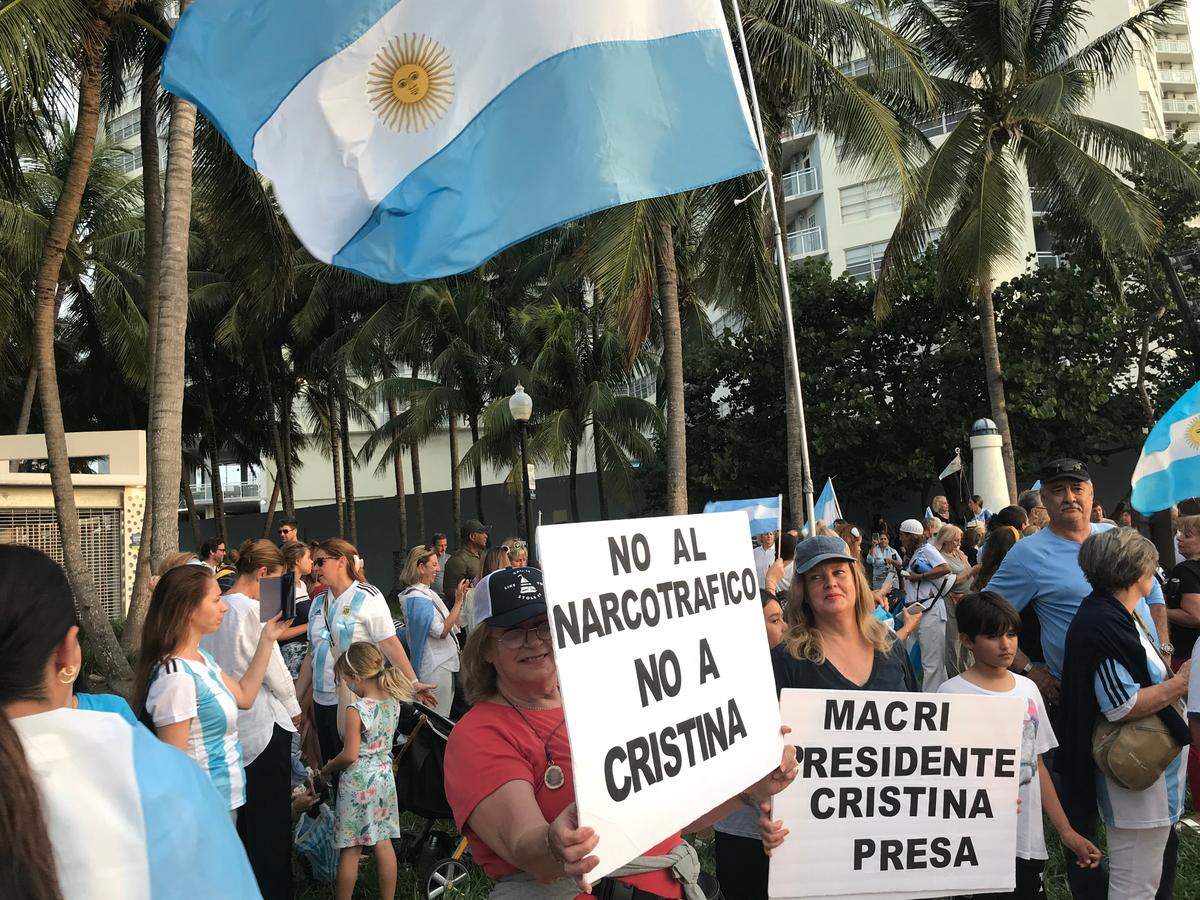
“In this scenario, it’s better for him to have Cristina inside the fold rather than outside” as a critic and opponent, Touzon said. “This way they will both have to pay the political price.”
Uruguay
If Argentina’s vote is being treated as a fait accompli, the 10-way presidential race in neighboring Uruguay remains a nail-biter.
A recent poll by Uruguay’s Grupo Radar gives Daniel Martínez, the former mayor of Montevideo of the ruling Popular Front party, 43 percent of the vote versus his nearest rival, National Party candidate Luis Lacalle Pou, who has 24 percent.
But unless Martínez wins a majority of the ballots, the two men will face each other in a Nov. 24 runoff. And that’s where it gets complicated, as Lacalle Pou is already building an opposition coalition to take on Martínez.
While Martínez is well respected, he’s carrying the baggage of a party that has been in power for 15 years, under José “Pepe” Mujica and current President Tabaré Vázquez, said Alain Mizrahi with Grupo Radar.
Mizrahi said there are two factors driving the discontent: rising crime and a downturn in the economy.
“There’s the widespread perception on the street that crime, delinquency and theft are on the rise,” Mizrahi said. “And there’s also the perception that the Popular Front hasn’t done everything it could to reduce insecurity.”
The troubles in nearby Chile also seem to be having an effect on its neighbor. Uruguay and Chile were both under military dictatorships in the 1970s and ‘80s, and the current scenes of Chilean security forces battling protesters have brought back bitter memories for many.
Those images seem to have hurt the prospects of Guido Manini, a former commander of the Uruguayan National Army who is running fourth in the polls on a law-and-order platform.
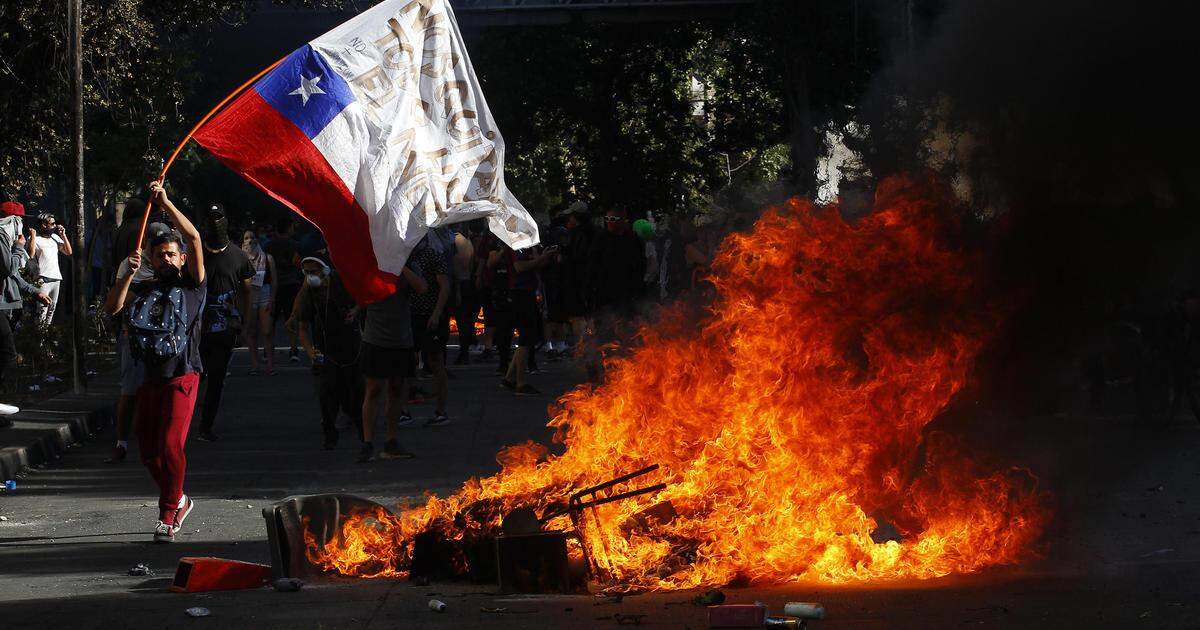
“Uruguayans identify with the Chilean reality,” Mizrahi said. “And it’s a reminder of a not-so-distant past.”
Colombia
Colombia also seems to be struggling with the demons of its past, as it prepares to elect 32 governors and more than 1,000 mayors in races that have been marred by violence.
According to the Foundation for Peace and Reconciliation, more than 20 candidates have been murdered over the course of the election cycle. Other organizations, however, put the number at seven.
Either way, it’s a sign that a historic peace deal in 2016 with the hemisphere’s oldest and bloodiest guerrilla group, the Revolutionary Armed Forces of Colombia, didn’t solve all the country’s problems.
The two most closely watched elections will be the mayoral races in the capital, Bogotá, and second city, Medellin.
In Bogotá, polls show that former senator Carlos Fernando Galán has pulled slightly ahead of former senator and presidential candidate Claudia López.
Galán, 42, a former journalist and city council member, broke with the Radical Change party over its decision in 2018 to support the campaign of President Iván Duque. Under the banner of the independent Bogotá for the People party, Galán has presented himself as a moderate pragmatist focused on the city’s two big problems: transportation and security.
In particular, Galán supports the current mayor’s plans to build an above-ground metro and expand the city’s articulated-bus network known as the Transmilenio.
Bogotá, a city of 7 million, is one of the few major metropolises in Latin America without a mass transit rail system and its traffic jams are legendary. But the debate over whether the city should have a subway or an above-ground tram has paralyzed the process for years.
López, with the Green Alliance party, had initially favored a subway but has said she will stick to the current plan after Mayor Enrique Peñalosa earlier this month awarded a Chinese-Canadian consortium the $4 billion contract to build the 15-mile metro. However, López has said she would limit the expansion of the Transmilenio system, saying buses are key contributors to the city’s pollution problem.
In Medellin, which has a rail system, Alfredo Ramos, the head of the ruling Democratic Center party, is seen as the clear favorite ahead of left-wing activist Daniel Quintero.
In other times, President Duque and his political mentor, former President Alvaro Uribe, might have used the election to build their political base. But the race comes as Duque has anemic approval ratings and Uribe is facing an investigation into witness tampering.
More broadly, the vote will test Colombia’s democracy. More than 85 percent of candidates have not provided details about their campaign financing, as required, and the central government is making a push for people to denounce vote-buying and fraud.
Vice President Marta Lucía Ramírez, who is spearheading the effort, is asking people to report abuse.
“Transparency and citizen participation in this race are fundamental for our democracy,” she said.
The busy electoral Sunday could have been even busier. Haiti was scheduled to hold legislative elections this weekend, but there’s no functioning government to present the election law to parliament.
Miami Herald staff writer Jacqueline Charles contributed to this report.
This story was originally published October 25, 2019 at 2:37 PM.