
(From the archives) Heart of the Space Coast skips a beat
The former and current mayors of Cape Canaveral stood in the smoky back bar of the Mousetrap steak house and lounge. Mayor Pat Lee was shooting pool. Former Mayor Wayne Rutherford was drinking, slowly and steadily.
On the wall above their heads, a television screen flashed the footage, over and over, of the explosion. In the front bar, people hummed Glenn Miller tunes to the plumped-up chords of an organ player. Two older women tried to dance, but one of them fell down.
The Mousetrap, so popular with the Apollo-era astronauts, became a setting for sorrow in the same off-kilter stance it took as a backdrop for courage in Tom Wolfe's "The Right Stuff."
Back then, the space program was young and compelling. Traffic stacked up along Florida A1A as thousands jammed the road to Kennedy Space Center for each launch.
The old-timers, excited about rockets 20 years ago, stayed excited. From their backyards they watched every launch streak skyward. Still do.
Former Mayor Rutherford is one of them. An electrical engineer, he helped design a portion of Pad B, where the Challenger pushed off at 11:38 a.m. yesterday. Rutherford, 58, saw it go.
"I've watched a lot of launches, " he said. "You know when something's going wrong."
He said he looked at a cloudless sky and hoped the shuttle was ducking behind a cloud. "I knew it wasn't, " he said. "I knew the thing had blown up."
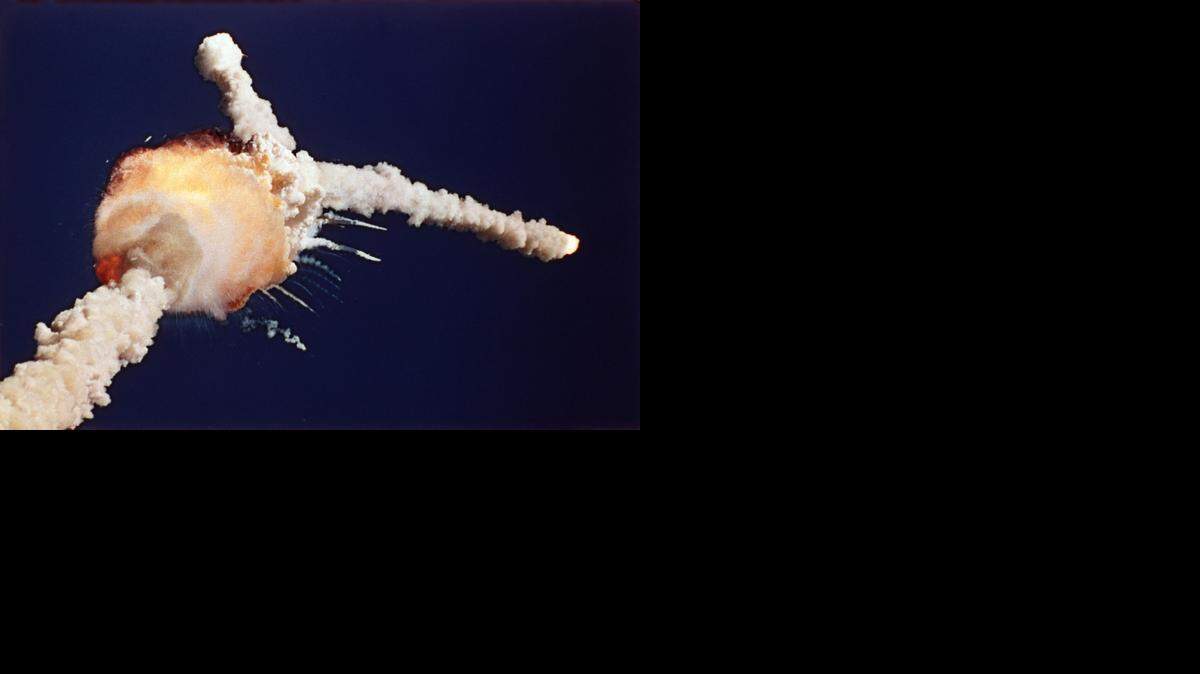
The explosion disintegrated the shuttle and its seven crew members, shot debris for miles in every direction, and blew the complacency out of a nation that had come to expect lush liftoffs and soft three-point landings.
"Having had 24 successful launches, people were a little complacent, " said Mayor Lee. "The only thing I can relate it to was when I was in school and I heard John Kennedy was assassinated. It was the same feeling in my stomach."
Lee, 35, said he sat transfixed in front of a television all afternoon, watching the footage again and again, each time yearning for the shuttle to follow through on its arc and trail off into space. It was not to be, not even for the mayor of Cape Canaveral.
"It was just appalling, " Lee said. "There was nothing you could do."
NASA, too, was stunned by the abruptness of it all. There was no visible sign of trouble, no prelude to disaster. There was only a voice -- "Roger, go with throttle up" -- and a frightening puff of smoke.
Klaus Gumto, a computer-software engineer for NASA, was at the space center working on a program for a shuttle mission scheduled for May.
"I kept looking for something that looked like they came out of this fireball, " Gumto said. "Within NASA, everybody was just shocked. Everybody was just too shocked to keep doing what they were doing."
Gumto's May mission, and another planned for March, have been suspended. NASA announced yesterday that all pending shuttle missions are on hold until some questions about the disaster have been answered. Mainly, what happened?
"You gather up the pieces and try to find the answers, " Rutherford said.
They were trying as hard as they could to find answers at the Surf Bar in Cocoa Beach, another hangout for those with The Right Stuff. Men who were boys in the Apollo era regretted that so many children were introduced to the program through tragedy. School kids throughout the nation had been watching the launch, cheering on Christa McAuliffe, the first teacher in space. An anonymous caller to a Tampa radio station that reaches the Cape requested that Lee Greenwood's "I'm Proud To Be An American" be played in honor of the seven crew members.
"They died for all of us, " he said.
Marquees on banks and hotels from the Cape to Cocoa Beach flashed messages of sympathy: "May God Be With Our Astronauts, " "God Bless The Challenger Crew, " and "May They Rest In Peace."
The punch that reeled the nation hit in the heart of the Space Coast.
Wayne Rutherford said he cried.
This story was originally published January 28, 2015 at 1:03 PM with the headline "(From the archives) Heart of the Space Coast skips a beat."