
US charges 15 in Minneapolis with conspiracy during immigration crackdown
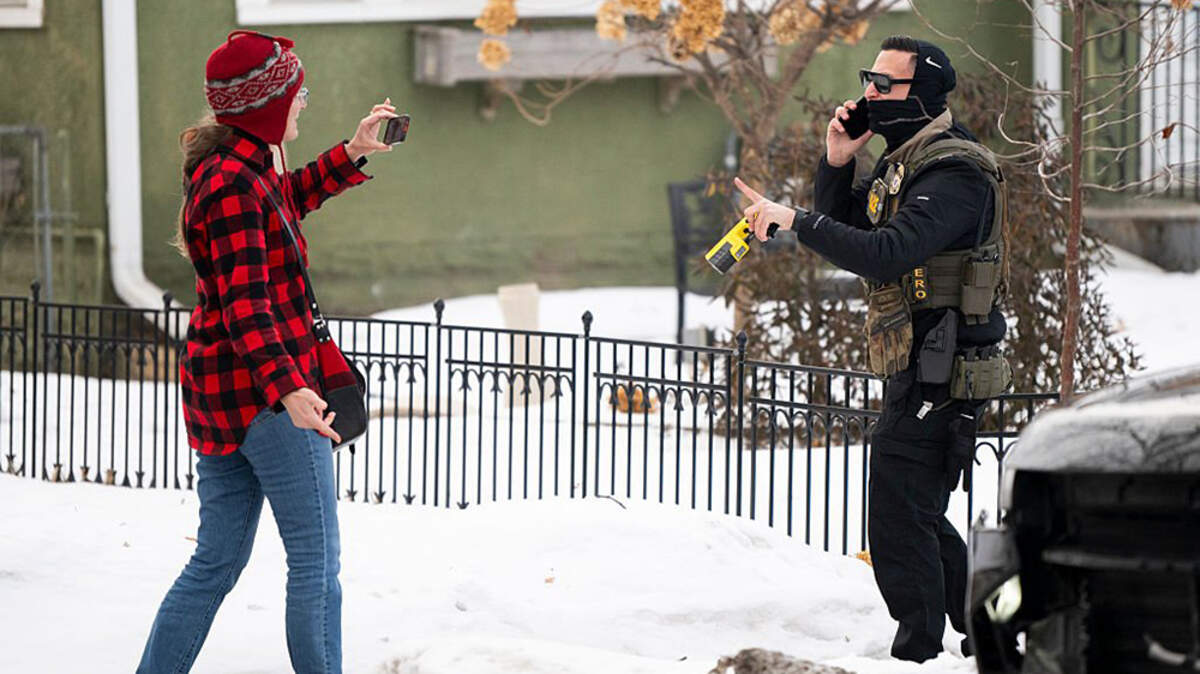
Federal prosecutors on Tuesday unsealed conspiracy, assault and other charges against 15 people accused of violently impeding immigration enforcement officers in Minneapolis during an immigration crackdown this year.
Daniel N. Rosen, Minnesota’s top federal prosecutor, said the defendants were members of two Minneapolis-based groups connected with antifa, a far-left movement. Twelve defendants were arrested Tuesday, Rosen said, one was already in custody for other charges, and two remained at large. Antifa, named for its anti-fascist alignment, is not an organization with a leader but a diffuse and sometimes violent protest culture of activists who oppose the far right.
The defendants were charged with conspiracy to impede or injure a federal officer; solicitation to commit a crime of violence; interstate stalking; assault on a federal officer; and destruction of government property.
“Today’s charges and arrests reflect a broad federal effort to address organized lawless behavior, which seeks to disrupt the execution of federal law, endanger law enforcement and importantly endanger the very communities that these defendants falsely claim to be protecting,” Rosen said during a news briefing Tuesday.
It was unclear whether all the defendants had legal representation.
The 94-page indictment was filed at a fraught moment for Minnesota federal prosecutors, who have had trouble sustaining many criminal cases they have lodged against protesters demonstrating against Immigration and Customs Enforcement since the Trump administration began its crackdown in the state late last year. The indictment links those accused of being conspirators with a broader group engaged in apparently lawful protests and tries to draw a line between criminal and protected behaviors.
Defense lawyers say that about half of the 36 federal cases in Minnesota charging individual defendants with assaulting or interfering with federal agents assigned to the crackdown have been dismissed. Judges have questioned the evidence underlying the accusations.
At Tuesday’s news conference in Minneapolis, reporters confronted Rosen with the struggles that his office has faced in prosecuting officer assault cases, and he sought to defend the new indictment. “You watch how this case plays out; you watch how the evidence plays out,” he said.
The Trump administration, through executive actions, has prioritized bringing criminal cases against anyone associated with antifa, especially those who have protested President Donald Trump’s aggressive immigration crackdown. Democrats have said that the administration was attempting to silence dissent.
After the news conference, a group of demonstrators gathered nearby to protest the charges. People chanted “shame,” and some held signs that said, “observing law enforcement is protected by the First Amendment.”
“This is an act of political oppression,” said Bruce Nestor, an immigration lawyer representing one of the defendants. “It’s designed to punish and intimidate.”
The 15 defendants charged with conspiracy to impede or injure a federal officer were: Isaac Auman Sant; Emmett James Doyle; Cameron Kennedy; Callum Robinet; Erik Davis; Brian Stillwell Apland; Kyle Wagner; Hannah Margaret Van De Water Davis; Treasure Cay Thoreson; Nathan Junho Kim; Alec Stewart; Douglas Misterek; Dustin Scott Beisell; William Morgan; and Natasha Rakotz.
They were accused of using debris, vehicles and other objects to obstruct roads used by federal law enforcement and of wielding homemade shields to resist officers on foot.
Morgan, a transgender woman who was addressed as Ms. Morgan in court, and Rakotz were also each charged with one count of assault on a federal officer, but Rosen declined to say during the news conference whether any officers had been injured. Wagner, who had been previously arrested on other charges, was also charged with solicitation to commit a crime of violence and interstate threats. Morgan and Sant were charged with interstate stalking, and Morgan with destruction of government property.
On Tuesday afternoon in St. Paul, the defendants appeared in groups before Judge John Docherty, a magistrate judge in U.S. District Court for the District of Minnesota, who read the charges and asked if the defendants understood them.
As the first group of defendants walked into the courtroom, they held up their fists and shook their heads as the prosecutor spoke. Docherty said the conditions for a detention hearing had not been met and that the defendants would be released on the condition that they do not contact other defendants and stay off federal property.
Davis, a religious studies professor at Macalester College in St. Paul, told the judge, “I looked through the indictment at all the things that include my name, and I seem to be indicted for holding meetings.”
The scene outside the courthouse grew tense after one protester there tried to go into the building through a secure entrance, The Minnesota Star Tribune reported. Law enforcement officers deployed chemical irritants and flash bangs, and one person exposed to pepper spray was taken away by paramedics.
The indictment said that the defendants often used information gleaned from group chats whose members tracked and monitored vehicles going to and from the Whipple Building, a hub for immigration agents. Those members, who were not charged, appeared to be acting within the law. Prosecutors did not rule out the possibility of additional arrests in Minnesota.
Many allegations in the indictment appear to have stemmed from a promise made in January, at the height of the protests, by FBI Director Kash Patel to investigate encrypted chats used by activists to monitor immigration raids. The move was immediately denounced by free-speech groups, including the Cato Institute, a libertarian think tank, as unlawful and contrary to the constitutional protections afforded to political groups.
Federal prosecutors around the country have faced extreme pressure from Justice Department officials in Washington to crack down on ICE protesters. In January, for example, Aakash Singh, a senior department official, spoke on a conference call with all of the country’s 93 U.S. attorneys’ offices and urged prosecutors to “go big and go loud.”
But the Justice Department has seen mixed results. Last month, prosecutors dismissed all charges against four protesters accused of interfering with federal agents at an ICE facility in Chicago after the judge in the case discovered an extraordinary series of grand jury violations.
In describing the new conspiracy case, Rosen said that it was based on National Security Presidential Memo 7, a sweeping directive Trump issued last September. It targeted groups aligned with antifa and expanded the definition of domestic terrorism to include not only violent crimes, including assault, but also relatively minor ones, including revealing the personal details of agents or getting in the way of immigration enforcement.
The Justice Department has started to establish a bureaucratic architecture to prosecute cases involving that directive, putting “coordinators” in U.S. attorneys’ offices. In his news conference, Rosen revealed that the new case had been investigated by a group called Joint Task Force Vanguard, which appears to be dedicated to pursuing inquiries into left-wing groups and individuals.
While the Trump administration has poured energy into building cases against antifa and other left-leaning movements, it has managed -- at least so far -- to actually file only a handful of charges against them. The most prominent example was a case brought in Texas resulting in the conviction in March of a group of young protesters accused of being members of antifa and taking part in an armed assault on an immigration facility.
Although some defendants in Tuesday’s indictment appear to have self-identified as antifa, it was not clear whether all did and, if so, to what extent.
The indictment describes the defendants as members of an organization called Direct Action Minnesota and subgroups such as the Black Cat Workers Collective that, prosecutors said, “infiltrated and exploited lawful protests to more efficiently carry out its direction actions.”
On Jan. 23, prosecutors said, protesters gathered at the Whipple Building and threw ice blocks at law enforcement vehicles. They also formed a blockade, boxing federal agents in one area.
On March 1, conspirators holding shields also blocked the Whipple Building after law enforcement officers issued multiple dispersal orders, the indictment said.
This article originally appeared in The New York Times.
Copyright 2026 The New York Times Company