
Ballroom? Bunker? Court Allows Work for Now on Trump Project.
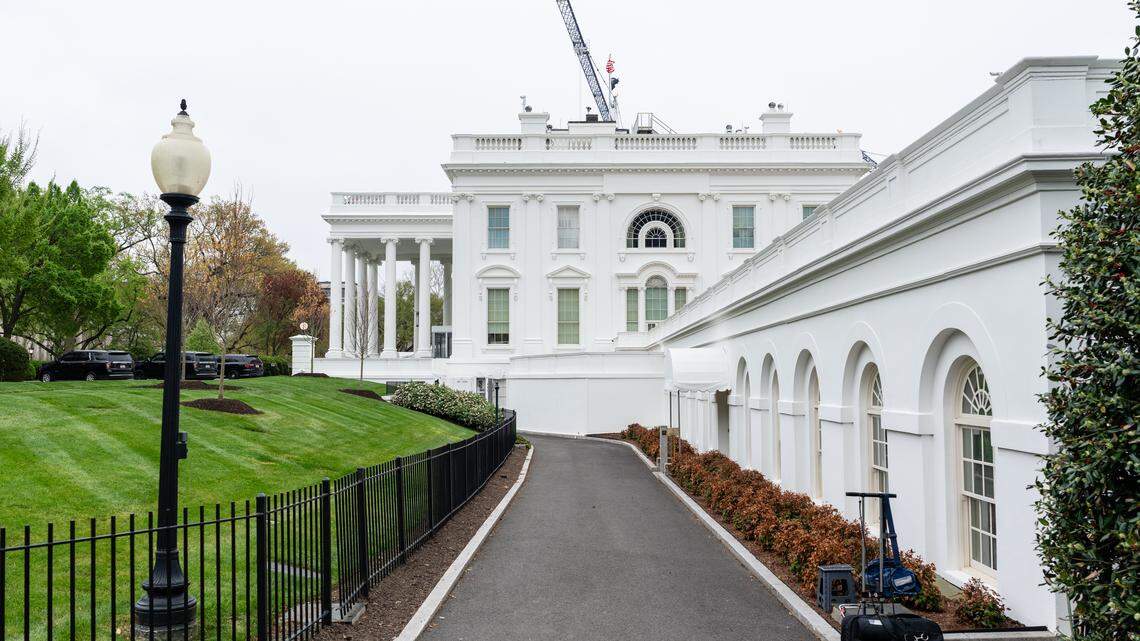
WASHINGTON -- A federal appeals court on Saturday ordered a lower court to clarify how its order blocking construction on President Donald Trump’s White House ballroom could be reconciled with more recent claims that the project’s main purpose is to add a sprawling military compound.
By a 2-1 vote, a three-judge panel of the U.S. Court of Appeals for the District of Columbia allowed construction to continue until Friday, briefly extending a stay set by Judge Richard Leon on his ruling, and allowing the Trump administration time to ask the Supreme Court to intervene.
Leon had ordered construction halted until the president sought approval from lawmakers on his plans to substantially reshape the White House campus. Trump tore down the East Wing last October to make way for the 90,000-square-foot ballroom.
Judges Patricia Millett, an appointee of President Barack Obama, and Bradley Garcia, an appointee of President Joe Biden, formed the majority. Judge Neomi Rao, a Trump appointee, wrote in a dissenting opinion that she would have allowed construction to continue uninterrupted pending appeals.
The order Saturday said that the Trump administration had injected considerable confusion into the case. It noted the recent claims of officials, also made by Trump, that the ballroom is only one element of a major overhaul that includes a giant underground bunker complex.
The government, the panel wrote, had not “explained how, if at all, the injunction interferes with their existing plans for safety and security at the remaining portions of the White House during the construction project.”
And the recent claims about the ballroom being only a secondary goal of the renovation, the order said, “raised serious factual questions about the relationship between” the aboveground ballroom area and the bunker addition.
Leon had paused his order from taking effect until Tuesday, giving the government two weeks to prepare an appeal. Construction has proceeded ahead of that court-ordered deadline.
The National Trust for Historic Preservation, an organization chartered by Congress, sued over the project, arguing that the president had refused input and resisted oversight in violation of the law.
The president of the National Trust, Carol Quillen, said in a statement that the group would “await further clarification” from Leon. “The National Trust remains committed to honoring the historic significance of the White House,” she said.
Before bringing in an architect or announcing a design, the president replaced members of the Commission of Fine Arts and the National Capital Planning Commission, the bodies responsible by law for reviewing and approving plans for major projects and renovations.
Now controlled by allies of the president, the planning commission voted this month to approve the project despite receiving tens of thousands of negative comments during the review process.
The president has tried to finance the ballroom with more than $350 million in donations from allies and corporations, which Democrats and public interest groups have said raises serious concerns about conflicts of interest, given that many corporate donors have business before the federal government. The National Trust has also argued that the financing was intended to circumvent Congress and prevent lawmakers from potentially withholding funds.
Trump for months has said the fundraising freed his hand to pursue a much-needed project at no expense to taxpayers. He has claimed authority to remake the White House grounds to suit his needs, and has argued that Congress has no role in such plans when public funds are not involved.
The White House budget released this month projected about $377 million for alterations to the campus this year and estimated another $174 million would be spent next year.
Since Leon’s order, Trump and his staff have shifted their messaging about the project’s purpose, insisting that the more crucial reason for the renovation is the construction of a sprawling new bunker below ground. Trump told reporters that the ballroom would merely be a “shed” placed atop the military complex.
The new basement area has been described as a replacement for the Presidential Emergency Operations Center, and is necessary, the Trump administration has argued, for national security.
Carving out a narrow exception, Leon wrote in his order that “actions strictly necessary to ensure the safety and security of the White House” could continue to prevent any risks from an open worksite next to the president’s residence.
But Trump has told reporters the exception would cover vast portions of the ballroom, such as bulletproof windows or a drone-proof roof, allowing him to proceed despite the order.
“So that’s called, ‘I’m allowed to continue building as necessary,’” he said in March.
The National Trust has filed a motion asking Leon to clarify his order to make it easier to enforce. And the Trump administration told the D.C. appeals court that the entire project was rooted in national security.
“The upgrades to the East Wing are not cosmetic,” a Thursday filing said. “Instead, they involve the use of missile-resistant steel columns, beams, drone-proof roofing materials and bullet, ballistic and blast proof glass windows. They also include the installation of bomb shelters, hospital and medical facilities, protective partitioning, and top-secret military installations.”
The order Saturday said it was not possible to proceed without clarity from Leon about what work was allowed under his order and the exception for crucial security features.
“We cannot fairly determine, on this hurried record,” the order said, “whether and to what extent the district court’s ‘necessary for safety and security’ exception addresses defendants’ claims of irreparable harm.”
This article originally appeared in The New York Times.
Copyright 2026 The New York Times Company
This story was originally published April 11, 2026 at 5:31 PM.