Supreme Court weighs Trump administration bid to end birthright citizenship
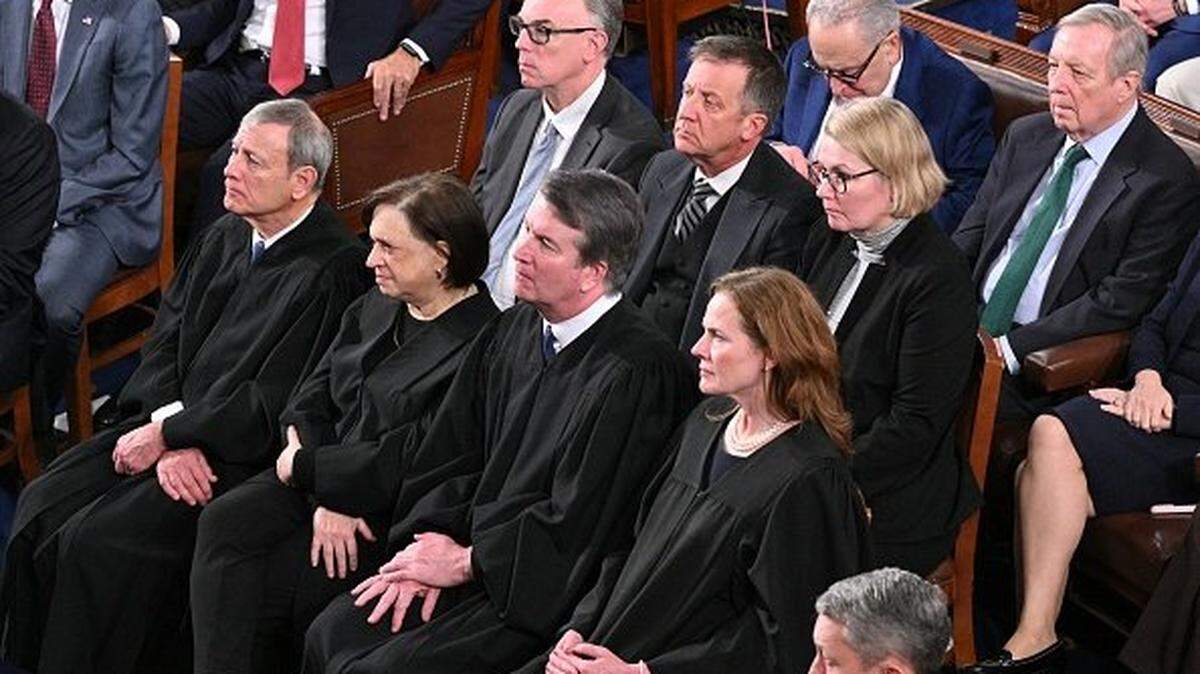
The U.S. Supreme Court on Wednesday heard arguments in a case that could redefine who is entitled to American citizenship, as justices weigh President Donald Trump’s effort to end birthright citizenship for some children born on U.S. soil — a move critics warn could upend generations of constitutional law and civil rights protections.
The case, Trump v. Barbara, centers on whether the president can reinterpret the 14th Amendment to deny citizenship to babies born in the United States to parents who are not citizens or lawful permanent residents. If upheld, the policy would mark one of the most sweeping changes to U.S. immigration law in modern history.
In South Florida — home to one of the nation’s largest immigrant populations — the court’s decision could carry immediate and far-reaching consequences. The region includes hundreds of thousands of families with mixed immigration status, as well as large communities from Latin America and the Caribbean where immigration status can be fluid or temporary. A ruling that restricts birthright citizenship could potentially affect hospitals, schools and local governments across Miami-Dade and Broward counties, where officials rely on clear definitions of citizenship to provide services.
In a first in U.S. history, President Donald Trump attended the hearing briefly, but left after the administration’s representative made his case to the high court.
At issue is a constitutional principle long understood to guarantee citizenship to nearly anyone born in the country. Ratified in 1868, the 14th Amendment to the Constitution declares that “all persons born or naturalized in the United States, and subject to the jurisdiction thereof, are citizens.” For more than a century, courts have interpreted that clause broadly, extending citizenship to children regardless of their parents’ immigration status, with limited exceptions.
Trump’s executive order, signed on his first day back in office in January 2025, challenges that interpretation. It directs federal agencies to deny citizenship documents — including passports and Social Security numbers — to children born to parents who are in the country unlawfully or on temporary visas, unless one parent is a U.S. citizen or green card holder.
But outside the court on Wednesday, the legal debate took on a more human dimension. Families gathered behind police barricades with strollers, signs and winter blankets, waiting as the justices heard arguments inside.
Some held placards reading “Born Here, Belong Here.” Others stood quietly, aware that the outcome could shape the lives of thousands of children.
Inside, the arguments quickly exposed a sharp divide over how the Constitution should be read — and whether a principle long considered settled could be narrowed by executive action.
Solicitor General John Sauer, arguing for the Trump administration, told the justices that birthright citizenship has been wrongly applied for decades and should not extend to children of noncitizens without permanent ties to the country.
“The citizenship clause was adopted just after the Civil War to grant citizenship to the newly freed slaves and their children,” Sauer said. “It did not grant citizenship to the children of temporary visitors or illegal aliens who have no such allegiance.” He argued that the phrase “subject to the jurisdiction thereof” excludes those who owe allegiance to another country and applies only to those with “direct and immediate allegiance” to the United States.
Sauer also pointed to what he described as unintended consequences of the current interpretation, including what he called “a sprawling industry of birth tourism,” in which pregnant women travel to the United States to give birth so their children can obtain citizenship.
“Uncounted thousands of foreigners from potentially hostile nations have flocked to give birth in the United States,” he said, “creating a whole generation of American citizens abroad with no meaningful ties to the United States.”
The phenomenon has also fueled a niche industry of so-called “maternity hotels” serving wealthy clients from countries including China, Turkey and Russia, but admitted it is not really clear how large it is.
Available data suggests the practice is relatively limited. The Center for Immigration Studies estimated in 2020 that between 20,000 and 26,000 babies were born annually to women traveling to the U.S. for that purpose — less than 1% of total births nationwide, according to Centers for Disease Control and Prevention data. That same year, the State Department tightened visa rules to allow officials to deny entry to applicants suspected of seeking to give birth in the United States.
Several justices appeared skeptical of the administration’s arguments during more than two hours of oral arguments, signaling potential trouble for Trump’s effort to narrow a long-standing interpretation of the Constitution.
Justice Elena Kagan pushed back directly on the government’s reading of the 14th Amendment, telling Sauer that the text itself did not appear to support his position. “I think you’re sort of looking for some more technical, esoteric meaning,” she said, questioning whether the administration was departing from the amendment’s plain language.
Chief Justice John Roberts also raised concerns about the legal foundation of the government’s argument, suggesting it relied on narrow and historically specific exceptions that may not justify a broader exclusion. “I’m not quite sure how you can get to that big group from such tiny and sort of idiosyncratic examples,” Roberts said, referring to cases involving diplomats, enemy forces and other limited categories of people born in the U.S. who would not be entitled to citizenship.
While some conservative justices appeared more open to revisiting the scope of the 14th Amendment, the questioning overall suggested the court may be reluctant to embrace the sweeping reinterpretation sought by the administration. Justice Samuel Alito was among the few to signal support, arguing that modern realities such as illegal immigration could justify expanding the amendment’s exceptions.
Even so, the exchanges indicated the outcome is not guaranteed. Several justices also pressed the attorneys defending birthright citizenship, suggesting the case may hinge on how the court interprets historical precedent and the meaning of “jurisdiction” in the amendment — a debate that could reshape the legal definition of citizenship in the United States.
Lawyers challenging the administration’s policy argued that its interpretation conflicts with both constitutional text and more than a century of Supreme Court precedent.
Representing the challengers, ACLU legal director Cecillia Wang framed the issue as a foundational question about the meaning of citizenship. “Ask any American what our citizenship rule is, and they’ll tell you: Everyone born here is a citizen,” Wang told the court, arguing that the principle is not a policy choice but a constitutional guarantee. She said the 14th Amendment deliberately enshrined that rule after the Civil War to place it beyond the reach of shifting political winds.
Her argument relied heavily on the 1898 Supreme Court decision in United States v. Wong Kim Ark, which established that a man born in San Francisco to Chinese immigrant parents was a U.S. citizen.
“When the government tried to strip Mr. Wong Kim Ark’s citizenship on largely the same grounds they raise today, this court said no,” Wang told the justices. Wang argued that the amendment incorporates the English common law principle of jus soli — citizenship by birthplace — under which nearly all persons born within a country’s territory are citizens.
The only exceptions, she said, are narrow and historically defined: children of diplomats, those born on foreign ships, or those born under foreign occupation — situations where U.S. jurisdiction does not fully apply.
“The controlling rule,” she argued, is simple: those born on U.S. soil are subject to its laws and are therefore citizens.
Justice Brett Kavanaugh also appeared to question the strength of the administration’s position, focusing on how Congress has historically treated the issue.
During an exchange with Sauer, Kavanaugh pointed to the Immigration and Nationality Act of 1952, noting that Congress adopted language mirroring the Constitution’s citizenship clause decades after the Supreme Court’s ruling in the. Wong Kim Ark case.
“Given Wong Kim Ark, one might have expected Congress to use a different phrase if it wanted to disagree” with the by then decades-old interpretation that the 14th Amendment covers immigrants, Kavanaugh said, emphasizing that Congress instead chose to repeat the same language. “So how are we to think about that?” he asked, suggesting that lawmakers effectively endorsed the broad understanding of birthright citizenship that has prevailed for more than a century.
Civil rights leaders and legal advocates echo ACLU’s view, arguing the administration’s position contradicts both the Constitution and long-standing precedent.
“We need look no further than American history to understand the consequences of denying birthright citizenship,” said Marc Morial, president and CEO of the National Urban League. “Any effort to limit it is a direct assault on civil rights.
“Elected officials pushing this change are not solving real problems. They are creating them,” he added. “We must see this case for what it is — an attack on civil rights,” said Cedric Haynes, a representative of the NAACP. “Ending birthright citizenship would create confusion, discrimination and lasting harm.”
Lower courts have consistently blocked Trump’s order, finding it likely unconstitutional, and the policy remains on hold nationwide.
Still, the stakes are high. Hundreds of thousands of babies each year could be denied citizenship, many of them in South Florida, if the order is upheld, raising questions about legal status and access to basic rights.
Advocates say the impact would extend far beyond immigration enforcement, creating uncertainty for hospitals, schools, employers and government agencies that rely on clear definitions of citizenship. They warn that implementing the policy would require new systems to verify parents’ immigration status at birth — a process that does not currently exist.
“Birthright citizenship is the foundation upon which so much of U.S. law and life are predicated,” said Conchita Cruz of the Asylum Seeker Advocacy Project. “No parent should be afraid that ICE will be waiting outside the hospital when their child is born.”
Critics also warn that some children could be left stateless if they cannot obtain citizenship from their parents’ home countries after they’re denied U.S. citizenship. Todd Schulte, president of FWD.us, called the executive order “an unprecedented attempt to rewrite the Constitution.”
“It would create chaos for families, confusion for employers, and put the rights of children born in this country up for debate,” he said. “This is about who counts as American.”
A Supreme Court decision is expected by early summer.
This story was originally published April 1, 2026 at 1:58 PM.