AI data centers could be coming to a city near you. Can your state handle it?
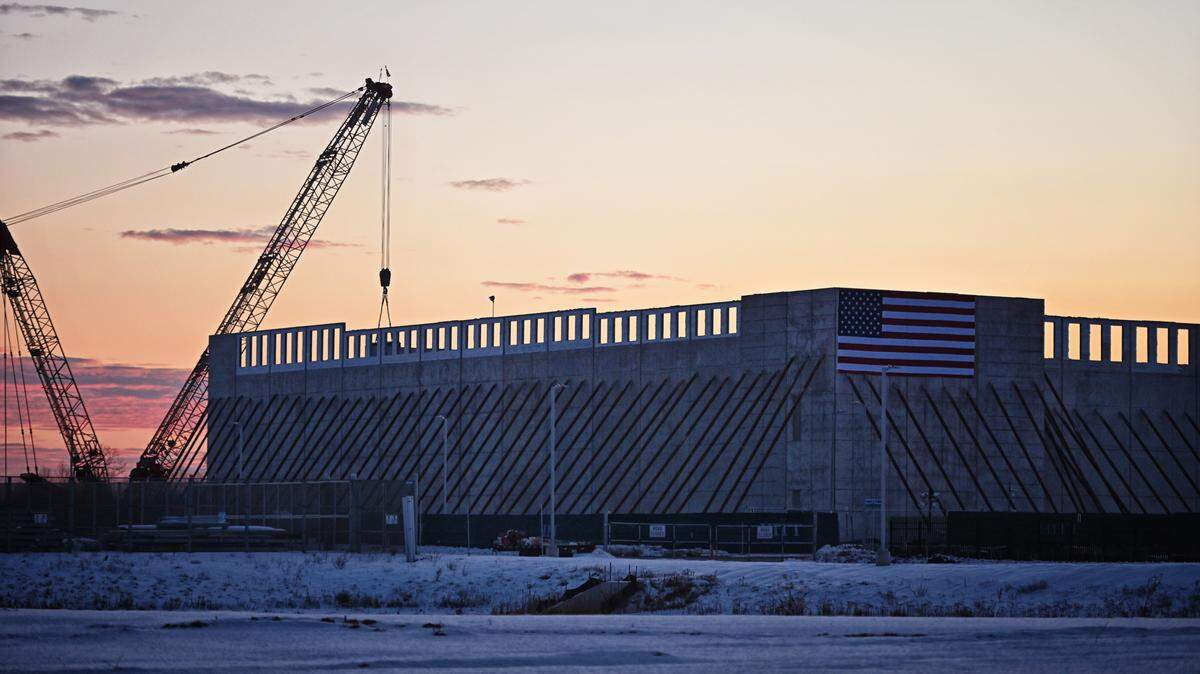
On Nov. 7, Meta announced a $600 billion investment in U.S. infrastructure, a portion of which will go directly toward the development and construction of artificial intelligence data centers, massive computing centers used to keep the A.I. industry growing.
The promise comes as Texas and Michigan have welcomed companies such as OpenAI, Meta and an “unnamed Fortune 100 company” into their states despite opposition from residents.
Quickly the question is becoming not whether these companies should build these massive computing centers, but whether the cities and states can actually handle the load the data centers carry, both in energy and water consumption.
To take a closer look, a group of researchers from Cornell University started to analyze the “energy-water-climate” impacts of A.I. data centers projected between 2024 and 2030, and their results were published Nov. 10 in the peer-reviewed journal Nature Sustainability.
“Artificial intelligence is changing every sector of society, but its rapid growth comes with a real footprint in energy, water and carbon,” study author Fengqi You said in a Nov. 10 news release from Cornell University. “Our study is built to answer a simple question: Given the magnitude of the A.I. computing boom, what environmental trajectory will it take? And more importantly, what choices steer it toward sustainability?”
Here is what they found.
What are A.I. data centers?
Data centers, specifically those used for artificial intelligence, are buildings that hold the IT (information technology) infrastructure used to train and deploy A.I. systems, according to IBM.
Artificial intelligence data centers require so much computing power that they would likely overwhelm normal data centers, IBM says, so new infrastructure has to be built to handle the demand.
They use incredibly high amounts of energy, and water is used to cool the systems and prevent them from overheating with the work, according to IBM.
The data centers are physically enormous, covering hundreds of acres, and cost billions of dollars.
Where could AI data centers be built?
“The team found that, by 2030, the current rate of A.I. growth would annually put 24 to 44 million metric tons of carbon dioxide into the atmosphere, the emissions equivalent of adding 5 to 10 million cars to U.S. roadways,” researchers said in the release.
On the local scale, cities have to worry about water.
By 2030, A.I. data centers are estimated to be using 731 to 1,125 million cubic meters of water per year, according to the study.
This is the same consumption as 6 million to 10 million American households, researchers said.
So which states will feel that pressure?
Projections included in the study show data center development, from most to least, in the states of Virginia, Oregon, Iowa, Ohio, Texas, Nebraska, Georgia, Oklahoma, Illinois, New Mexico, New York, Alabama, Tennessee, Washington, Utah, South Carolina, Arizona, North Carolina, Colorado, Nevada, California, Wyoming, Pennsylvania and Missouri.
Whether the centers will be successful depends on “location, location, location,” researchers said.
“Many current data clusters are being constructed in water-scarce regions, such as Nevada and Arizona. And in some hubs, for example northern Virginia, rapid clustering can strain local infrastructure and water resources,” according to the release. “Locating facilities in regions with lower water-stress and improving cooling efficiency could slash water demands by about 52%, and when combined with grid and operational best practices, total water reductions could reach 86%.”
The best locations, therefore, are places with enough water and energy infrastructure, particularly in renewables, that can handle the A.I. data centers.
Researchers say the perfect match is America’s “windbelt states,” or Texas, Montana, Nebraska and South Dakota.
Other places, like New York with a mix of nuclear hydropower and an increasing renewables sector, could also be a good match for future data centers, researchers said.
“There’s a lot of data, and that’s a huge effort. Sustainability information, like energy, water, climate, tend to be open and public. But industrial data is hard, because not every company is reporting everything,” You said in the release. “And of course, eventually, we still need to be looking at multiple scenarios. There’s no way that one size fits all. Every region is different for regulations. We used AI to fill some of the data gap as well.”
The research team includes You, Tianqi Xiao, Francesco Fuso Nerini, H. Damon Matthews and Massimo Tavoni.