
Second-century Roman tablet mysteriously found in New Orleans yard, report says
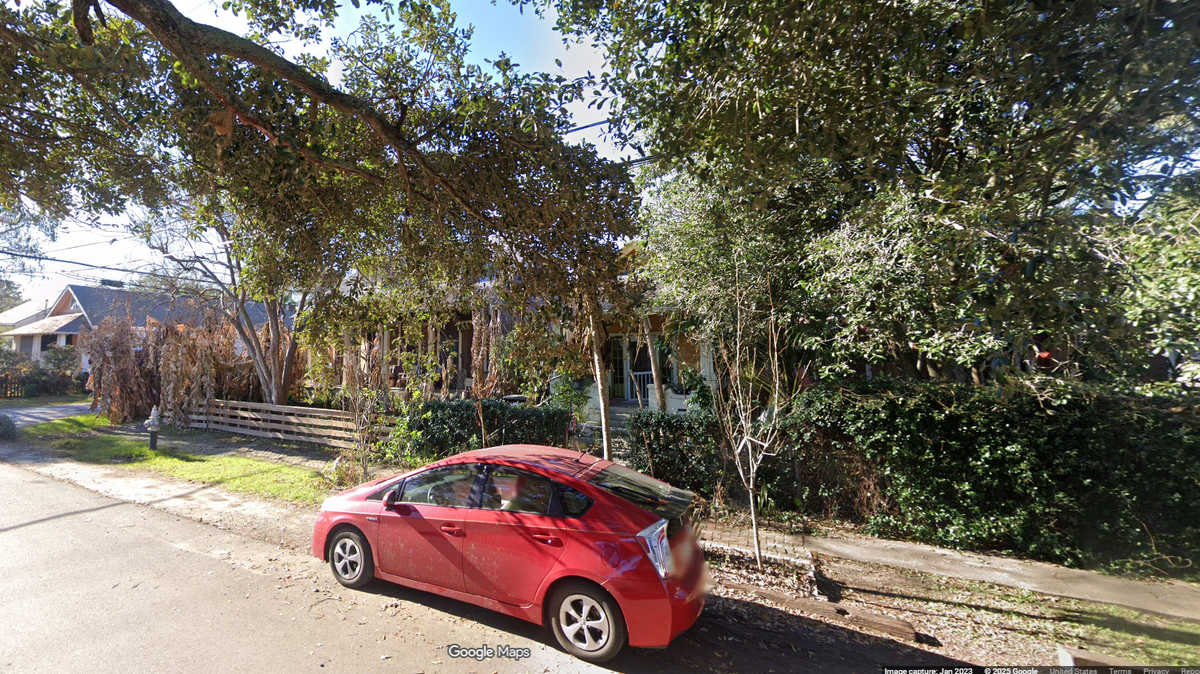
A second- century Roman headstone mysteriously turned up in the yard of a New Orleans home, and scholars are baffled as to how it got from Italy to 1106 Cambronne Street.
The property belongs to Daniella Santoro, an anthropologist at Tulane University, and she’s the one who suspected it wasn’t your average Home Depot yard ornament.
“We were cleaning up our backyard and found this marble slab in Latin. We thought pet grave, real grave?” Santoro wrote in an Oct. 6 Facebook post.
“It was so random and so impossible to find anything on the internet to help and I never would have thought it was actually real.”
Undeterred, Santoro began reaching out to experts, including her former university professors, and they all came to the same conclusion: She found an ancient artifact that belongs in a museum.
What experts say
Among the scholars Santoro consulted was University of New Orleans archaeologist D. Ryan Gray, who documented her discovery in an Oct. 6 article published by the Preservation Resource Center of New Orleans.
“Not only was this a Roman funerary inscription for a sailor named Sextus Congenius Verus, but the circa second century inscription had been reported before,” Gray wrote.
“In fact, a stone fitting that exact description was missing from the city museum in Civitavecchia, Italy, near where it had originally been found! After consulting with Tess Davis, executive director of the Antiquities Coalition, which specializes in the repatriation of stolen and looted items of cultural heritage, we concluded that the case needed to proceed through the FBI’s Art Crime Team.”
The FBI has since taken custody of the stone and is working to return it to the museum, Gray said.
Why is it in Louisiana?
The discovery counts as “an international mystery,” due the odd circumstances of the recovery, Gray said.
One theory offered by Susann S. Lusnia, associate professor of Classical Studies at Tulane University, is the stone ended up in the hands of a U.S soldier during World War II, when “the museum was almost entirely destroyed,” Gray said in his report.
“The stone could have passed into the hands of an antique dealer who sold it to a tourist in the years after the war when there was no real way to police the sale of antiquities,” he said. “Perhaps a family member or someone cleaning out the house after a sale saw it just as a convenient paving stone for a muddy yard.”
Santoro has joked on social media that a free trip to the repatriation ceremony is justified.
She is also wondering about her neighborhood as a whole: “Who knows what else is in people’s backyards!”