
Eric André can sue after cops stop him, ask about drugs at GA airport, court rules
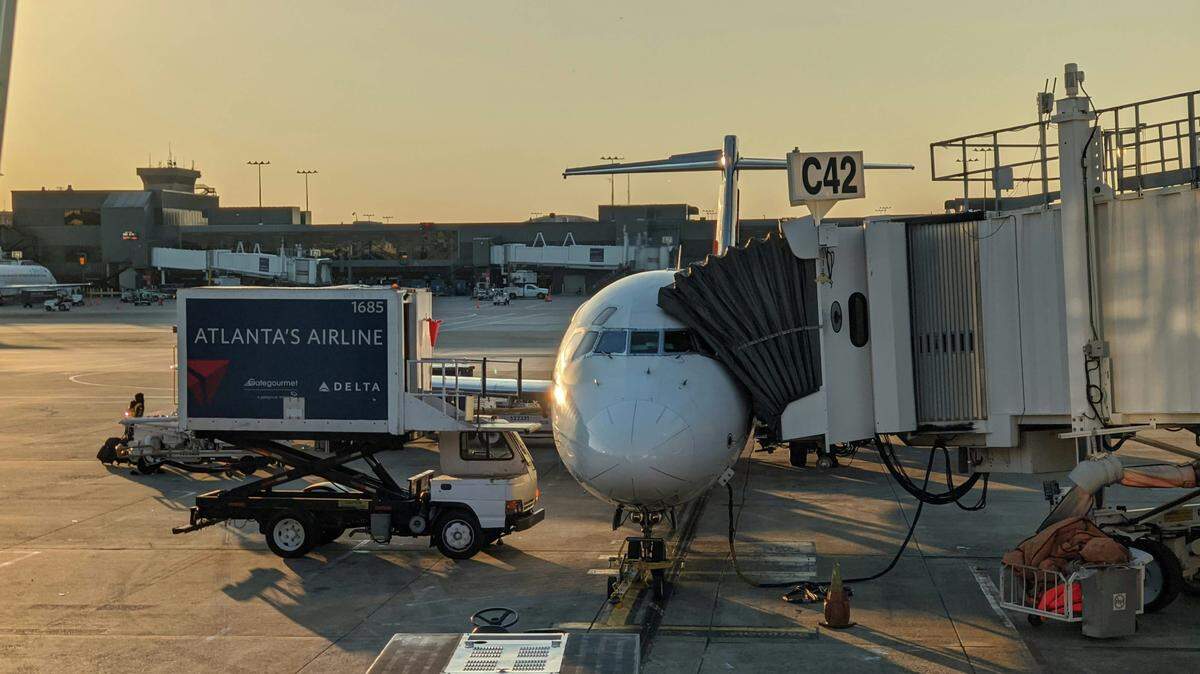
Eric André and fellow comedian Clayton English can sue police in Georgia because both men reasonably argued that officers illegally stopped, then interrogated them about drugs at an airport, according to a federal appeals court.
A federal lawsuit brought by André and English against Clayton County, Chief of Police Kevin Roberts and multiple police officers in 2022 was revived, in part, by the Eleventh Circuit Court of Appeals on Aug. 15, after it was dismissed in 2023.
An amended complaint filed in December 2022 by the comedians and actors, who are Black, says they were separately “unconstitutionally singled out because of their race and detained” at Hartsfield-Jackson Atlanta International Airport when they were boarding their flights.
“I was the only person of color on the jet bridge at the time,” André said during a 2022 news conference, according to CNN.
They were stopped as part of a Clayton County police program, which involves officers questioning certain travelers at the airport, the appeals court’s 44-page opinion says.
The interrogations can include drug-related questions, specifically whether passengers are traveling with illicit substances, according to the filing. Clayton County officers may also ask to search passengers’ luggage.
“They asked me if I was selling drugs, transporting drugs, what kind of drugs I have on me,” André said during the news conference, according to CNN. “It was clearly racial profiling.”
Now, André and English’s lawsuit is being sent back to the U.S. District Court for the Northern District of Georgia on claims of Fourth Amendment violations.
The comedians, however, can no longer pursue their racial-profiling claims, as the appeals court stood by the district court’s decision to dismiss them.
The defendants are represented by Atlanta-based attorney Arash A. Sabzevari, who did not immediately return McClatchy News’ request for comment Aug. 19. Spokespersons for Clayton County and its police department did not immediately respond to separate requests for comment.
André and English and represented by the Policing Project at NYU Law and law firms Jones Day, Krevolin & Horst LLC and Canfield Law LLC.
Eric André’s stop
Following a TV shoot in Charleston, South Carolina, André flew home to Los Angeles from the Atlanta airport in April 2021, according to the lawsuit.
André is the creator and host of “The Eric Andre Show,” which won a 2024 Emmy.
After having his boarding pass scanned, André went to get on his Delta Air Lines flight when he was approached by two police officers with badges, wearing plain clothes, on the jet bridge, according to the amended complaint.
They began interrogating André, “who was alarmed and caught off guard,” about whether he had cocaine, methamphetamine, narcotics as well as “prescription drugs that were not prescribed to him,” the complaint says.
He told the officers that he was not carrying drugs, then gave them his boarding pass and ID at their request, according to the filing.
It was clear that he had to cooperate with their questions, the complaint says.
André also felt that he could not “say no” to providing his boarding pass and ID, the filing continues.
After taking André’s information, the officers wanted to know why he was flying out of Atlanta before letting him continue down the jet bridge, according to the complaint.
“The experience was traumatizing, degrading, and humiliating,” the complaint says.
Clayton English’s stop
A few months earlier, English was similarly “targeted” before his Delta flight to Los Angeles for work, according to the lawsuit.
English, an Atlanta native, was the 2015 winner of NBC’s “Last Comic Standing” and has appeared in a variety of other shows.
In October 2020, two plainclothes officers with badges appeared and “cut off (English’s) path” inside the jet bridge, the complaint says.
Like André, English was asked whether he had illicit drugs and to “hand over his ID and boarding pass,” according to the filing.
He was further questioned about what he did for work, why he was visiting Los Angeles and how long he was going to stay there, the complaint says.
“Mr. English did not understand why he was being singled out for this invasive and humiliating experience, or why the officers seemed so concerned that he might possess illegal drugs,” his attorneys wrote in the filing.
Then one officer started searching his luggage, according to the complaint.
They ultimately told English, who felt degraded over the stop and search, that he was “free to leave,” the complaint says.
The stops of English and André were a part of Clayton County police’s “Airport Interdiction Unit” and were not random, according to an Aug. 18 news release shared by the Policing Project at NYU School of Law.
In reinstating their lawsuit, the appeals court ruled Andre and English “have plausibly alleged that the drug interdiction program itself calls for repeated violations of the Fourth Amendment.”
The men were two of 402 people stopped in an eight-month time frame, according to their attorneys, who said officers disproportionately interrogated them and other Black travelers.
Their legal counsel, citing a review of data for that span of time, said 56% of people stopped were Black.
Policing Project Faculty Director Barry Friedman said in statement that “in the United States, you may not be seized or have your belongings searched unless you truly voluntarily consent or the government has at least reasonable suspicion to justify the seizure.”
“We look forward to returning to the trial court to learn even more about the Clayton County Police Department’s unconstitutional jet bridge stop program,” Friedman said.
.jpg)