22,000-year-old tracks — possibly from ‘oldest known’ vehicle — found in national park
The invention of the wheel more than 5,000 years ago changed the game for transportation around the world.
But for tens of thousands of years before the circular structure came into fruition, ancient people had to get a bit more creative to move goods — and themselves — from place to place.
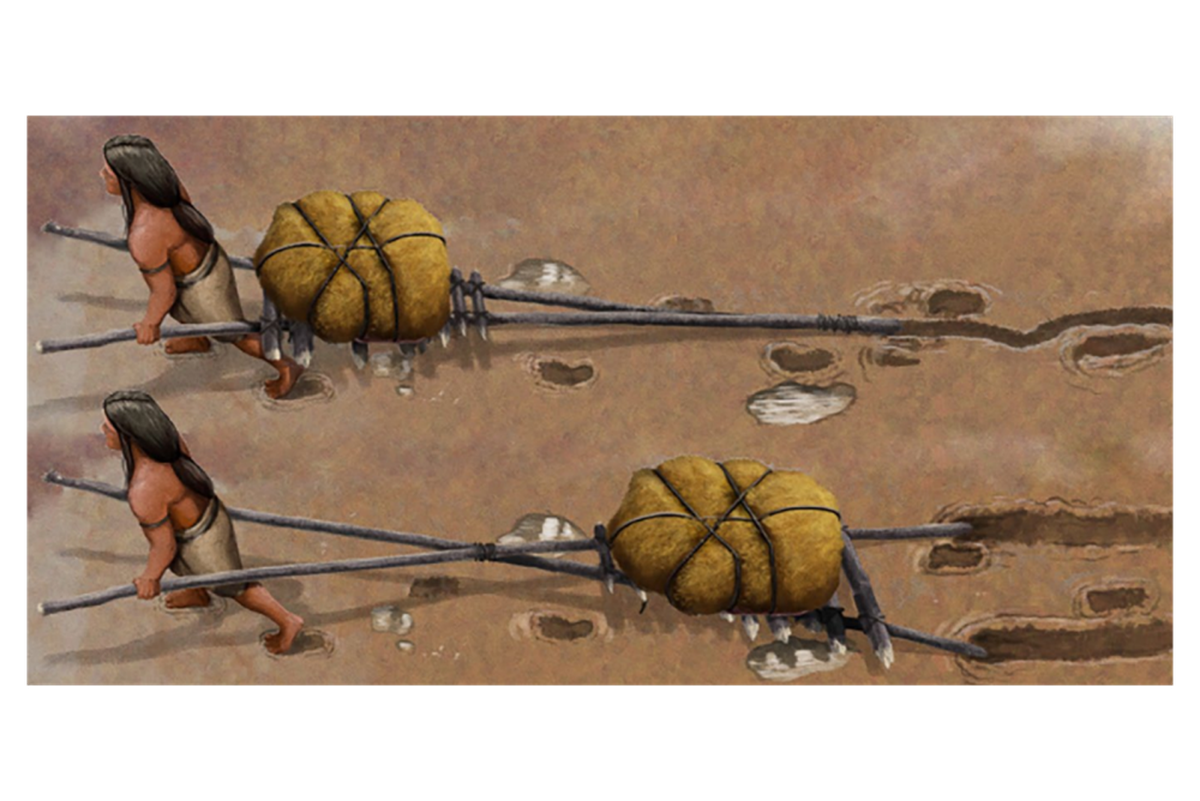
They used a “vehicle” called a travois, researchers said in a Feb. 20 study published in the peer-reviewed journal Quaternary Science Advances.
“We use the term ‘travois’ broadly to include any form of vehicle fashioned from a single wooden pole with a load, as well as more complex vehicles consisting of two or more crossed poles,” according to the study. “Ancient travois were most likely made of wood, so are not usually preserved in the archaeological record.”
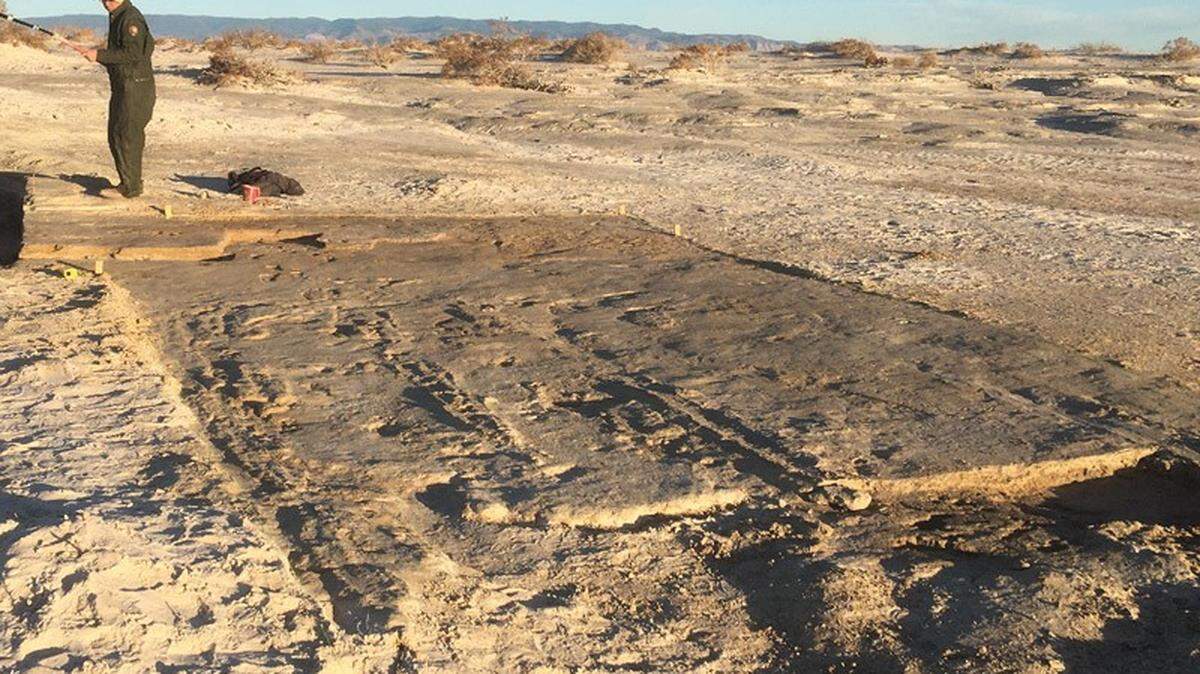
Now, researchers believe fossilized tracks discovered in White Sands National Park, New Mexico, belong to one of these cart-like constructions, and the marks could be from as far back as 22,000 years ago.
Images of the tracks and a reconstruction were shared by Bournemouth University on Feb. 24.
In the past few years, fossilized human footprints have been found within the park in the eastern Alkali Flat, according to the study. The exact location of the tracks are protected under U.S. federal law protecting archaeological and palaeontological sites.
The exact age of the prints is a topic of debate, study authors Matthew Robert Bennett and Sally Christine Reynolds, from Bournemouth University, wrote in The Conversation on Feb. 24, but they are estimated to be more than 20,000 years old.
“The footprints tell stories, written in mud, of how people lived, hunted and survived in this land. Footprints connect people to the past in a way that a stone tool or archaeological artifact never can,” Bennett and Reynolds wrote. “Traditional archaeology is based on the discovery of stone tools. Most people today have never made a stone tool but almost all of us will have left a footprint at some time, even if it is only on the floor of the bathroom.”
The footprints are considered among the “oldest known human footprints in the Americas,” according to the study authors, and accompanying some of the prints are long, straight lines.
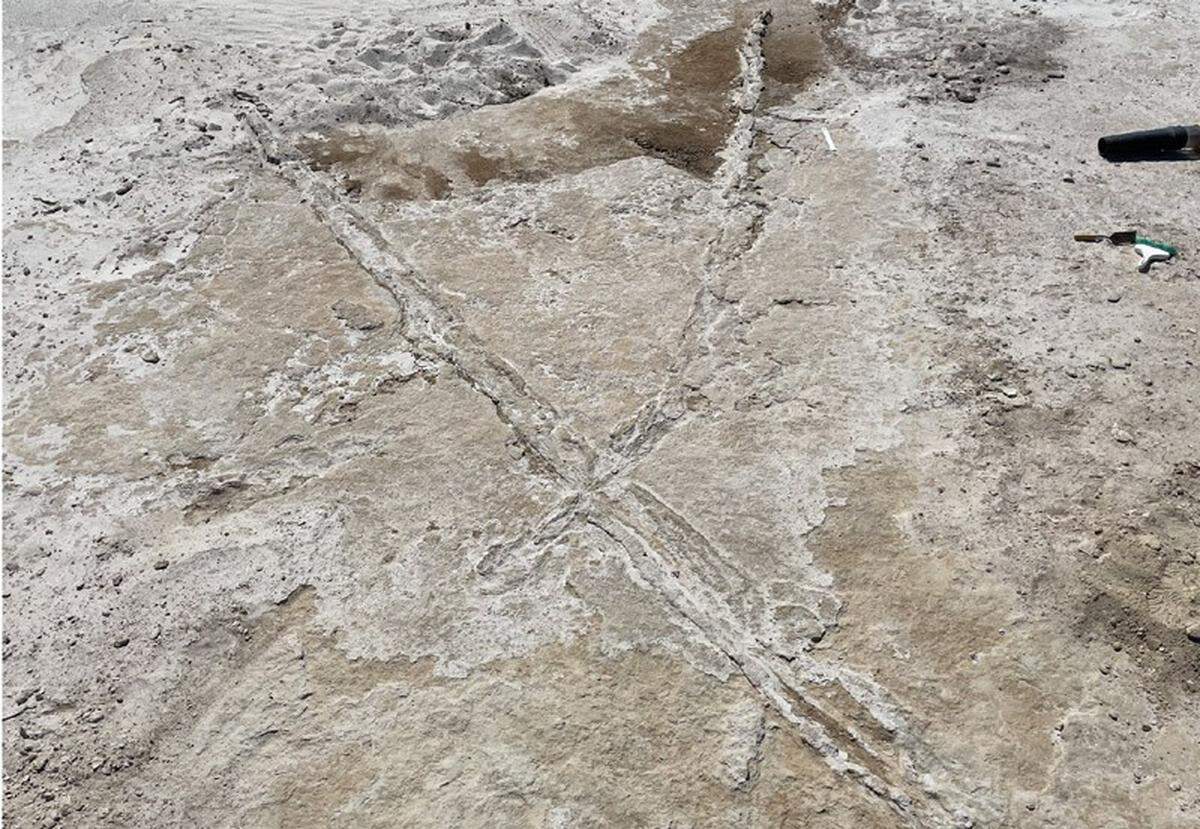
“There are three basic morphological types of features, namely single, often deeply cut, grooves that may bifurcate or jump between parallel lines,” according to the study. “Secondly, there are broader grooves that form runnels with either single or multiple lines. Finally, there is a third type, in which two parallel grooves move across the surface.”
The marks found in the Alkali Flats were likely close to a previous shoreline, researchers said, or even out on the seafloor. There are no animal tracks with the grooves and footprints, suggesting they were created with human agency, rather than a structure being pulled by an animal.
Some of the simpler grooves could be explained by someone dragging a piece of firewood or spears and tent poles, but the marks that include parallel lines were most likely created by an “improvised travois dragged by people,” according to the study.
“These drag-marks are preserved in dried mud that was buried by sediment and revealed by a combination of erosion and excavation,” Bennett and Reynolds wrote in The Conversation. “The drag-marks extend for dozens of meters before disappearing beneath overlying sediment. They clip barefoot human tracks along their length, suggesting the user dragged the travois over their own footprints as they went along.”
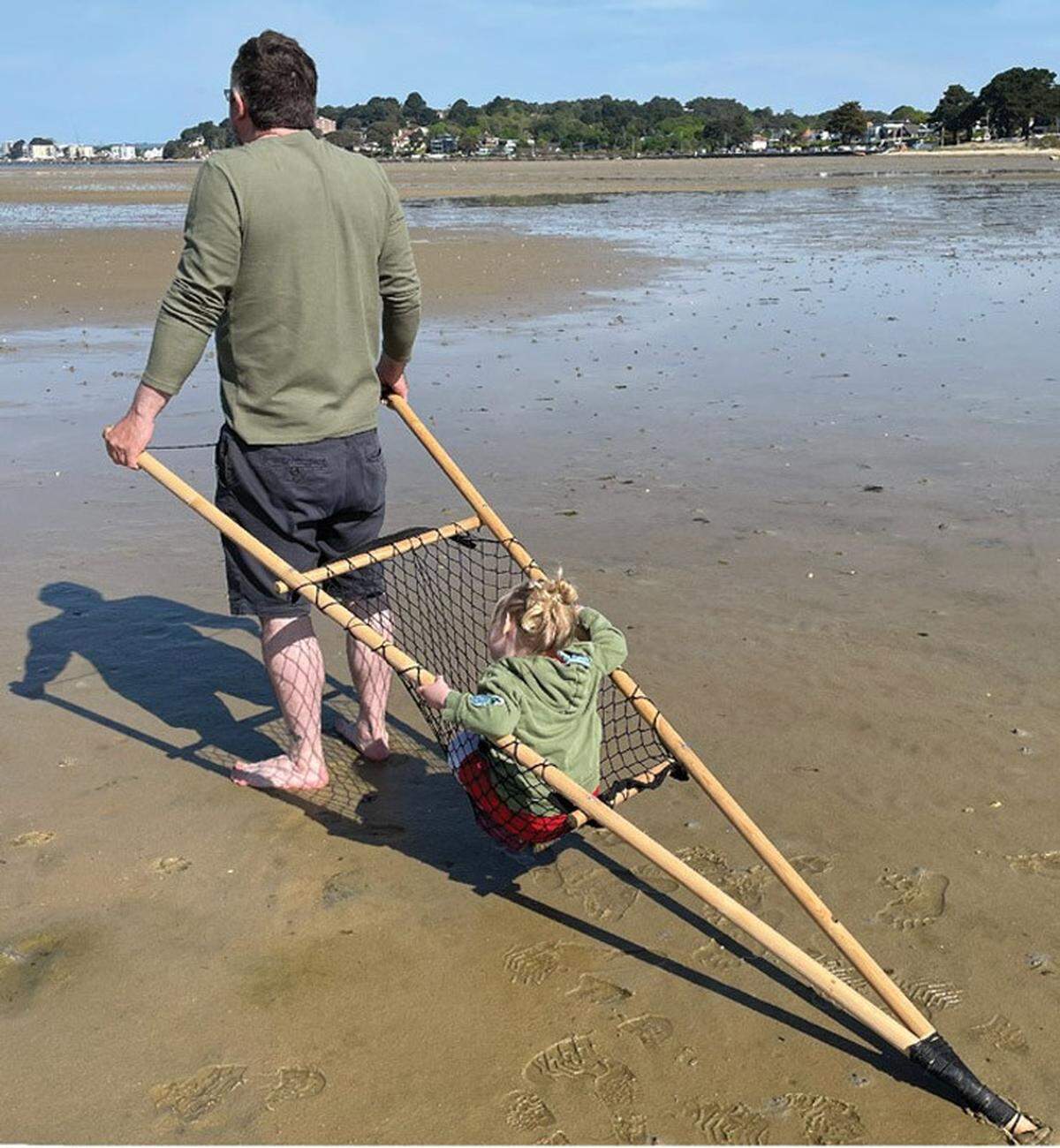
To confirm their theory, the researchers conducted travois tests in the mud flats of Dorset, England, and along the coast of Maine, and varying combinations of poles fashioned into hand-pulled travois gave the researchers the same marks as those represented in the New Mexico fossils, the study authors said.
The footprints are of varying size along the tracks, researchers said, meaning an adult and children were moving together while the adult pulled the travois.
If you were to imagine the scene, it would be much like a mom taking her kids to the grocery store, pushing a cart with one hand and holding the hand of her child with the other, Bennett and Reynolds said.
“We believe the footprints and drag-marks tell a story of the movement of resources at the edge of this former wetland,” the study authors wrote. “Adults pulled the simple, probably improvised travois, while a group of children tagged along to the side and behind.”
Assuming the drag marks are as old as the researchers estimate, it would make them the “oldest known evidence of vehicle transport,” found in the Americas, according to the study.
White Sands National Park is is south-central New Mexico, about a 100-mile drive north from El Paso, Texas.
The research team includes Bennett, Reynolds, Thomas M. Urban, David F. Bustos, Edward A. Jolie, Hannah C. Strehlau, Daniel Odess, Kathleen B. Springer and Jeffrey S. Pigati.
This story was originally published February 27, 2025 at 10:58 AM with the headline "22,000-year-old tracks — possibly from ‘oldest known’ vehicle — found in national park."