
Christmas Eve NASA mission to the sun will make history — if the probe doesn’t melt
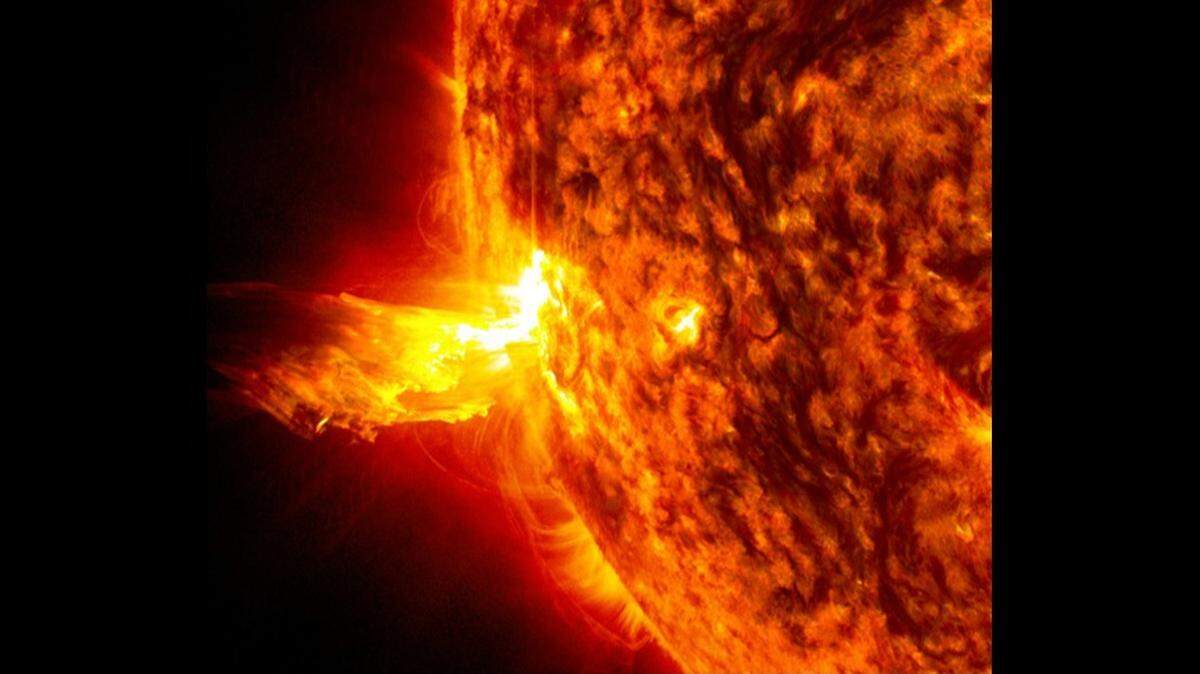
A guiding star is key to the Nativity story, so there’s symbolism to be found in a daring Christmas Eve mission to give humans their closest-ever encounter with the sun.
The big question is whether the NASA probe will endure the sun’s intense heat, or burn up like a moth in flames.
The Parker Solar Probe will stay a seemingly safe 3.8 million miles above the sun’s surface, but that’s still dangerously hot territory, NASA says.
The surface is 10,000 degrees, but for reasons unknown, the corona, or the sun’s outermost atmospheric layer, gets hotter the farther out you go, reaching 3.5 million degrees, scientists say.
NASA expects the probe’s shield to reach 1,800 degrees at its closest point to the sun. However, the shield should keep the guts of the probe stable at a relatively cool 85 degrees, experts say.
Another historic factor is the probe’s speed. It will be traveling about 430,000 mph, the “fastest any human-made object ever has traveled,” NASA says.
“That’s fast enough to get from Philadelphia to Washington, D.C., in one second,” NASA says.
The probe is expected to send a message confirming completion of its mission on Dec. 27.
The Parker Solar Probe was launched in 2018 from Cape Canaveral Air Force Station in Florida and has already made history as the first spacecraft to enter the sun’s corona in 2021, NASA says.
“With every orbit bringing it closer, the probe faces brutal heat and radiation to provide humanity with unprecedented observations, visiting the only star we can study up close,” NASA says.
The 1,510-pound probe’s mission is to help scientists unravel a series of mysteries, including why the corona is much hotter than the sun’s surface, how solar wind accelerates and how high-powered solar particles get their energy.
“Data from Parker will be key to understanding and, perhaps, forecasting space weather,” NASA says.
“Space weather can change the orbits of satellites, shorten their lifetimes, or interfere with onboard electronics.”
This story was originally published December 18, 2024 at 8:56 AM.