
Mysterious bone — with black teeth — found during Virginia seafloor survey, NOAA says
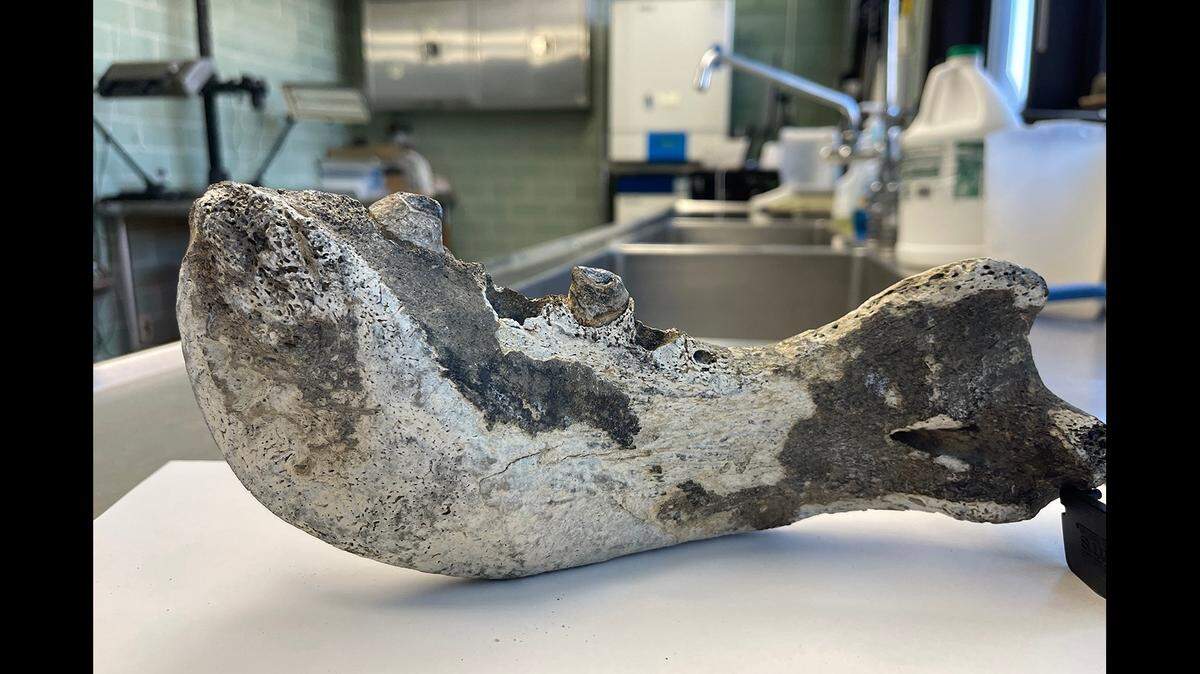
A routine clam survey took an unexpected turn off the Virginia coast when a mysterious bone with big black teeth was pulled from a depth of 177 feet, NOAA Fisheries reports.
The “once-in-a-lifetime” find was made about 37 nautical miles off Chincoteague Island, during a Surfclam and Ocean Quahog Survey, NOAA Fisheries told McClatchy News in an email.
The bone is 11 inches long, 3 inches tall and its two remaining teeth are more than half an inch long, even with the tips missing, according to Jonathan Duquette, chief scientist for the survey.
“I honestly had no idea as to what this was. The tooth count, the size of the teeth, and just the overall density of the bone made me feel that this was something that needed a further investigation,” Duquette said in an Oct. 30 news release.
“I kept looking online for Virginia fossils — to see if we could draw some correlation. The desire to identify this thing is what compelled us to keep it. So, I placed it at the watch chief station and would stare at it, almost daily. I knew we had to figure this mystery out.”
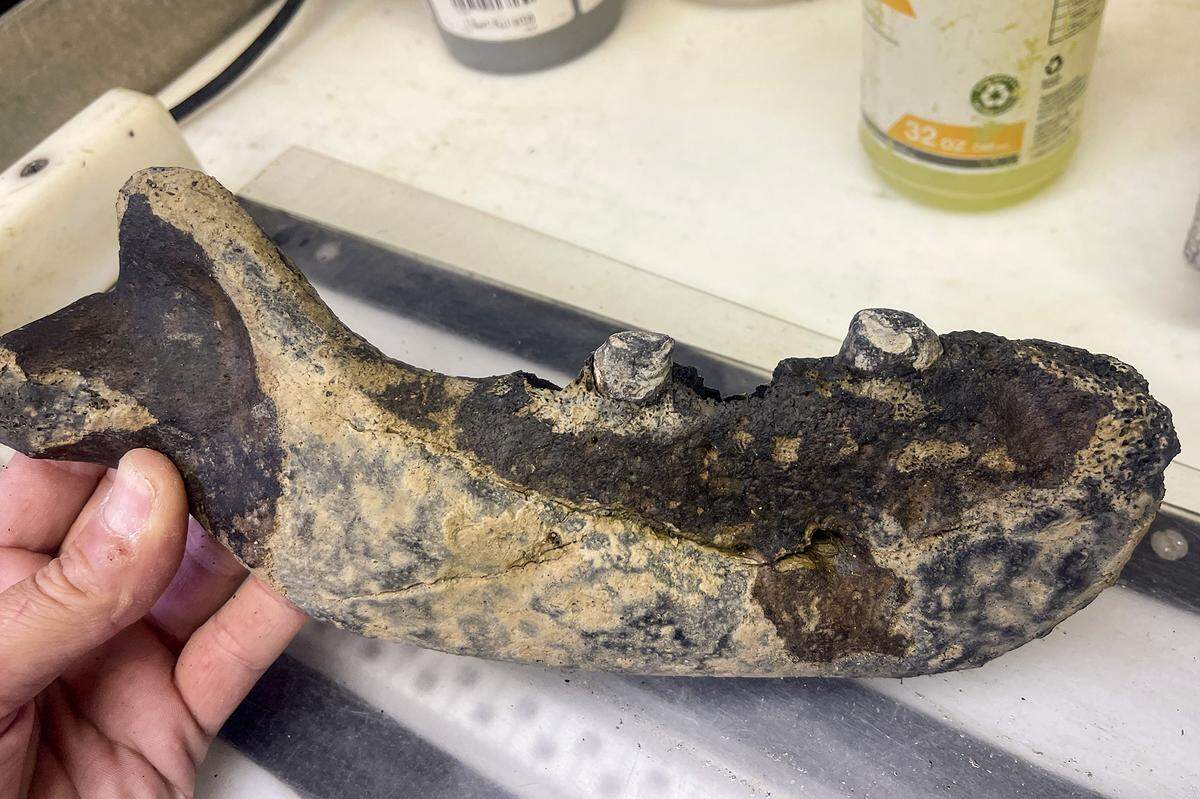
The jawbone clearly came from something big, but it didn’t match any known species in the region. It was too big for a seal and too small and oddly shaped for a whale, NOAA Fisheries noted.
Duquette sought the expertise of Dr. Nick Pyenson, an expert in fossil marine mammals and head of the Smithsonian’s National Museum of Natural History’s Department of Paleobiology.
It took just seconds for Pyenson to recognize the bone was from an Ice Age creature, officials said. Specifically, “the right jawbone of a likely extinct walrus.”
“At the Smithsonian, we have the world’s best collection of Atlantic Ice Age walrus bones. Most of our collection was collected under similar circumstances — from dredges or trawls,” Pyenson said in the release.
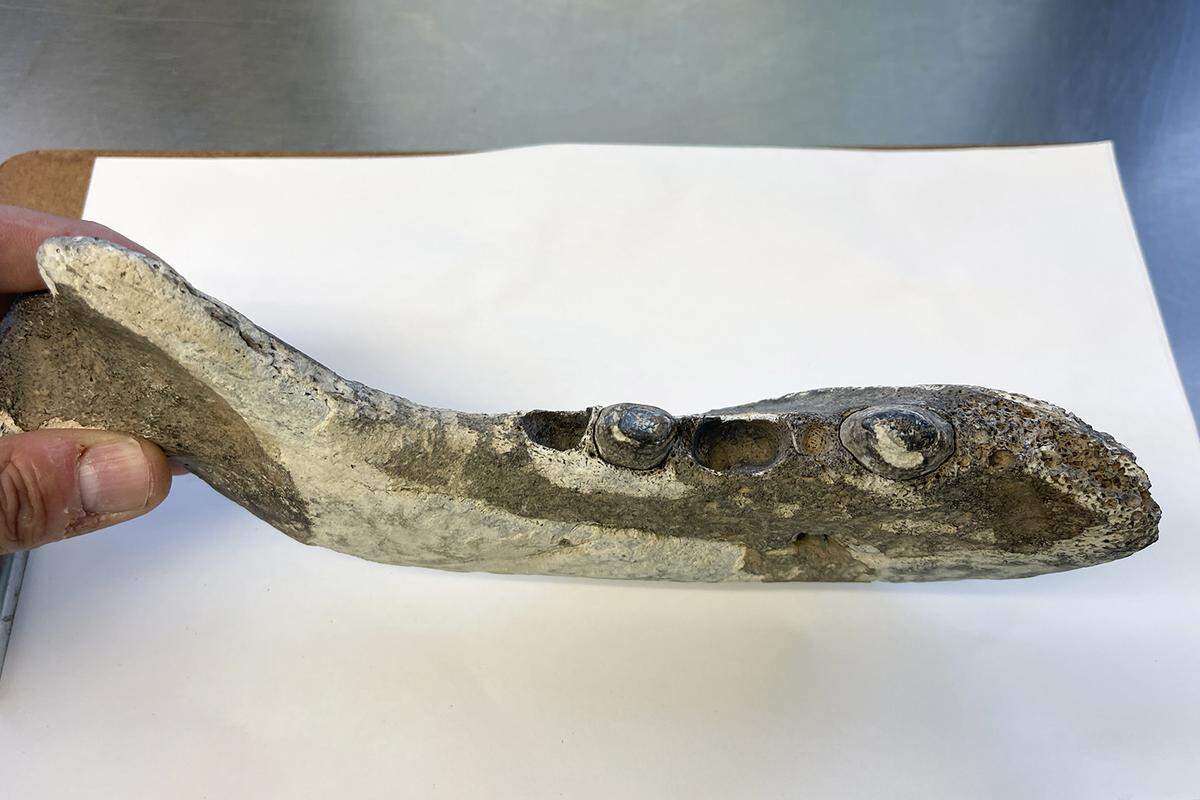
However, the one found by Duquette during the early-August survey was unique. Those two teeth might allow scientists to “extract ancient DNA” from the jawbone, experts say. (NOAA Fisheries has donated the bone to the Smithsonian.)
“If we’re fortunate, we can begin the work of placing this survey specimen into the genealogy of walruses, and how walruses have changed over time,” Pyenson said.
The last Ice Age “started about 2.6 million years ago and lasted until roughly 11,000 years ago,” NOAA reports.
Modern walruses are largely found around the Arctic Circle, but Ice Age walruses had a much broader geographic range that extended as far south as Florida, experts say.
This story was originally published November 5, 2024 at 7:51 AM.