
Mysterious anchor snagged off Maine ignites talk of notorious 1836 circus boat fire
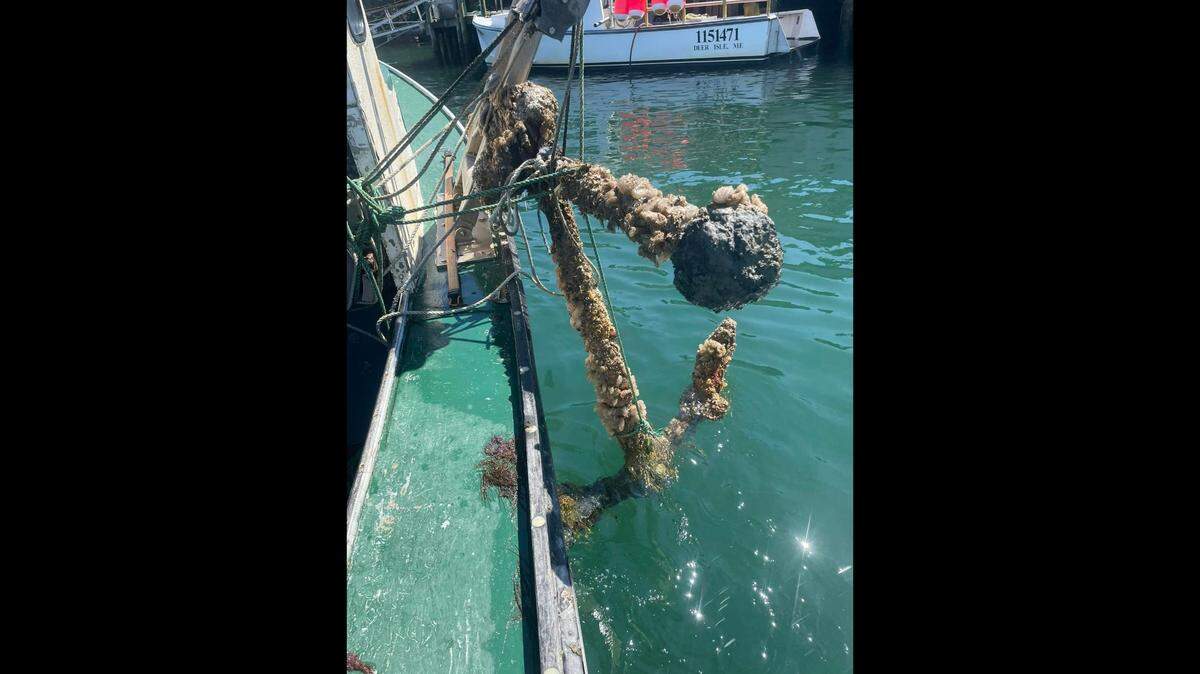
A man pulling lobster traps from Maine’s Penobscot Bay snagged a massive anchor, and the mystery of its origin has some citing the notorious 1836 wreck of the “circus steamboat” Royal Tar.
Lobsterman Mike Billings stubbornly dragged the 6-foot-long anchor to shore alongside his boat, hauled it out of the water with a forklift and took it home in the back of his truck.
In the days since, he has learned it may be 150 years old, and could be from the fabled Royal Tar, which sank in dramatic fashion: burning out of control and surrounded by drowning passengers and exotic circus animals.
Definitive proof of a link has so far eluded Billings, but he refuses to give up trying to uncover the anchor’s story.
“It is a beast of an anchor ... very thick and heavy for its size. I would think this could be from (the Royal Tar). Maybe it even had two of these,” Billings told McClatchy News.
”That’s the mystery we’re trying to solve. Or at least figure out what ship this anchor did come from. I’ve been told by a couple of our oldest fishermen it sank right there.”
Others say the Royal Tar sank farther south, which only adds to the mystery.
.jpeg "anchor_fitted (1).jpeg")
What happens next
The anchor was found off Farrel Island south of Stonington, an area where “ships used to load up with granite from Crotch Island,” Billings said. Stonington is about a 60-mile drive south from Bangor.
“Last trap of the day I had a toggle gone. ... I hauled it and something heavy was on my line,” Billings wrote in a July 8 Facebook post.
“Luckily things started to come up off bottom, and then I see this massive anchor was caught in my line. I tied it off my hauling bracket and came in.. It had my 37 (foot) boat leaning to starboard side.”
The anchor is “in pretty good shape” and is now being soaked with fluids to prevent rapid oxidation and rusting, he said.
His plan is to donate it to the community of Stonington for incorporation into a display on the region’s fishing heritage.
Linda Nelson, a community development director for Stonington, believes the anchor is a way to illustrate the town’s history, no matter its specific origin, station WABI reports.
“Part of storytelling is myth, right? I mean, the whole story of the Royal Tar involves a lot of myth-making,” she told the station. “Stonington’s shared sense of identity is around its waterfront, its working waterfront. And so an anchor is a perfect representation of that.”
There are conflicting details on where the Royal Tar vanished, with some historians saying it was closer to the nearby island of Vinalhaven.
“A tailwind would send them exactly where I found this,” Billings said. “They would have known Stonington was their best hope for survival in a storm like that. That’s my theory but it’s a strong one because I’ve heard the old timers talk about this a couple times over the years.”
The Royal Tar
The sidewheel steamer Royal Tar caught fire in Penoscot Bay on Oct. 25, 1836, and among its passengers was a menagerie of circus animals, according to the book “The Tragedy of the Royal Tar.”
“Plagued by gale-force winds and rough seas, the usual overnight trip from Saint John, New Brunswick, stretched out to four days and, on the fourth day, disaster struck off the island of Vinalhaven,” author Mark Warner wrote. “Thirty-two people and all of the circus animals perished in the tragedy.”
The ship carried a crew of 21 and 70 passengers, and was so overloaded that crewmen removed two life boats to make room for cages, the New England Historical Society reported. The fire was found “under the middle deck” and it sank the ship in four hours, historians said.
“The terrified passengers began to jump overboard amid the screams of caged animals. Several people clung to a makeshift wooden raft in the water. According to lore, the panicked elephant jumped overboard onto the raft, killing the people who clung to it,” the society said.
“Another legend has it that a man filled his pockets with gold from his luggage, jumped overboard and drowned, dragged underwater by the weight of the metal.”
The dead included four men, nine women and 10 children, the society said.
Why it matters
Billings has been a lobsterman his entire life, and has been setting lobster traps for years at the same spot where he found the anchor.
It was found only by odd coincidence, he says. Another vessel snagged his buoy and dragged it across the anchor. The rope became perfectly hitched to it, just beneath the anchor crosspiece, Billings said.
He said he has been offered cash for the anchor, but maintains it needs to be part of the community.
“When I pulled this up, it made me think of the rich history of this coast and the people who built these coastal communities. Fishermen, boatbuilders, stonecutters, carpenters,” he said.
“I’ve started working with the town and they are happy to put this on display at the Stonecutters Memorial in downtown by the town landing. ... I want this the be given to everyone and hopefully it sparks some inspiration for people to dig into the mystery of it.”
This story was originally published July 24, 2024 at 7:47 AM.