
Haunting forensic tests reveal home near Virginia battlefield is stained with blood
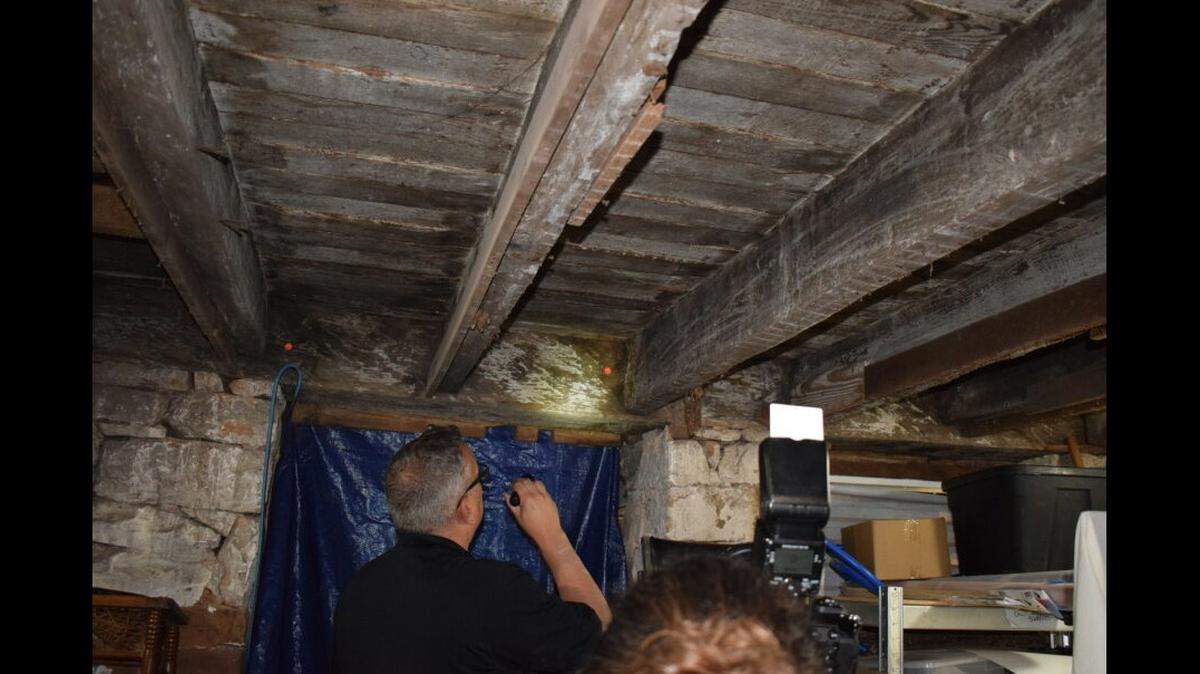
Mysterious dark spots found throughout a 192-year-old home in Northern Virginia are actually blood stains, a police department forensics team has discovered.
Lots and lots of blood stains.
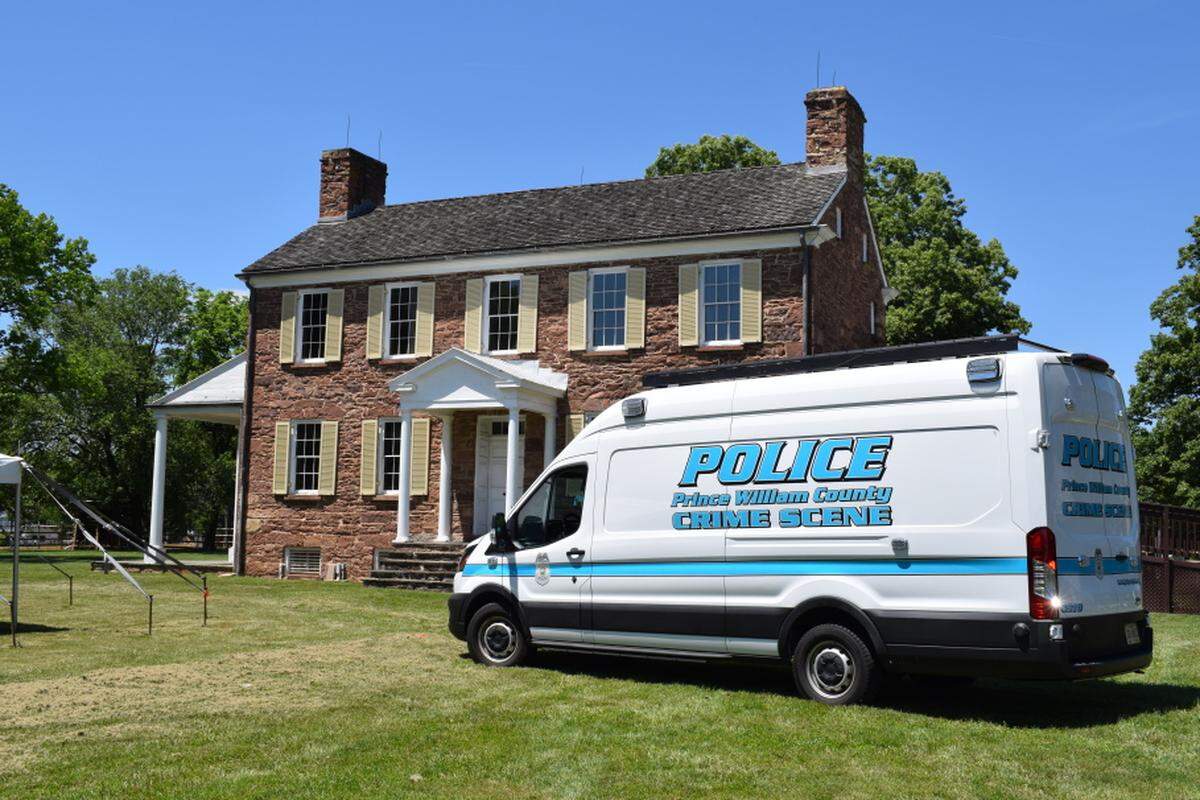
The unusual tests used the latest forensic technology to confirm something historians long suspected about the Ben Lomond Historic Site.
For 35 days in 1861, it became a house of horrors while serving as a field hospital after the Battle of First Manassas.
Among the unusual areas that tested positive for blood was the roof of the cellar, “where it apparently dripped through the floors and went undisturbed for 163 years,” according to Sgt. Jeremy Johnson of the Prince William County Police Department’s Forensic Services Section.
The results are giving historians a surprisingly intimate look into what happened at the home.
“Sometimes as historians, you fall into a trap when talking about people from 160 years ago. It’s hard to remember that they were humans like we are,” Ben Lomond Historic Site Manager Kevin Pawlak told McClatchy News.
“So seeing those blood stains reflected in (tests) puts those people in a new light. You are seeing the physical blood they left behind. For some of the soldiers, that was the last place they were on Earth. It humanizes the people who were suffering in that hospital.”
But there is a key detail the tests didn’t confirm, he said, and that only adds to the enduring mystery surrounding the house.
Is the blood human?
Despite all the advances made in forensic science, the tests could not confirm the blood was human.
“There was not enough of an undisturbed sample to collect due to heavy foot traffic or the blood was absorbed by the dry wood over the last 160 years, which could cause an inconclusive result,” Johnson said.
It was his idea to do the tests after he learned historians “suspected historical blood on several floorboards but had no way to confirm it was actual blood.”
“As a supervisor in the Forensic Unit, I thought it would be an interesting idea to test out historical blood,” Johnson said. “Many of my crime scene investigators are history buffs and immediately loved the idea!”
The technology, provided by Bluestar Forensic, “allows the detection of blood traces with the naked eye up to dilutions of 1 / 100 000.”
A forensics team spent about half a day at the home on May 21, and tests focused on areas where original flooring remained exposed.
“The best results came from between boards and hard to reach places,” Johnson said. “Thanks to the new technology ... we were able to test large areas at one time, drastically cutting down our testing time.”
Pawlak admits being disappointed the tests could not confirm the blood was human, but he said no other conclusion makes sense. The spots are plentiful and found at every level of the home.
“As historians, you follow the evidence. We don’t have evidence of other activity in the house that would lead to such an abundance of blood stains on floor boards — beyond its use as a Civil War hospital,” Pawlak said.
“Could it be animal blood? Could be. But we have no evidence of animals being slaughtered in the house. It could also be that someone fell and cut their hand, but the amount of blood tells me it was likely from the hospital,” he said. “That’s the only event we know of that would create so many blood stains on the floor boards.”
The exact number of soldiers treated in the home is not known, but it could have been as many as 100 suffering from every imaginable type of battle injury.
That means surgeries and amputations were likely.
Battle of First Manassas
The Battle of First Manassas was a defeat for the Union Army in July 1861, a notorious occasion where carriages of congressmen and civilians came out to watch, the National Park Service reports.
When things didn’t turn out as expected, those gawkers flooded roads needed by Union troops making their retreat, historians say.
“Immediately after the Battle of First Manassas the house was converted into a Confederate hospital. ... Wounded soldiers were crammed into the house with many more covering the grounds,” according to the Prince William County Office of Historic Preservation.
“Confederate troops camped near the house in the winter, requiring the house to be re-established as a hospital treating diseased men. After the Confederates evacuated the area in 1862, Federal soldiers ransacked the house, destroyed furniture, and littered the interior with graffiti.”
Like the blood stains, that graffiti has been preserved as part of the home’s volatile history.
An attempt was made nearly 20 years ago to test stains in the home for traces of blood. The new technology allowed previous information to be validated and, in some cases, invalidated, Pawlak said.
In this most recent round of tests, blood stains were found on the second floor, he said. Tests also confirmed some suspicious spots were not blood.
“We came away with more questions than answers, which is not atypical for historical research. But we can now tell visitors with certainly which spots are blood,“ he said.
“We don’t have historical records for how the (family) picked up the pieces of their lives after a hospital reverted back to a home. But there was no way to erase it.”
The home’s purpose changed drastically in the decades that followed, including years when the property served as a dairy farm and horse breeding estate, records show.
It was gifted to Prince William County in 1981 and opened to the public as a museum in 2011. The farm complex includes a structure later identified as the original quarters used by enslaved people, who worked the land for about 100 years, historians say.
This story was originally published May 28, 2024 at 8:15 AM.