
‘Lost cities.’ New hydrothermal vent towers found billowing in Mid-Atlantic, team says
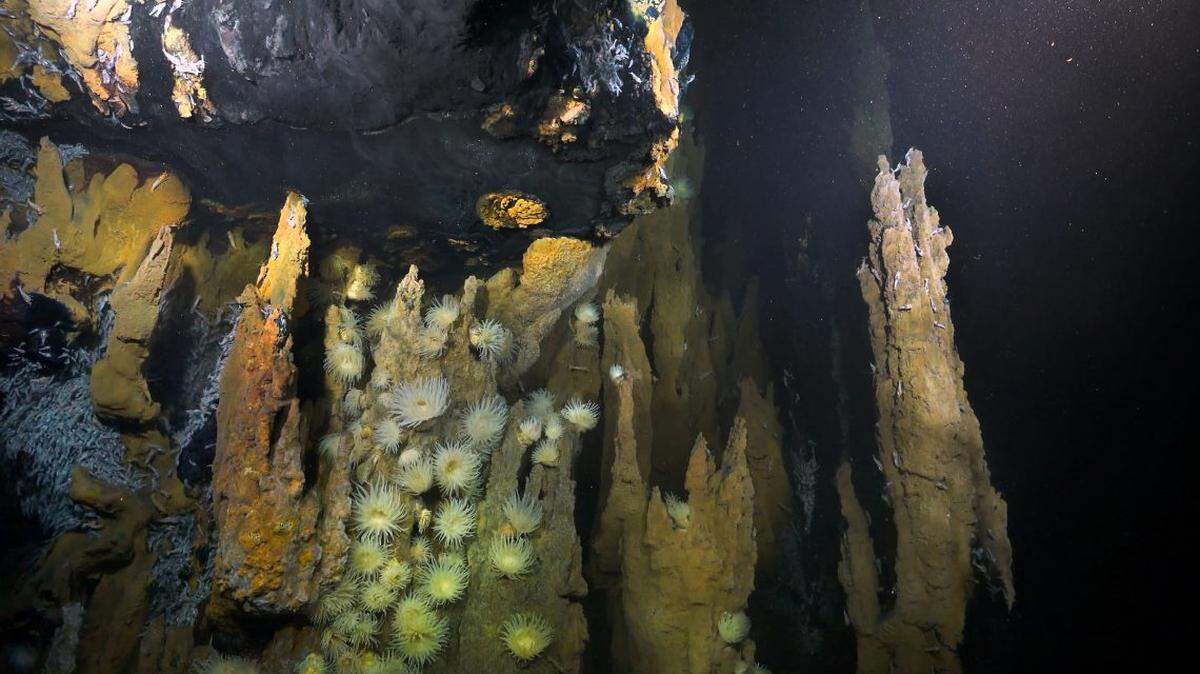
Deep sea explorers have discovered multiple fields in the Atlantic Ocean where super-heated water billows like smoke from the seafloor over 2,200 miles east of Miami.
Called “hydrothermal lost cities,” such fields host “ghostly towers made of limestone” that serve as chimneys for the mineral-rich water.
The three new hydrothermal vent fields were found as scientists were mapping an area approximately 65 square miles along the volatile Mid-Atlantic Ridge, according to the Schmidt Ocean Institute.
Video recorded by a remotely controlled vehicle shows the fields resemble seafloor wildfires and were surrounded with strange creatures attracted to the warmth, including “massive swarms of vent shrimp.”
“It sounds like something out of a fairy tale: scenes of fantastical creatures — some floating, others firmly entwined within towering mineral chimneys that billow underwater ‘smoke,’” the institute wrote on YouTube.
“These are the very real ecosystems around the hydrothermal vents we were lucky enough to explore. ... Astounding geological structures and remarkable biological diversity.”
The 434-mile-long Mid-Atlantic Ridge is the world’s longest mountain range and appears like a giant wall down the middle of the Atlantic.
The newly found vent fields were at spots that ranged from 1.2 miles to 2.4 miles deep, the institute reports.
While the vents appear to pump out smoke, the discharge is seawater that has been “chemically altered through water-rock interactions at high temperatures,” the institute says. Temperatures at the sites can top 700 degrees Fahrenheit, NOAA reports.
Explorations of the Mid-Atlantic Ridge are being staged for a growing number of reasons, including its potential for deep-sea mining and a belief that vent fields hold secrets to the “building blocks of life,” the institute reports.
“While the exact origins of life on Earth are unknown, the process necessitates two things: organic molecules and a stable environment to preserve them. The chemical process that creates Lost City-style vents meets both requirements,” the institute reports.
“Studying the microbes that utilize the hydrogen and methane at these vents may reveal clues about the origin of life on our planet. It may also provide insight into where to look for life on other ocean worlds in our solar system.”
The expedition included researchers from 11 institutions in the United States, Canada and France, including NOAA Ocean Exploration, Woods Hole Oceanographic Institution, Monterey Bay Aquarium Research Institute and Pacific Marine Environmental Laboratory.