Levi’s newest ‘diverse’ model doesn’t exist in the flesh — and critics aren’t happy
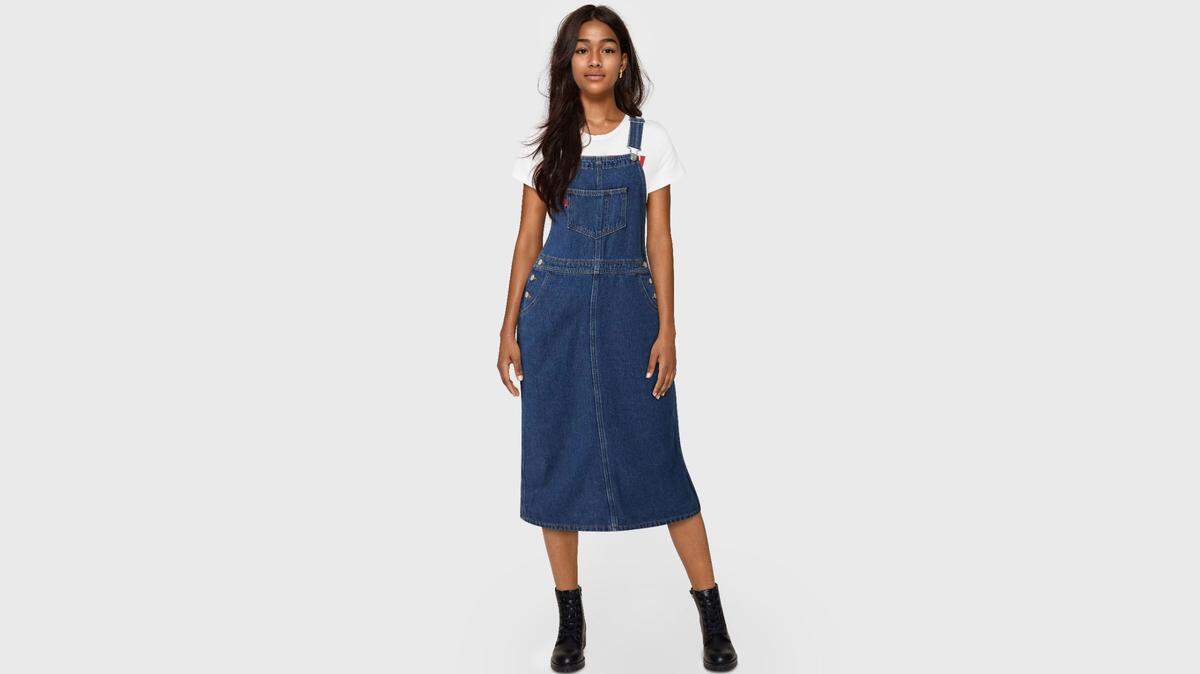
You may not find anything strange with Levi’s newest female model, dressed in a simple white tee and iconic branded overalls.
But in reality, she doesn’t exist at all — the model is a product of an artificial intelligence program created by Lalaland.ai, which is collaborating with the top denim dynasty in the world.
Levi’s described Lalaland.ai as a digital fashion studio that builds custom models from scratch. Models could be male, female, Black, white, Asian or have any other custom characteristics.
”We are planning tests of this technology using AI-generated models to supplement human models, increasing the number and diversity of our models for our products in a sustainable way,” Levi’s said in a news release.
In an effort to diversify their modeling pool using AI, Levi’s ended up in the hot seat when it came to Twitter critics, who asked the company why it wouldn’t just pay real minorities to model, instead of funding AI technology.
“We hope to see more human models who are authentic and diverse,” Lotus Solutions, a company that centers itself around diversity in the workplace, said on Twitter.
“It’s super easy to create actual equity and diversity by hiring real humans across a spectrum of ages, hair types, skin tones, body shapes, disabilities gender expressions etc,” Multimedia manager Brigette Supernova added.
They were two of the dozens of questions and biting remarks aimed at Levi’s for the announced partnership — but Levi’s responded that it had no intention of reeling back their real-life models.
“Our recent announcement of a partnership with Lalaland.ai did not properly represent certain aspects of the program. For that, we take responsibility,” Levi’s said in a March 28 response statement. “We do not see this pilot as a means to advance diversity or as a substitute for the real action that must be taken to deliver on our diversity, equity and inclusion goals and it should not have been portrayed as such.”
It added that the company would not be minimizing live shoots, live model use or collaboration with diverse models in the future.
The spotlight on Levi’s decision to incorporate AI in its company is one instance in a growing trend of AI encroaching on workplaces and professions. Other forms of art and media, including photography, are eyeing the technology warily as it spreads, McClatchy News previously reported. One major concern — as highlighted by how realistic Lalaland.ai’s models are — is the fact that technology can create “fake” people.
“I also think that we’re not ready for the social implications of being able to spoof people at scale ... The idea that you could do this for anyone is sort of a new phenomenon,” University of Pennsylvania’s Wharton School professor Ethan Mollick told NPR after making a fake video of himself giving a lecture.
According to Lalaland.ai, no physical samples are needed to create a lifelike model in less than five minutes, and it’s 90% faster than an average photo shoot.
Even so, Levi’s stressed that it considers AI a tool to improve their approach to modeling — not a replacement for real people.
“While AI will likely never fully replace human models for us, we are excited for the potential capabilities this may afford us for the consumer experience,” Dr. Amy Gershkoff Bolles, global head of digital and emerging technology strategy at Levi Strauss & Co, said in the release. “We see fashion and technology as both an art and a science.”