77-year-old convicted of rape gets prison time for taking dead boy’s identity, feds say
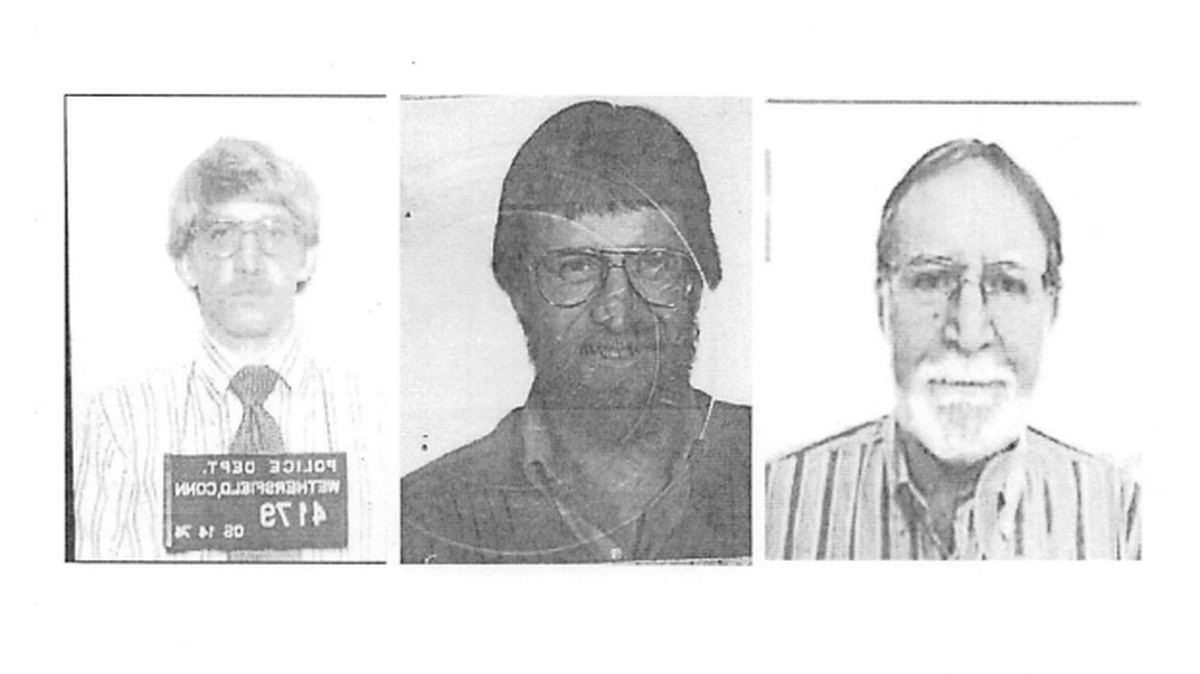
Gordon Ewen, a man in his 70s with thin, graying hair, a white beard and bushy eyebrows that hung over sunken blue eyes, lived in an unassuming one-story house off the Florida coast, just a few miles inland from the Gulf of Mexico.
But Ewen wasn’t his real name.
It was Douglas Edward Bennett — a man wanted in Connecticut for more than 40 years after he was convicted of kidnapping and rape in 1975. Bennett, now 77, was sentenced to 22 years in federal prison on Feb. 4 after he pleaded guilty last year to passport fraud, identity theft and gun possession as a convicted felon.
“The sentence in this case sends a strong message: The Diplomatic Security Service is committed to ensuring violent criminals who commit identity theft to evade justice face consequences for their actions,” Special Agent in Charge Peter Kapoukakis said in a news release announcing the sentence.
Bennett, who has been held at the Pinellas County Jail since his arrest in November 2020, could not be reached for comment. His defense attorney did not immediately respond to McClatchy News’ request for comment on Feb. 9.
The Connecticut case
The case against Bennett stems from a violent home invasion on Valentine’s Day in 1974.
According to evidence presented at trial, Bennett — then around 30 years old — was wearing a mask and carrying a gun when he allegedly broke into a woman’s home in Connecticut while looking for her father. She was home alone.
Bennett was accused of robbing the woman, tying her hands behind her back and covering her eyes with duct tape before dragging her outside and sexually assaulting her. According to court filings, the assault continued in a car for over an hour.
Bennett was arrested three months later and convicted on Jan. 3, 1975, on charges of robbery, rape, kidnapping and sexual assault. Prosecutors said he was sentenced to between nine and 18 years in prison.
According to court documents, Bennett was released on bond while he filed an appeal. But he never showed up to prison after the Supreme Court of Connecticut upheld his conviction in 1976.
Instead, prosecutors said, Bennett assumed the identity of a dead child and fled to Florida.
‘Douglas Bennett ceased to exist’
His whereabouts remained a mystery until 2016, when Bennett filed a passport application using the name of a boy who was born in Massachusetts in 1940 but died in 1945. Investigators said they were able to trace the real identity of the applicant to Bennett using the name of the person he listed as an emergency contact: his sister.
Bennett was arrested Nov. 4, 2020, as he was leaving his home in Clearwater, Florida. A fingerprint comparison matched him to the 1974 case, prosecutors said.
The State Department’s Diplomatic Security Service also searched his home on the day of the arrest, where the government said they found identification documents for both Bennett and Ewen.
Tucked in the crawlspace of the home was a locked safe, prosecutors said. Inside, agents found Bennett’s high school and college diplomas, a letter that referred to him under both names and “handwritten notes detailing the first time Bennett used the Ewen identity.”
They also discovered a shotgun, rifles and pistols as well as 4,819 rounds of ammunition hidden in a locked room in the garage, court documents state.
Law enforcement continued to monitor Bennett — particularly his interactions with family — after his arrest.
It was during one of those video visits that prosecutors said Bennett appeared to acknowledge his decades-long deception.
“I started out as Douglas Bennett, but Douglas Bennett ceased to exist in 1977,” he reportedly said. “And from that time forward, I’ve spent forty-three years being Gordon Ewen.”