
Number of migrant children in US custody drops below 10,000 for first time since March
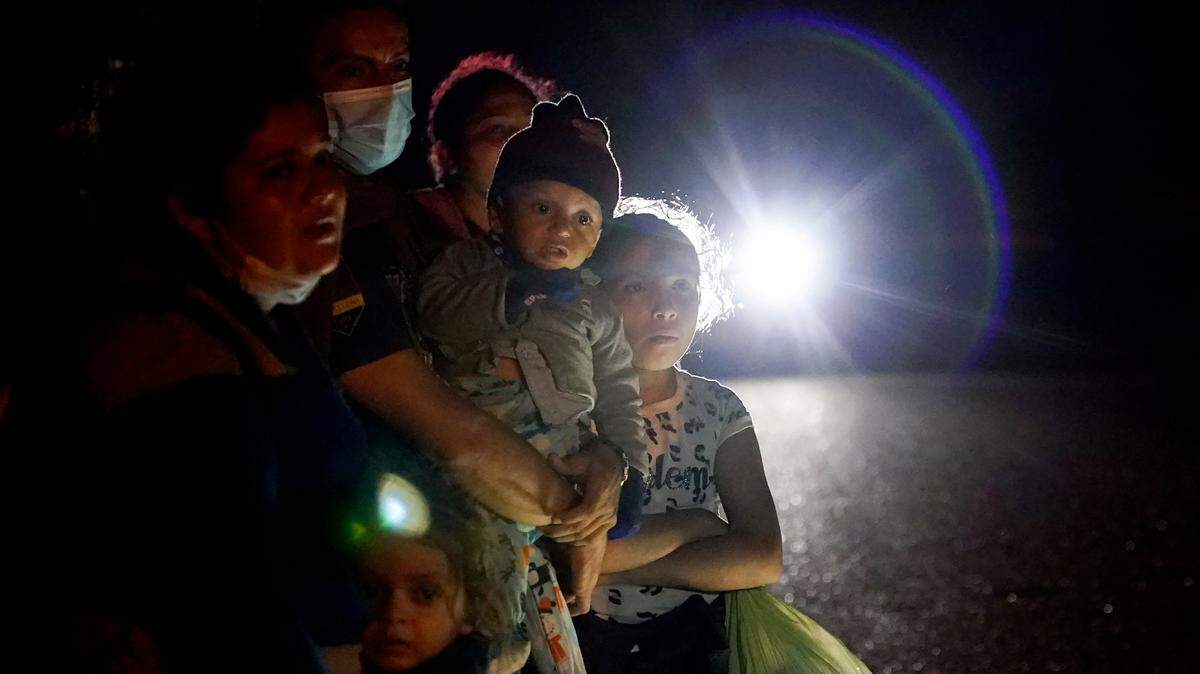
The number of migrant children in federal custody dipped below 10,000 for the first time since last March, according to government data released on Jan. 3.
As of Jan. 2, there were 9,980 children in custody of the U.S. Department of Health and Human Services, data shows. That number peaked for the year around April 28, when there were more than 22,500 children in custody.
The drop may be in part due to a decrease in the number of children attempting to cross the border over the winter holidays, allowing the Office of Refugee Resettlement to process more cases than usual, according to Aaron Reichlin-Melnick, policy counsel with the American Immigration Council.
Even though the number of children currently in custody is at its lowest in 10 months, HHS’ shelter system took at least 122,000 migrant children into custody — an all-time high over the course of the year, CBS News reported.
At least 146,925 unaccompanied minors total arrived at the southern border in fiscal year 2021, according to data from U.S. Customs and Border Protection. That means that most of those children - over 80% - spent some amount of time in HHS custody during the year.
The new numbers come a few weeks after a memo was revealed in which officials raised alarms about the conditions minors face in federal custody. Welfare professionals with the Office of Refugee Resettlement expressed concern over the “erosion of child-welfare centered approaches” within the custody program and said that some facilities were run like “disaster camps” where children faced “the deterioration of mental and behavioral health,” CNN reported.
In one instance, children held in a “tent city” at Fort Bliss, in the Texas desert, experienced such significant mental health problems that they had to be monitored constantly for panic attacks, self harm and escape attempts, staffers told CBS News in June.
And in a federal court declaration filed on June 21, 2021, a 13-year-old girl from Honduras said that, during the 58 days she spent at the Fort Bliss Emergency Intake Site in El Paso, she was at one point put on a suicide watch list with 28 other girls. She also said she had difficulty sleeping, that the food was largely inedible, and that she was told that if she tried to escape, she would be detained even longer.
“I have been here for a really long time,” she wrote. “I really want to leave. It’s sad because all my friends are waiting for the staff to call my name to be released because I have been here for such a long time.”
In another court declaration, a 17-year-old girl from Guatemala said she had spent 60 days at the Fort Bliss intake site. She wrote that she experienced anxiety, a problem she had never had before, and increased blood pressure. She also said she was sometimes bullied by other girls, but didn’t want to tell staff about it “because it would be worse for them and wouldn’t be any better for me.”
“I used to be able to cope with my anxiety and breathe through it, but now I feel like I’ve given up,” she wrote. “I feel like I’ll never get out of here.”
By late July, when the ORR memo criticizing the conditions of facilities was written, more than 79,000 unaccompanied children had crossed the U.S.-Mexico border, overwhelming facilities and leading the government to set up more emergency intake sites, according to CNN. There were about 14,100 children in the care of the Office of Refugee Resettlement at the time, the outlet said.
The high numbers of children in custody corresponded to a historic child migration wave during fiscal year 2021, CBS News reported. That wave was likely propelled by the fact that the Biden administration had exempted unaccompanied children from a Trump-era public health order that allowed border officials to turn migrants away at the border, CNN reported.
The migration wave has posed significant challenges for the Biden administration, which has responded to the influx by expanding capacity at migrant shelters and announcing plans to build two new ones in New Mexico and North Carolina, CBS News reported.
But that strategy has previously been criticized by immigration advocates, who say that the conditions of the shelters maintained by HHS - which may come in the form of stadiums, convention centers or other vacant buildings - aren’t fit for children, NPR reported. Advocates have also said that holding children there often violates the Flores settlement, which mandates that children cannot be held in detention centers for more than 20 days, according to the American Immigration Lawyers Association.
The administration may also turn to Title 42 or to the Migrant Protection Protocols — also known as the Remain in Mexico program — to address the increase in attempted migration.
The Trump administration policy allowed the federal government to send migrants to Mexico to await their court dates instead of allowing them into the U.S., according to the American Immigration Council. The Biden administration temporarily terminated use of the policy, but was ordered to reinstate it by a federal judge on Aug. 15. The policy went back into effect on Dec. 6, Time reported.
Unaccompanied minors have previously been considered somewhat exempt from both Title 42 and MPP, but the government continued to expel some minors under Title 42, according to Border Report.
This story was originally published January 5, 2022 at 2:43 PM.