
Ash cloud from 1912 volcanic eruption billows across Alaska island, scientists say
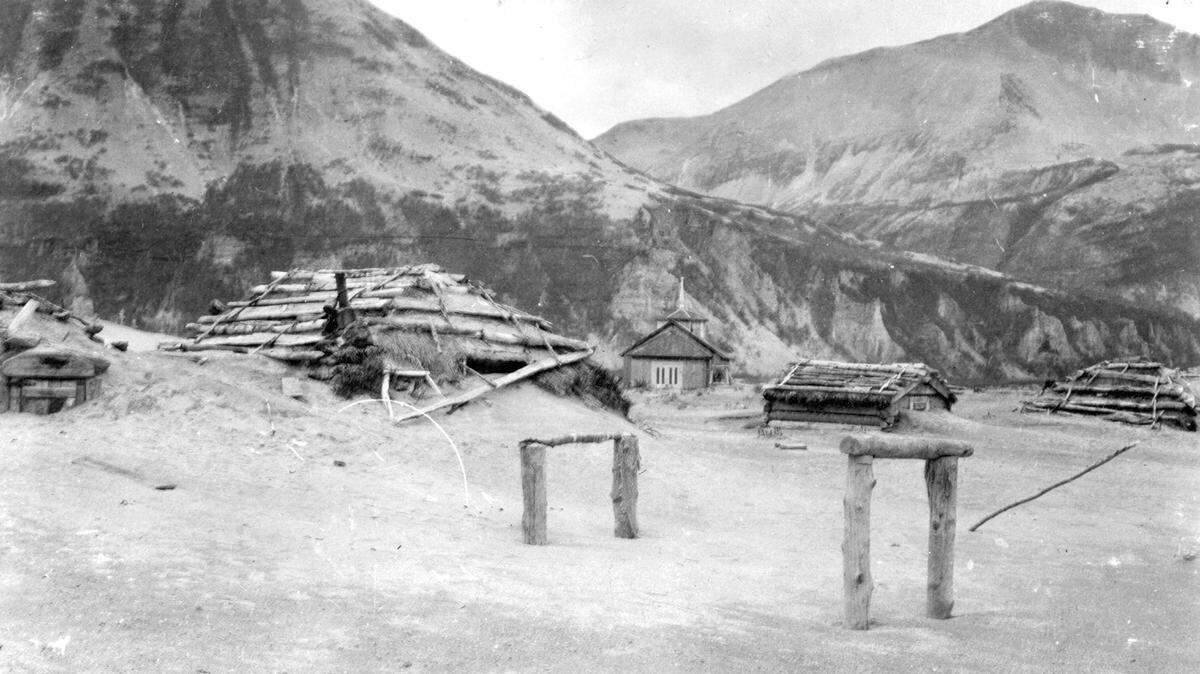
Winds are blowing ash from a 1912 volcanic eruption across an island off Alaska, volcano experts reported.
Loose volcanic ash from the Novarupta eruption in Katmai National Park on the Alaska Peninsula is billowing across Kodiak Island, the Alaska Volcano Observatory said.
Trace amounts of ash fall are expected on the island, home to 13,000 people and a U.S. Coast Guard base.
No eruptions are in progress, the volcano observatory said.
“Generally, this time of year, we get these northwestern winds that can come down from the Katmai region and really scour some of the free ash that’s deposited from the 1912 eruption,” Hans Schwaiger, a U.S. Geological Survey research geophysicist at the observatory, told The Associated Press.
The three-day Novarupta eruption in June 1912 had the highest magnitude and volume of any historical eruption in North America, the National Park Service reported.
The eruption created the Valley of Ten Thousand Smokes, which prompted creation of a national monument and, later, Katmai National Park.
Although the eruption was thought to have taken place on Mount Katmai, in 1968 scientists determined it occurred at Novarupta, the National Park Service said.
Following the 1912 eruption, ash was so thick on Kodiak Island that “a lantern held at arm’s length could scarcely be seen” for nearly 100 hours, the park service said. One foot of ash blanketed Kodiak, collapsing roofs and making water undrinkable.
Effects of the ash were felt worldwide, rangers said.
This story was originally published November 18, 2021 at 3:47 PM with the headline "Ash cloud from 1912 volcanic eruption billows across Alaska island, scientists say."