
Ever gotten unexpected medical bills? New Biden law may prevent that. What to know
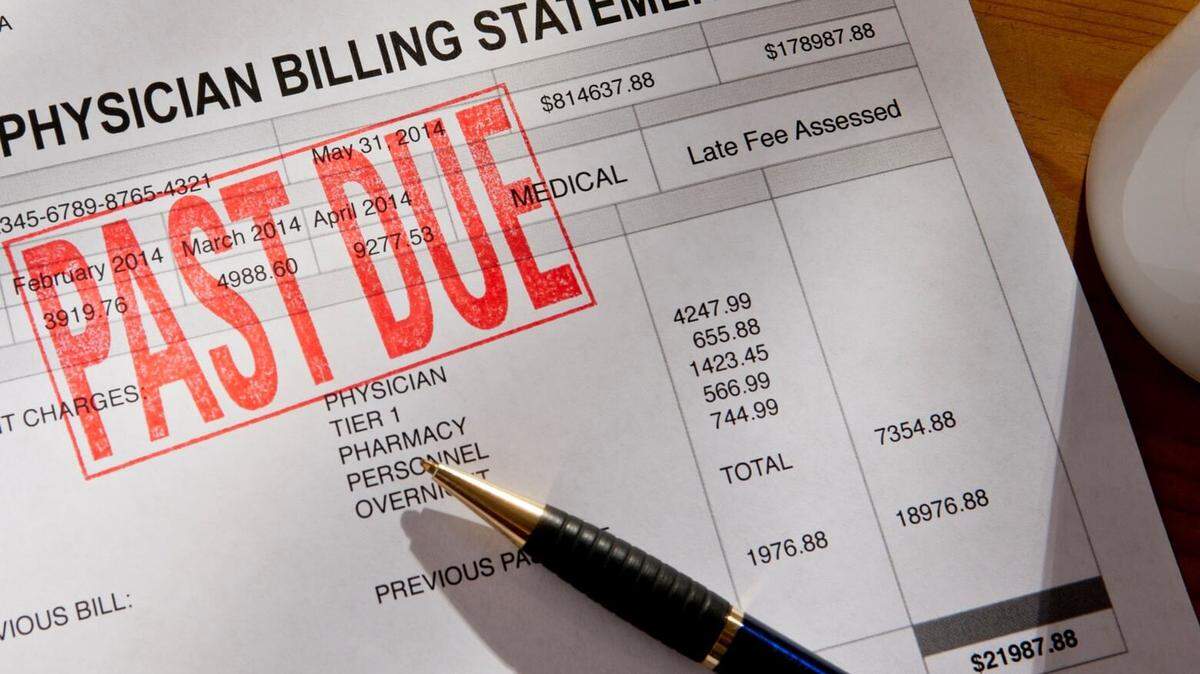
Have you ever received a medical bill that you weren’t prepared to pay for? A new law may help with that starting Jan. 1.
Under President Joe Biden’s “No Surprises Act,” patients will no longer have to pay extra for out-of-network hospital emergencies or be held liable if an out-of-network doctor conducts a medical procedure in an in-network hospital, according to the U.S. Department of Health and Human Services.
Out-of-network service providers will also have to tell how much their estimated charges are 72 hours in advance, according to the Centers for Medicare and Medicaid. Patients will then have to agree to the care before a hospital or doctor can bill them.
Lastly, air ambulances can’t send patients surprise bills that exceed their in-network cost sharing amount, the federal agency said.
Patients will only be responsible for their in-network costs — leaving hospitals, doctors and insurers to sort out other fees, Erin Duffy, research scientist at the University of Southern California’s Schaeffer Center for Health Policy & Economics and adjunct policy researcher at the RAND Corporation told McClatchy News.
“Then it’s a question of what the ultimate cost to the insurer will be if the initial qualifying amount is insufficient to the provider, and some additional payment has to be made through a settlement or an arbitration,” Duffy said.
The high cost of arbitrators
Arbitrators help insurers and providers resolve differences about the cost of medical services, according to a 521-page guidance report released Sept. 30.
The Centers for Medicaid and Medicare Services found that some state arbitrators who don’t comply with surprise billing are charging between $270 to $6,000 for their expertise, the report said.
However, the Center for Consumer Information and Insurance Oversight said that the cost should be “between $200 to and $500 for it’s assistance,” Benefits Pro reported.
“This range was selected to keep administrative costs reasonable, thereby reducing the potential for excessive.... fees that could result in inflated health care and insurance costs that could ultimately be passed on to consumers,” the federal agency said, Benefits Pro reported.
Millions of Americans receive surprise medical bills, with as “many as one in five emergency room visits” resulting in a hefty charge, The New York Times reported. A Pennsylvania woman, for example, was charged more than $50,000 for an out-of-network air ambulance.
“Under the federal law, both the insurer and the doctor will tell an arbiter what they believe the appropriate price for the service should be. The arbiter will then look at a variety of factors to decide which of the two rates to pick,” as reported by the Times.
The “No Surprises Act” was passed by Congress and President Donald J. Trump signed it into law, but “it is the Biden administration that has been fine-tuning the policy,” according to the Times.
Some states offer protection against surprise medical bills
Many states already have legislation that protects consumers from surprise health care bills, but “what’s been challenging is that even the states that have been really proactive can only protect the fully-insured,” Duffy told McClatchy News.
That’s because only the federal government can regulate self-insured commercial plans, Duffy said.
Only 18 states offer protections against surprise billing and 15 states offer partial protection, according to the Commonwealth Fund/Georgetown University Center on Health Insurance Reforms.
“The No Surprises Act is such a big deal because it can regulate self-insured plans, and fully-insured plans in states without an existing law,” Duffy said.
But there’s a catch.
The No Surprises Act does not cover ground ambulance expenses, despite having the highest out-of-network coverage, Duffy said.
“Many ambulance services are provided by public service departments like fire departments, and they’re a revenue source for local governments,” Duffy said. “So policymakers will need to be sensitive to that dynamic when addressing surprise bills for ambulance services.”
According to a Health Affairs 2020 report, 71% of all ambulance rides involved “potential surprise bills” between 2013 and 2017. The average bill for ground ambulances totaled $450 and $21,698 for air transportation.
This story was originally published October 5, 2021 at 7:36 PM.
.png)