Which masks protect best against wildfire smoke? Study shows one is superior
Some experts are questioning whether face masks should continue to be worn after the COVID-19 pandemic to protect people from the flu, common cold and other respiratory viruses. Now, similar queries are being made about mask use during wildfires that send plumes of harmful smoke into the air.
“People were asking, should we keep them on in the summer when the fire season starts?” Jack Kodros, an atmospheric scientist at Colorado State University and lead author of a new study on the topic, said in a news release. “There weren’t a lot of guidelines on what sort of masks would be helpful for wildfire smoke.”
In laboratory experiments, Kodros and colleagues tested how well N95, synthetic, cotton or surgical masks filter out particles of many sizes found in wildfire smoke and other types of air pollution that are known to enter our lungs and cause health issues, such as asthma, respiratory infections and chronic obstructive pulmonary disease. Researchers put each mask over a pipe that “breathes” in air and particles inside a plastic box.
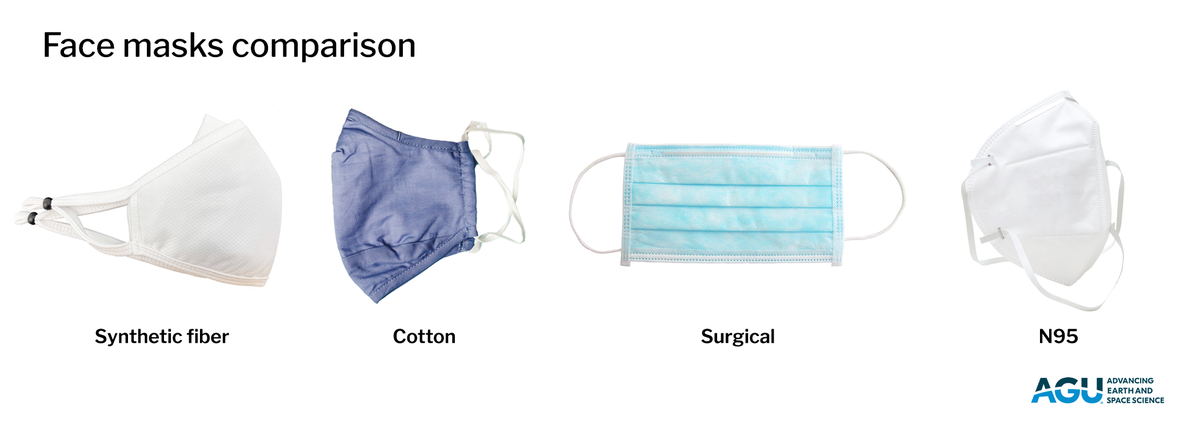
N95s offered the best protection against wildfire smoke, reducing exposure to harmful particles by a factor of 16, according to the study published in August in the journal GeoHealth. Next were synthetic masks, such as those made of polyester, spandex or nylon, which did “a poor job” of filtering harmful particles from wildfire smoke. They reduced exposure by a factor of 2.2
Cotton masks performed even worse, reducing exposure by a factor of 1.4.
Surgical masks have been shown to filter more than 90% of particles that pass through them, but about 50% of air can leak out the mask through gaps on the sides if not properly worn, so researchers determined they are only about as effective as their synthetic and cotton counterparts.
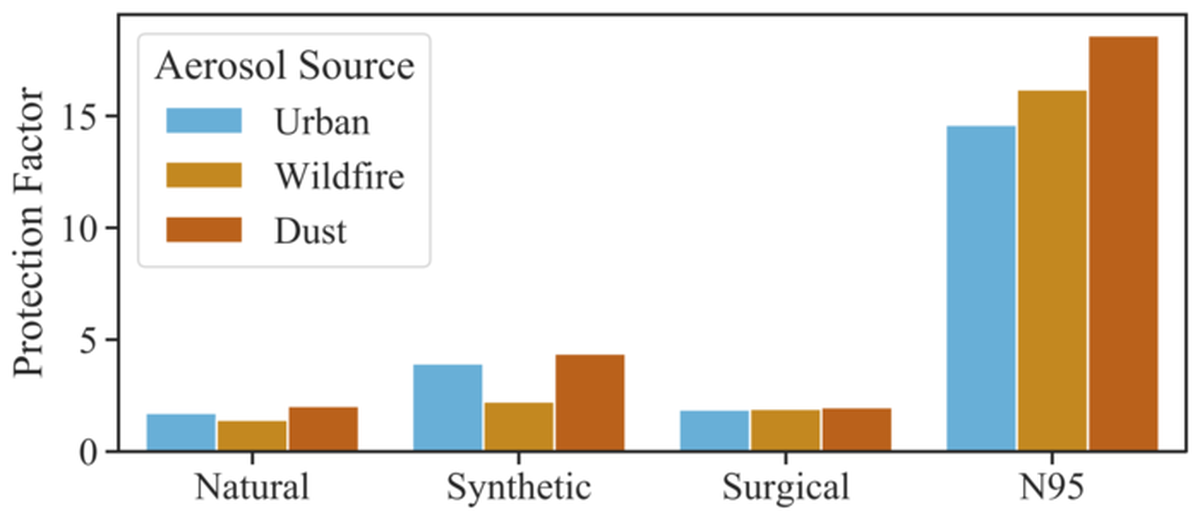
N95 masks also protected the best against larger dust particles and air pollution typical in cities, including particles from car exhaust, which are smaller than those from wildfire smoke. Smoky particles are usually about the size of a single bacterium, or about the thickness of a single strand of hair.
Researchers estimate that N95 masks could reduce 22-39% of wildfire smoke-related hospitalizations — an important implication given global warming will continue to make wildfires more frequent and intense.

The team also developed a model that can estimate the benefits of mask wearing within a population based on the percentage of people likely to wear masks and how consistently they would wear them during wildfire season. Researchers inserted data from Washington’s 2012 fire season to see how many wildfire smoke-related hospitalizations masks could have been prevented, if any.
Turned out N95 masks would have prevented about 30% of hospitalizations caused by wildfire smoke inhalation. Surgical masks would have prevented about 17% of them, while synthetic masks would have done away with 13% of hospital admissions. Cotton masks would have led to a 6% reduction in hospitalizations.
This story was originally published September 29, 2021 at 12:59 PM with the headline "Which masks protect best against wildfire smoke? Study shows one is superior."