
‘Squash it, smash it.’ These pesky bugs turn everything to mold, officials warn
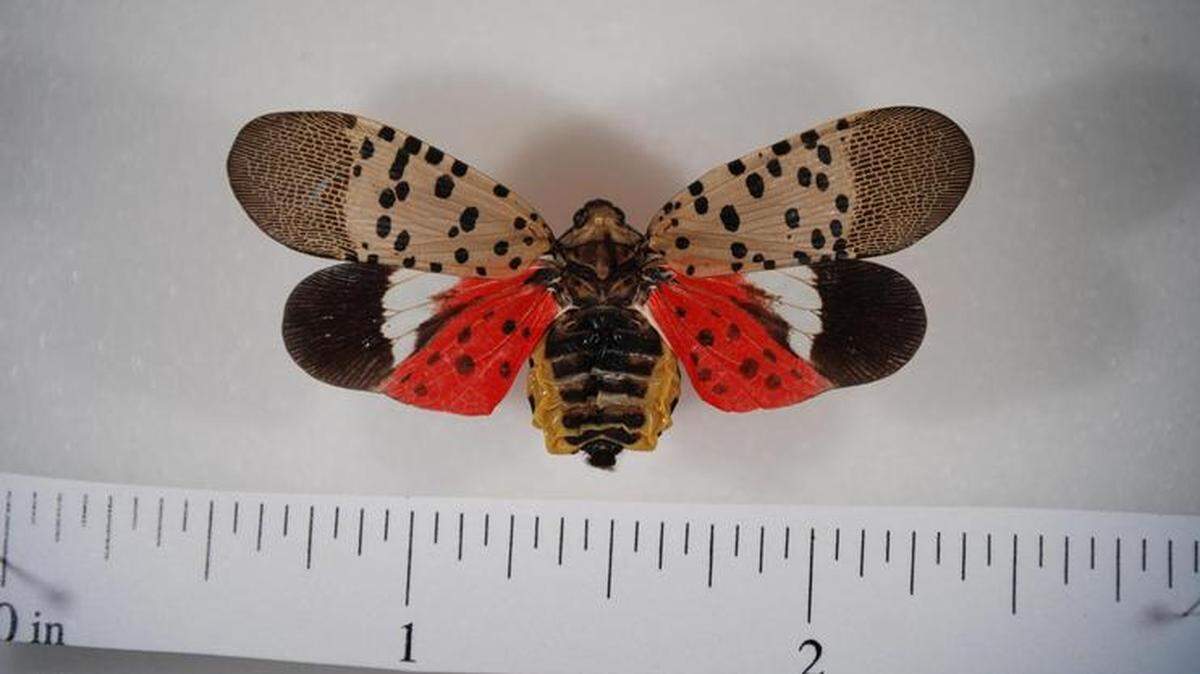
Don’t let its colorful appearance fool you ― the spotted lanternfly has an insatiable appetite.
First spotted in Berks County, Pennsylvania in 2014, these invasive bugs are not only notorious for destroying apples, plums, grapes and other fruits, but also for excreting a sweet substance that creates mold, officials warn.
This mold is harmless to people but damages more than 70 types of plants by “oozing sap, wilting, leaf curling and die-back in trees, vines, (and) crops,” according to the Pennsylvania Department of Agriculture.
Now several state agricultural departments are warning people to take matters into their own hands ― by any means necessary.
“Kill it! Squash it, smash it...just get rid of it,” Pennsylvania agricultural officials said in a statement. “In the fall, these bugs will lay egg masses with 30-50 eggs each.”
“Stomp it out,” the New Jersey Department of Agriculture added.
In Ohio, meanwhile, officials advise people to scrape eggs off trees and drown them in alcohol.
Confirmed in several U.S. states
Although native to Asia, the spotted lanternfly is thought to have first arrived to the U.S. on shipments of stone from China ― and possibly “imported woody plants, wood products, and other commodities,” according to the United States Department of Agriculture.
They have since become a nuisance to farmers and residents across several states, including Connecticut, Delaware, Massachusetts, Maryland, North Carolina, New Jersey, New York, Pennsylvania, Virginia and West Virginia, the government agency said.
It was detected for the first time in Rhode Island and Indiana this summer, according to the USDA. It was also spotted in Maine and Ohio last year.
The pesky bugs are 1-inch long and a half-inch wide, and have black, red, and gray dotted wings with a yellow belly and broad black bands, Pennsylvania officials said.
But appearances can be deceiving. Spotted lanternflies will cover trees and congregate in the air ― and their honeydew cover decks and play equipment, officials warn.
Residents in Pennsylvania “report hundreds of these bad bugs that affect their quality of life and ability to enjoy the outdoors during the spring and summer months,” according to the Pennsylvania Department of Agriculture.
U.S. infestation could cost billions
Pennsylvania’s agriculture agency added eight new counties to its “Spotted Lanternfly Quarantine” list in March, bringing the state’s total of 34 counties.
“The economic impact could total in the hundreds of millions of dollars and hundreds of thousands of jobs for those in the grapes, apple, hops, and hardwood industries,” the Pennsylvania Department of Agriculture said.
Meanwhile, “various estimates put the potential economic damage in the billions of dollars,” for the U.S. as a whole, according to the USDA.
Spotted lanternflies may be killed with insecticides on grapevines, but they are expensive and limited due to recurring infestation, the USDA said.
Now scientists with the federal agricultural agency are attempting to develop “sustainable pest management strategies.”
This story was originally published September 1, 2021 at 5:39 PM with the headline "‘Squash it, smash it.’ These pesky bugs turn everything to mold, officials warn."
.png)