
70% chance of La Niña winter, forecasters say. What does that mean for your state?
Be on the lookout, weather watchers: There’s a 70% chance that La Niña may return between November and January, forecasters predict.
That means the nation’s southern tier, which stretches from Southern California to the Gulf Coast states, could experience a warm and dry winter, according to the National Oceanic and Atmospheric Administration’s (NOAA) Climate Prediction Center.
As of now, there could be a 40% chance of less than average rainfall in those areas and may even “extend into spring,” NOAA meteorologist Michelle D’Heureux, told Fox 8 news.
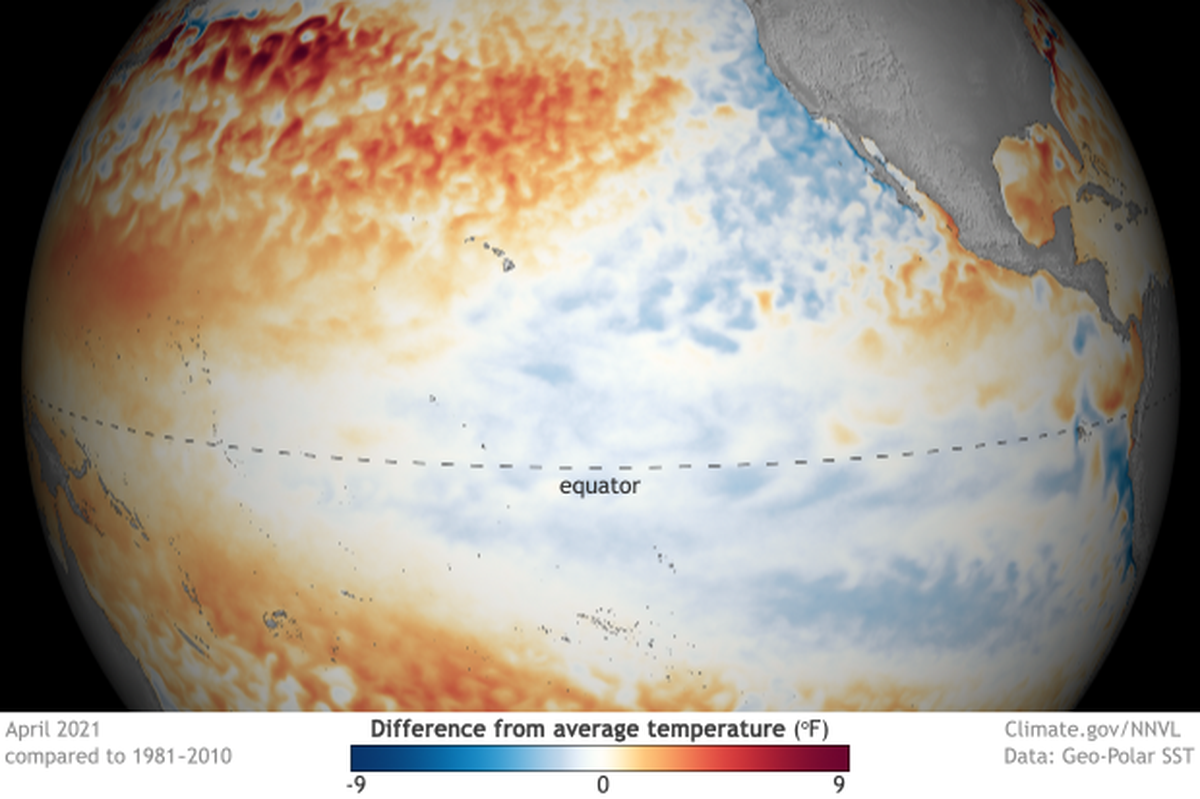
Northern California and the Pacific Northwest, meanwhile, may see cooler, stormier winter months, NOAA reported.
If more precipitation hits the Northwest, “there may be consequences for the Midwest and parts of the South later in the winter, specifically Ohio and the Tennessee Valley,” D’Heureux told Fox 8 news.
“It’s like throwing a rock into a pond — it skips and has a ripple effect,” D’Heureux told news station. “The atmosphere behaves similarly. There are waves in the atmosphere. That’s one of the reasons Ohio and Tennessee Valley have these ripples later in the winter.”
La Niña could also ramp up hurricane activity in the Atlantic for the rest of the season, CNN reports.
Droughts, floods, and tropical cyclones are all common during La Niña, according to NOAA Climate.gov.
This weather phenomenon is based on “patterns of ocean temperatures across the tropical Pacific ocean, as large areas seesaw back and forth from warmer than average to cooler than average,” according to NOAA. As ocean patterns change, so do weather patterns in the tropical atmosphere.
There’s also El Niño, which has less stronger trade winds than La Niña, NOAA said. It occurs when warm water is pushed east toward the west coasts of North and South America, which leads to the northern U.S. and Canada becoming drier and warmer than usual. In Gulf Coast states, El Niño can produce more rain and flooding.
Scientists classify both weather events as the El Niño-Southern Oscillation (ENSO) cycle.
Both weather events happen every two to seven years and may disrupt “seasonal average temperature, precipitation, and winds — not only in the tropical Pacific, but around the world,” NOAA said.
Forecasters often predict La Niña’s influence on the climate months ahead, which allows governments and the public to plan for potential climate disasters, according to NOAA.
But there’s still much to learn, especially how far ahead La Niña can be predicted, why some are stronger than others, and how it may change in warming climates, NOAA said.
This story was originally published August 13, 2021 at 3:32 PM.
.png)