Miami Herald columnist wins courage award in journalism for writing about race in America
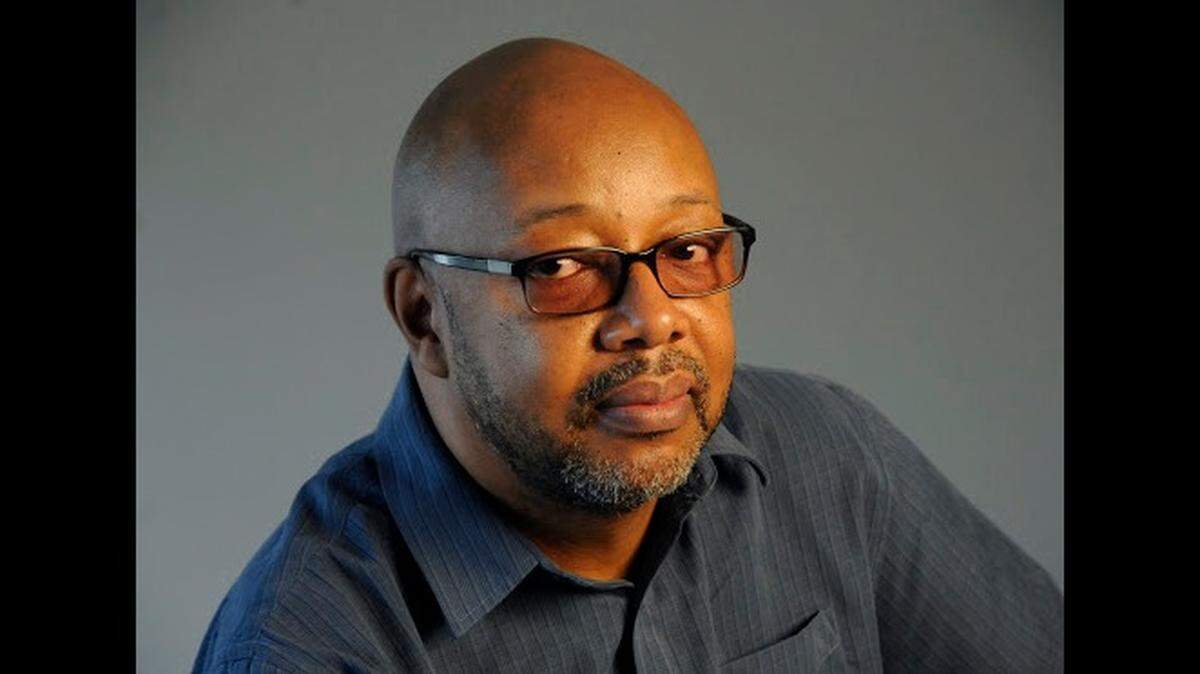
Nationally syndicated columnist Leonard Pitts Jr. of the Miami Herald has been awarded the 2021 Elijah Parish Lovejoy Award, its presenter, Colby College, announced Thursday.
Colby’s award recognizes “individuals of our time who embody courageous journalism” the Waterville, Maine, college said in its announcement.
Pitts, 63, who has been with the Miami Herald for 30 years — first as its pop music critic and, since 1994, as a columnist — might joke with a buddy that it feels odd to get an award for courage in writing.
Writing is simply what the California-born Pitts has done since 1976. He was still an English major at the University of Southern California, which he would enter at age 15, when he landed his first writing and editing job with Soul magazine.
Soul covered Black musicians and cultural figures in the African-American community, like some of Pitts’ musical heroes such as the Temptations, Gladys Knight, Stevie Wonder and Marvin Gaye — all of whom were courageous, like Pitts would be, in confronting the issues and inequities of race in America.
“It’s an interesting thing to get an award for just doing your job,” Pitts said. “I don’t know what else I’m supposed to do. When people come at you and are threatening to intrude on your life, what else are you supposed to do? Go, ‘No, I guess I won’t write that anymore?’ I can’t do that. I almost feel it’s undeserved getting an award for doing something for which you really had no choice. If this is courage I’ve had no choice but to have courage because anything else is unworkable.”
Lovejoy named for crusader
But then there’s that name — Lovejoy — and what that namesake award represents.
“Elijah was a 19th Century bad-ass in terms of publishing,” Pitts said. “This guy would refuse to stop publishing anti-slavery editorials in the paper he had in Alton, Illinois.”
Lovejoy, an 1826 valedictorian at Colby and a crusading abolitionist editor, was murdered at age 34 in 1837 for his anti-slavery editorials. He was called “America’s first martyr to freedom of the press” by John Quincy Adams, the sixth U.S. president, according to Colby College.
Pitts, a novelist whose most recent historical fiction book is “The Last Thing You Surrender,” recounts how a pro-slavery mob destroyed Lovejoy’s printing press to get him to stop publishing his editorials.
“He put it back, and on the second or last time they came, they threw the printing press in the river and shot him to death,” Pitts said. “His death was one of the incidents right before the Civil War that illustrated how divided this country was in terms of slavery. So to get an award in his name is pretty amazing and a high honor because what he did was ultimate courage because he was advocating for a group to which he did not belong. He was advocating for African American slaves, and he was neither African American nor a slave, but he saw this as a moral issue. He saw this as the right thing to do. He refused to be silenced.”
“I’m flattered to think I’m even a 10th as brave as he was because I think if a mob came to my door I might have to reconsider,” Pitts said with a chuckle.
A divided nation
Colby President David A. Greene sees parallels today.
“Lovejoy made the ultimate sacrifice defending freedom of the press, and almost two centuries later, journalism continues to be under siege,” Greene said in a statement. “The need for courageous journalism is as strong as ever. Leonard Pitts writes forcefully and masterfully, resulting in profound and important work that not only helps us consider the complexities of the issues of our time but also to become better people. It is truly fitting for him to be honored with Colby’s Lovejoy Award.”
According to the college, the Lovejoy Award, presented annually by Colby since 1952, honors Pitts for “his courage in writing about race and racism, which has, at times, made him the target of serious threats of violence.”
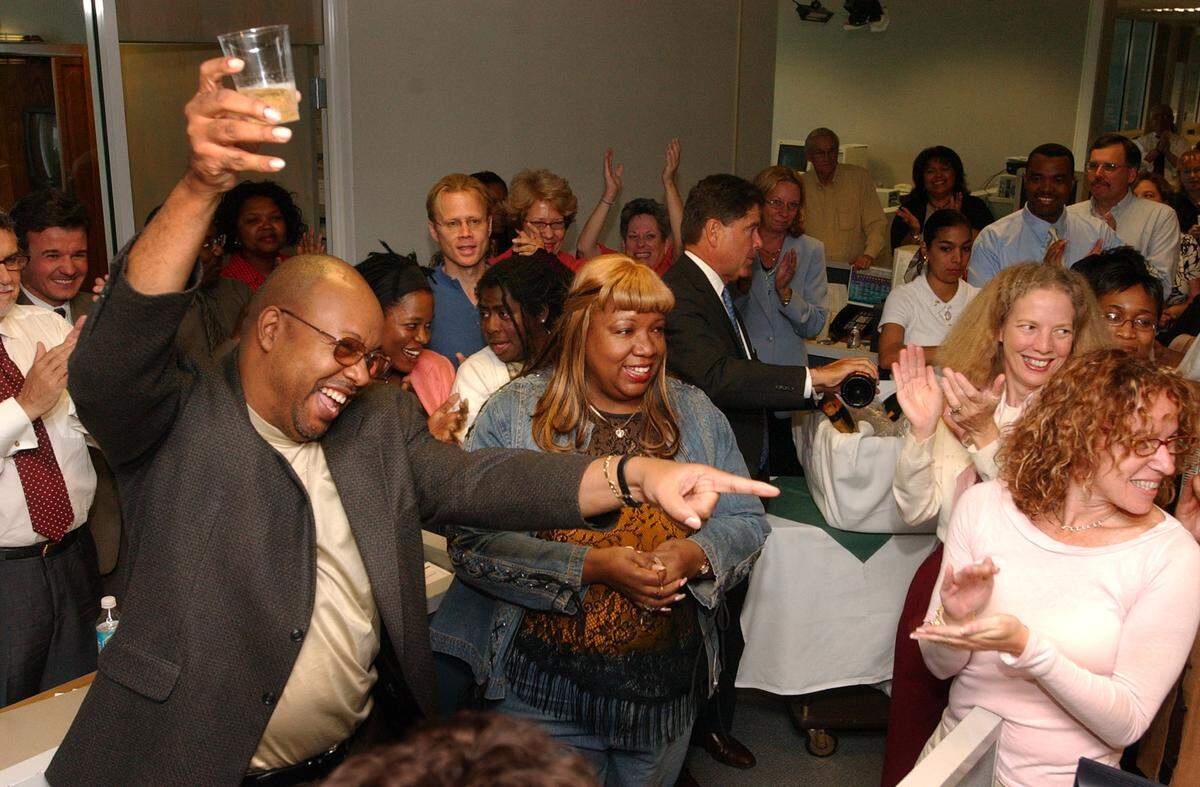
Pitts was awarded the 2004 Pulitzer Prize for Commentary.
Monica Richardson, executive editor for the Miami Herald and McClatchy’s Florida regional editor, says of Pitts: “This award is especially fitting for Leonard because it represents a heritage of fearlessness and freedom. It is based not just on Leonard’s mastery with words and craftsmanship, but it also recognizes Leonard’s integrity, character and courage.
“Leonard has delivered excellent coverage on the issue of race, race relations and how the nation has grappled with, and in many instances ignored, this topic,” Richardson said. “This award is a phenomenal tribute to Leonard as well as the Miami Herald. This honor means Leonard has been seen, that he has been heard and that his words and the care that he takes with his research and with his words really do matter to those who engage with his columns.”
Reader engagement
In a recent column headlined “The Cat in the Hat is alive and well,” Pitts weighed in on the controversy surrounding the decision by the Theodor Seuss Geisel estate to stop publishing six lesser-known titles by the late, celebrated children’s book author because they contained offensive racial stereotypes.
Pitts wrote:
The truth is, Dr. Seuss Enterprises, like Aunt Jemima and the Washington Redskins, has simply undergone a belated but needed process of self-reflection; they woke up and smelled the 2021. So this outcry is less about outrage than opportunism, a means of firing up a certain segment of white America. Meaning those who simmer in gnawing grievance at cultural changes they find threatening. Those who live with a bone-deep fear of losing their God-derived prerogatives, their “place” as white women and men.
“I got emails on the Dr. Seuss column, including from a reader who said the Dr. Seuss column gave her words to express to some people exactly what her emotions were on the whole Dr. Seuss kerfuffle. That was gratifying,” Pitts said.
The ‘swatting’ incident
Sometimes Pitts’ prominence as a provocateur — a Black man with an opinion and a national platform — can turn sinister.
Two summers ago, Pitts was the victim of a “swatting” incident. Someone phoned 911 to tell authorities that Pitts had murdered his wife and vowed to kill police when they responded. The 911 caller gave officers the Pitts family’s home address.
Pitts was roused out of bed at 4:48 on a Sunday morning by a call from the police department.
In his July 2, 2019 column, “Police thought I murdered my wife — and they didn’t kill me,” Pitts wrote:
My “murdered” wife sat up in confusion as the caller ordered me to stay on the phone and exit the house. I opened my front door into blinding spotlights and an amplified voice instructing me to drop my phone and walk forward, hands away from my body, then go down on my knees, whereupon I was cuffed and taken to stand behind a police cruiser.
Pitts was luckier than others, he wrote in his column.
I do know that too many unarmed black people are wounded and killed by frightened and adrenalized cops. And that I could have become one of them and didn’t.
Why Pitts writes
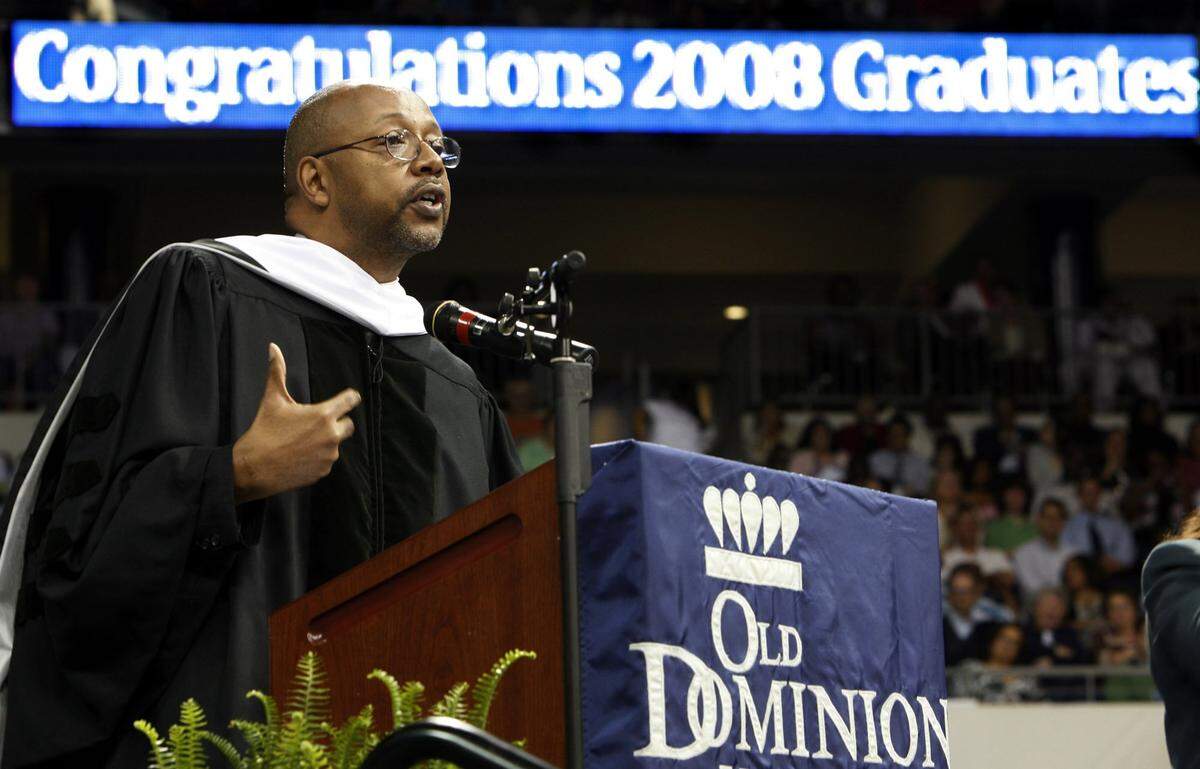
“Sometimes I just want to scream and have somebody hear me,” Pitts says of why he writes and what he hopes his readers take away from his columns or novels. “Sometimes I hope I’m explaining something that people know instinctively but haven’t been able to intellectualize. Same with writing novels. You write what you want to read, you write what you feel needs to be said.”
Richardson, named the Herald’s first Black executive editor in its 117-year history in December, feels Pitts’ writing deeply.
“Every Leonard Pitts column challenges our thinking, no matter our age, race, where we grew up or how. On the issue of race, Leonard once wrote that to be an ‘African American is to be perpetually exhausted by race. It is to be worn, wasted, spent and drained from the daily need to prove and defend your own humanity.’ I not only agreed with Leonard but I felt what he felt in those words,” Richardson said.
“I know there are some people who don’t always, or maybe never, agree with him — nor does he want people to always agree — and I know others who cling to his every word as their own gospel,” she continued. “He teaches us that rooting out ingrained biases requires a willingness to venture beyond our comfort zones. His columns have changed lives and perspectives. I believe that in every Leonard column there is a lesson in culture. He writes about humanity, he shares his experience and the experience of others and he does it with the courage and in the spirit that this award honors in the name of Elijah Parish Lovejoy.”
Aminda “Mindy” Marqués González, vice president and executive editor at Simon and Schuster and the Miami Herald’s former publisher, was on the nine-member Lovejoy Selection Committee.
“This is a hard-earned and well-deserved recognition for Leonard Pitts, a courageous journalist and incredible individual who has been tackling racism and social inequity long before this country’s racial reckoning hit its current crescendo,” Marqués said in a statement.
The committee also included journalists and educators representing the New York Times, NPR, Los Angeles Times, PBS’s “Frontline,” Milwaukee Journal Sentinel, the Associated Press and Colby College.
Pitts will address the public and Colby community in a virtual event on April 6.
This story was originally published March 11, 2021 at 6:00 AM.