Plot twist: Antarctic penguins thrive with less sea ice, study says. Here’s why
In what might seem like a climate change plot twist, some penguins in Antarctica thrive in environments with less sea ice, providing perfect opportunities to travel faster, feed better and ensure the survival of their species, a study says.
Researchers are calling them a “rare global warming winner.”
The study on Adélie penguins — the most common species in Antarctica — in a region called Lützow-Holm Bay was published Wednesday in the journal Science Advances.
“This unexpected ‘natural experiment’ revealed how changing sea ice alters penguin foraging behavior and, consequently, their body condition and breeding success,” the researchers from Tokyo’s National Institute of Polar Research and The Graduate University for Advanced Studies, SOKENDAI, said in the study.
“This may seem counter-intuitive, but the underlying mechanism is actually quite simple,” said Yuuki Watanabe, lead author of the study, in a news release.
The researchers tagged 175 penguins with GPS loggers, accelerometers and video cameras over four breeding seasons between 2010 and 2017.
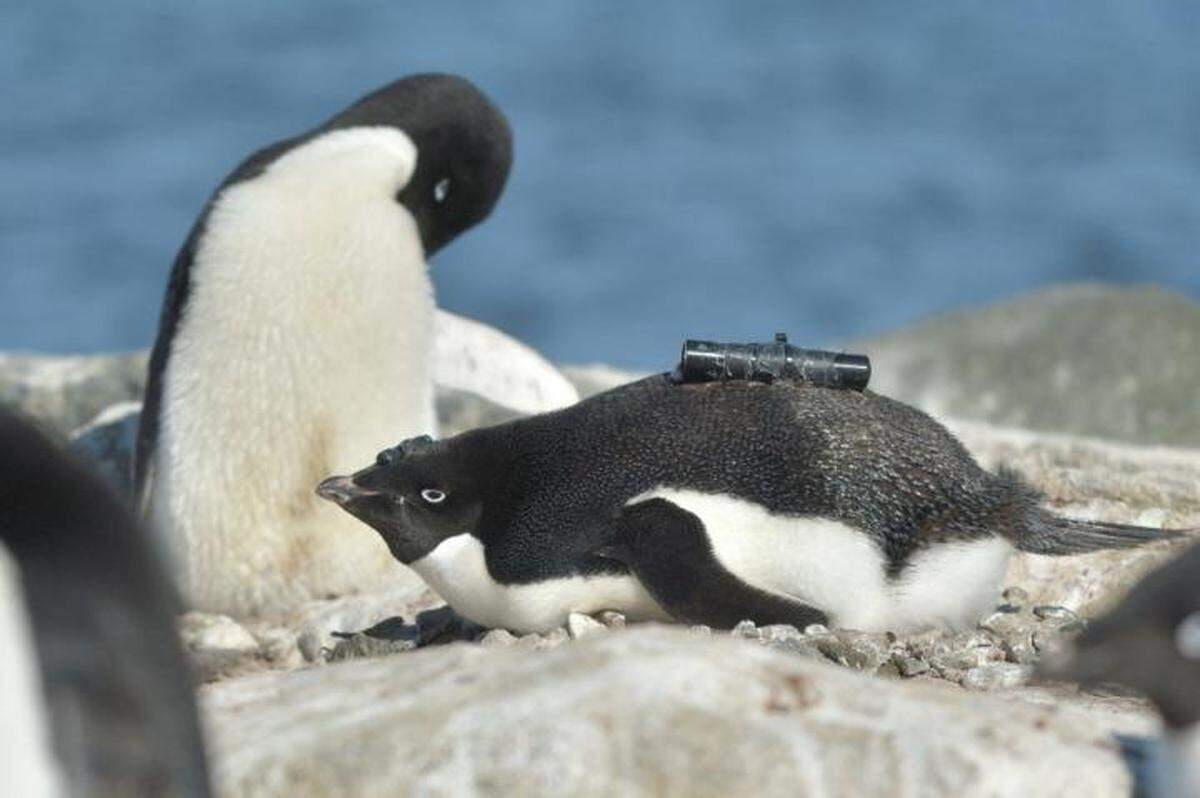
The devices measured foraging trips, categorized behavior such as walking, swimming and resting, and estimated the number of prey caught during dives, according to the study.
The “unusual” 2016-2017 season proved vital for data collection; a large portion of sea ice broke up and was carried away by ocean currents, “an event that has occurred six times since the 1950s,” the study said.
The event was unusual because unlike the Arctic — its polar opposite in the Northern Hemisphere — Antarctica sees steady growth in sea ice over time, the researchers said.
Icy winds and a unique, powerful ocean current prevent warmer ocean water from flowing into Antarctica’s sea ice region, while keeping the water there extremely cold, according to a 2016 study led by NASA researchers.
This allows sea ice to grow despite rising temperatures, although recent research showed “rapid reductions” in the region’s ice cover, “with the year 2017 having the lowest yearly average in the 1979–2018 record,” according to the study.
In turn, penguins were able to travel more by swimming than by walking or sliding on their bellies, which helped them save between 15% to 33% more energy than during ice-covered seasons.
Not to mention their foraging trips were shortened by about three to eight hours, the study said.
“For penguins, swimming is a whopping four times faster than walking. They may be sleek in the water but are pretty slow waddlers overland,” Watanabe said.
The more ice, the longer penguins have to travel to find cracks to access waters to hunt, sometimes requiring extensive rest stops along the way, the researchers said.
“Most importantly, this likely reduces competition with other penguins for prey and allows them to catch more krill — the penguin’s main” meal, the release said.
What’s more, less ice means more sunlight reaches the water, leading to blooms of plankton that krill feed on, thus supplying penguins with more food.
As a result, penguins were fatter and baby chicks became heavier, all while growing faster compared to breeding seasons in ice-covered conditions.
The researchers said Adélie penguin populations in the continental Antarctic region could likely grow in the coming decades, but they note not all members of the species prefer less sea ice, such as those living in the Antarctic peninsula and islands.
This story was originally published June 24, 2020 at 6:37 PM.