
Poison has killed 20 Maryland bald eagles since 2016. But who’s behind it?
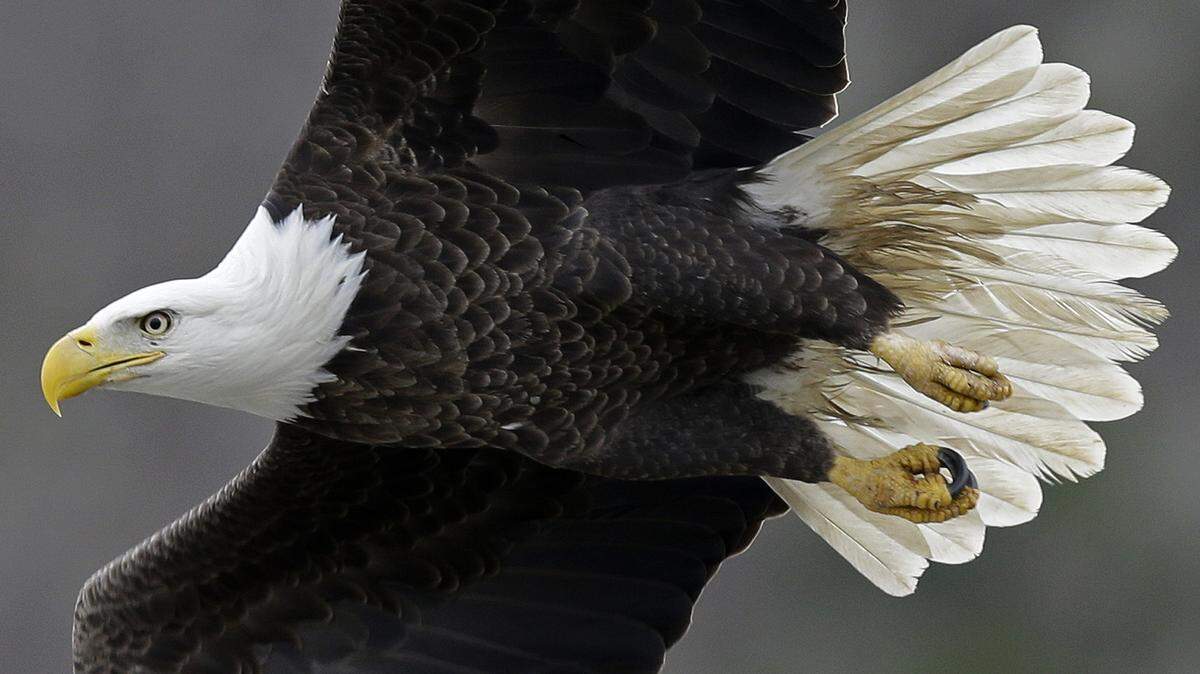
Seven bald eagles have turned up dead on the eastern shore of Maryland in the last two months, according to state authorities. That raises the number of protected eagles that have died of suspected poisoning in the area to at least 20 birds in recent years.
But authorities have few clues about who is laying the poison they believe has killed the birds, U.S. Fish and Wildlife Service investigators and Maryland Natural Resources Police said in a news release Wednesday. Investigators said it’s likely whoever is laying the poison is “placing baits laced with carbofuran, one of the most toxic carbamate pesticides, in fields, along woods lines and even directly into fox dens.”
“Eagles probably are not the primary target of the poisoning,” authorities said, but the poison is “so toxic that the eagles are secondarily poisoned after feeding on the poisoned primary target.”
Six bald eagles, as well as a great horned owl, were found dead in Maryland’s Kent County on March 1, investigators said. Even more eagles were discovered with “significant injuries,” but rescuers were able to treat them. Investigators said the deaths were likely the result of “on-going and intentional poisoning” targeting raccoons, foxes and other animals considered nuisances.
According to the news release, “officers have returned to the area on several occasions since the initial incident and retrieved eagle carcasses that were discovered and reported by local land owners and property managers.”
And just a month later, on April 3, authorities were dispatched to a farm in Talbot County where they found three more eagles that appeared to be poisoned — one of which died at the scene, the news release said. All of them had been eating the carcass of a red fox. The other two eagles are in stable condition after rescuers treated them for poison exposure, authorities said.
Those recent eagle deaths in the state come after 13 eagles were found poisoned near Federalsburg, Maryland, in February 2016, according to authorities. But despite interviewing local hunters, landowners and others, authorities said they’re still looking for more information to figure out who is behind the poisonings.
“It is hard to believe that not one person has information of persons placing a toxic poison that has killed no fewer than twenty eagles in these areas,” Jay Pilgrim, who oversees USFWS enforcement work across the mid-Atlantic region, said in a statement.
Pilgrim said it’s a problem “unique” to Maryland and the state’s eastern shore.
“The only way this stops is if the local communities come forward with information,” Pilgrim said.
Carbofuran is especially deadly in birds, investigators said. In its granular incarnation, just one grain of the toxic chemical can kill a bird that mistakes it for a seed — which is why the U.S. Environmental Protection Agency banned the granular form in 1991, after it was linked to millions of bird deaths, according to the news release.
But the liquid form is still lethal to birds if it’s placed in bait, authorities said.
Federal authorities are offering up to $10,000 as a reward to eligible individuals who provide information that helps the investigation, the news release said. Tips about illegal wildlife killings can be made to Maryland Wildlife Crime Stoppers by calling or texting 443-433-4112, or emailing mwc.dnr@maryland.gov.
Investigators said that the fact that an owl died in the March poisonings suggests the toxic baits were placed out in the open, explaining that owls aren’t usually scavengers. That means any person or animal could have stumbled upon it, authorities said.