
Bible Museum reveals five of its Dead Sea Scrolls may be fake. But what are they?
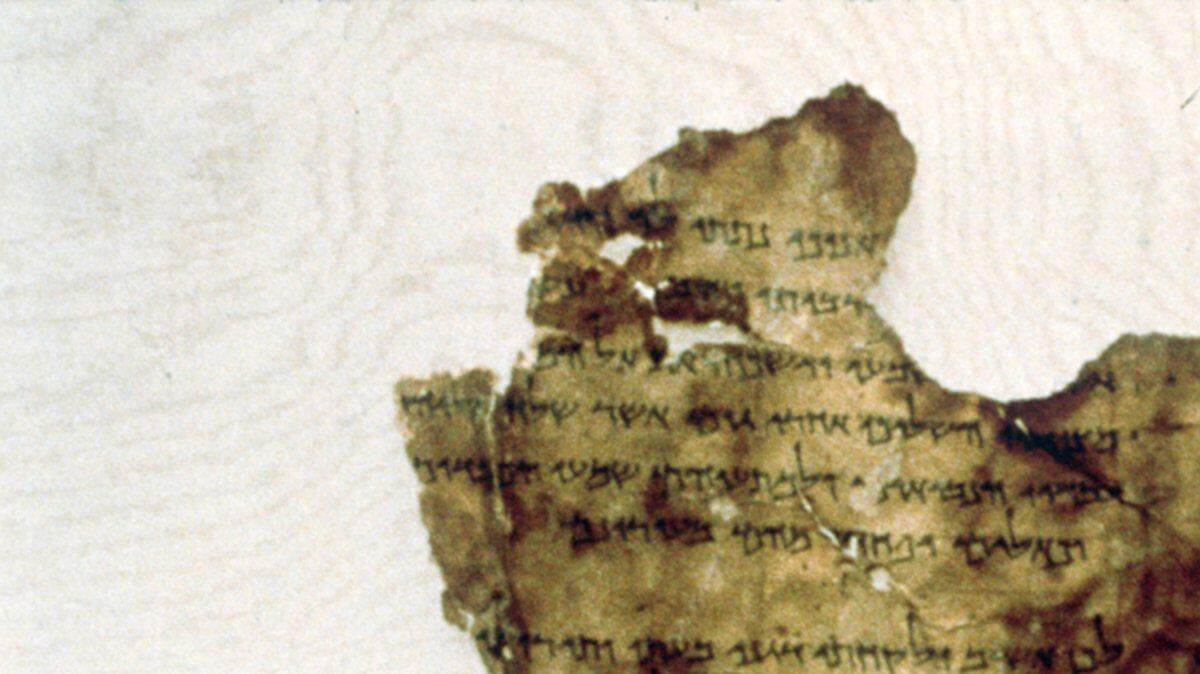
Less than a year after opening its doors in Washington, D.C., the Museum of the Bible revealed a few of its artifacts might be forgeries.
Specifically, the museum says it learned through testing in Germany that five of the 16 fragments thought to be of the ancient Dead Sea Scrolls actually have “characteristics inconsistent with ancient origin,” according to a press release on its website.
Because of that discovery, the museum wrote, the fragments will no longer be presented alongside the thousands of other items.
“Though we had hoped the testing would render different results, this is an opportunity to educate the public on the importance of verifying the authenticity of rare biblical artifacts, the elaborate testing process undertaken and our commitment to transparency,” said Jeffrey Kloha, the museum’s chief curatorial officer. “As an educational institution entrusted with cultural heritage, the museum upholds and adheres to all museum and ethical guidelines on collection care, research and display.”
But you may be wondering: Just what are the Dead Sea Scrolls — and why do they matter?
The Dead Sea Scrolls are centuries-old manuscripts for the Hebrew Bible that were found in mid-20th century by a shepherd searching for his sheep in the caves of Qumran, Israel, according to BBC.
The documents — believed to be hidden for nearly 2,000 years — are purported to show different copies of books in the Hebrew Bible, according to NPR. At first, somewhere around 800 to 900 manuscripts were found in that Qumran cave.
In total, there were around 50,000 fragments, which kept scholars busy for decades as they excavated and put them together, CNN wrote.
But in the last two decades dozens of other alleged copies of the Dead Sea Scrolls have seen the light of day, per the AP. However, it’s not known where these new scrolls have come from, making it challenging to prove their legitimacy.
In fact, even The Museum of the Bible seemed to say that some of the scroll fragments in its possession might be fake. When they were displayed in the 430,000-square-foot museum, the scrolls were next to a sign that read, “scholars continue to debate the authenticity of this fragment,” as reported by The Daily Beast.
Arstein Justnes, a professor of biblical studies at the University of Agder in Norway, told CNN that a website called “The Lying Pen of Scribes” has found that about 90 percent of the newly revealed Dead Sea Scrolls since 2002 are actually complete fakes.
A spokesperson for the museum said nine of the 16 fragments need more testing, and three of those will stay up, according to CNN, while the other seven will not be put back up.
“The museum continues to support and encourage research on these objects and others in its collection both to inform the public about leading-edge research methods and ensure our exhibits are presenting the most accurate and updated information,” Kloha said in a press release.
Last year, Hobby Lobby Stores — owned by Steve Green, the founder of the museum — was fined $3 million for smuggling thousands of old Iraqi artifacts into the country, according to The Washington Post.
This story was originally published October 23, 2018 at 8:22 AM.