
Beer prices could double under ‘severe’ increase in world temperature, new study says
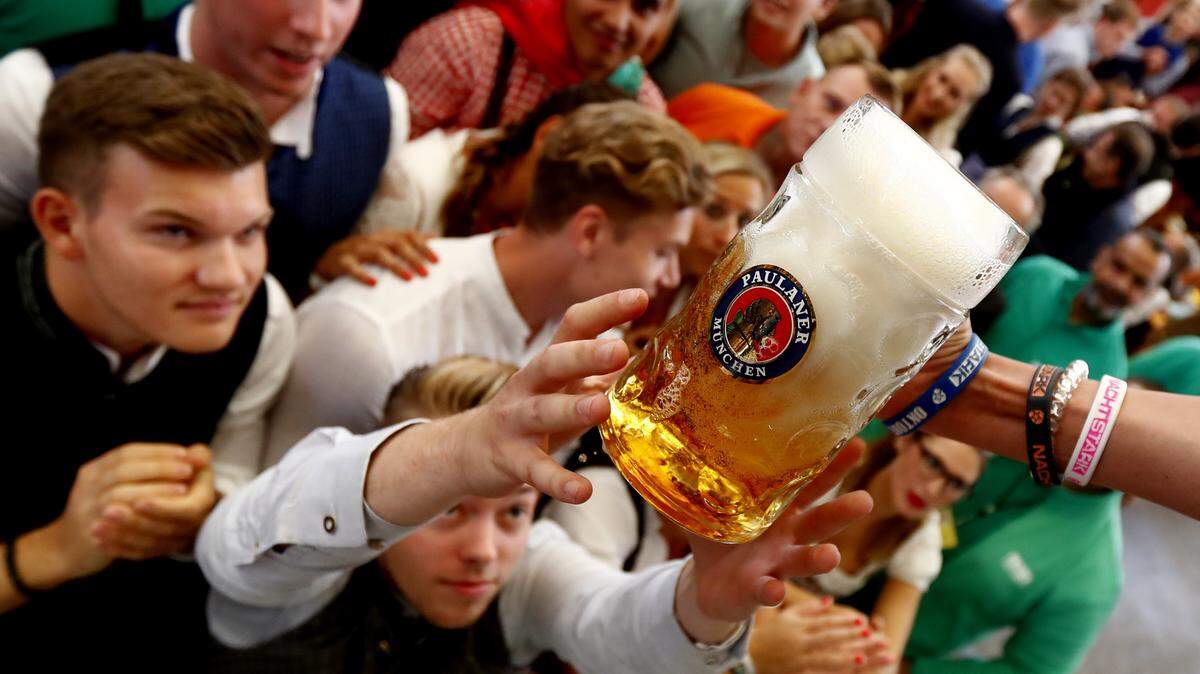
If nothing else can spur the world to combat climate change, maybe the love of beer can.
A new study published in the journal Nature Plants found that beer prices could double under the worst-case “severe” scenario for rising heat and droughts.
This study comes shortly after the release of a United Nations report that warned we have until 2030 to stop climate change from raising temperatures above a key threshold. Another recently-released study warned of “catastrophic” dips in mental health for some if climate change causes the global temperature to increase by 2 degrees Celsius (35.6 degrees Fahrenheit) above pre-industrial levels. In 2016, the World Meteorological Organization estimated that the world was already at 1.2 degrees Celsius (34.16 degrees Fahrenheit) above pre-industrial levels.
And now, this most recent study says one of the most popular forms of alcohol is squarely in the crosshairs of global warming.
Global temperatures are expected to increase the price of beer because barley — the main ingredient in the alcoholic beverage — is easily affected by heat and droughts, as noted by CNN. Rising heat can reduce how much barley is harvested, in turn increasing prices.
But study co-author Dabo Guan, professor of climate change economics at University of East Anglia, issued a warning for concerned beer-drinkers: Don’t drink away your worries about the effect of global warming. Instead, he told CNN, we have to work to stop it.
“The aim of the study is not to encourage people to drink more today,” he said, according to CNN. “If you don’t want that to happen — if you still want a few pints of beer — then the only way to do it is to mitigate climate change.
“We have to all work together to mitigate climate change.”
Forty-three percent of Americans said beer was their favorite type of alochol in 2016, according to Gallup, with 32 percent saying the same about wine and another 20 percent sticking by hard liquor.
To reach their findings, researchers looked at 80 years of different climate change models — which includes temperature and rainfall — to estimate how it would alter the yield of barley throughout the world.
In a worst-case scenario beer prices would double worldwide, the study says, and people would drink 16 percent less beer. That equals out to about 29 billion litres less. The price only jumps 15 percent and consumption drops four percent in less severe scenarios.
That change is driven by a drop in barley yield, which could be as little as 3 percent or as large as 17 percent, the study says.
However, the study’s authors noted that different regions of the world will experience the change in quantity and price differently.
“Changes in barley supply due to extreme events will affect the barley available for making beer differently in each region because the allocation of barley among livestock feed, beer brewing and other uses will depend on region-specific prices and demand,” it read.
The study actually predicted that northern United States and China could actually see an increase in the amount of barley harvested — but the U.S. may decide to “increase their exports to meet demand in other countries” instead of making more beer.
In a statement, Guan said that the increase in beer prices “will add insult to injury” for those living in the new environmental conditions, according to ScienceDaily.
“Although some attention has been paid to the potential impacts of climate change on luxury crops such as wine and coffee, the impacts on beer have not been carefully evaluated,” he said, according to ScienceDaily. “A sufficient beer supply may help with the stability of entertainment and communication in society.
“While the effects on beer may seem modest in comparison to many of the other — some life-threatening — impacts of climate change,” he added, “there is nonetheless something fundamental in the cross-cultural appreciation of beer.”
Richard Ellis, professor from University of Reading in England, said that the study, which he was not involved in, could actually be lowballing the price increases for beer if nothing is done to curb climate change, according to The Guardian.
He pointed to a fall in barley yields in the United Kingdom this spring as proof of climate change’s effect on the crop.
“For beer drinkers, this (study) converts an abstract concept ... into the more real future price of beer,” Ellis said, according to The Guardian.
This story was originally published October 15, 2018 at 3:01 PM.