
After taking ecstasy, antisocial octopuses get close and do ‘water ballet,’ study finds
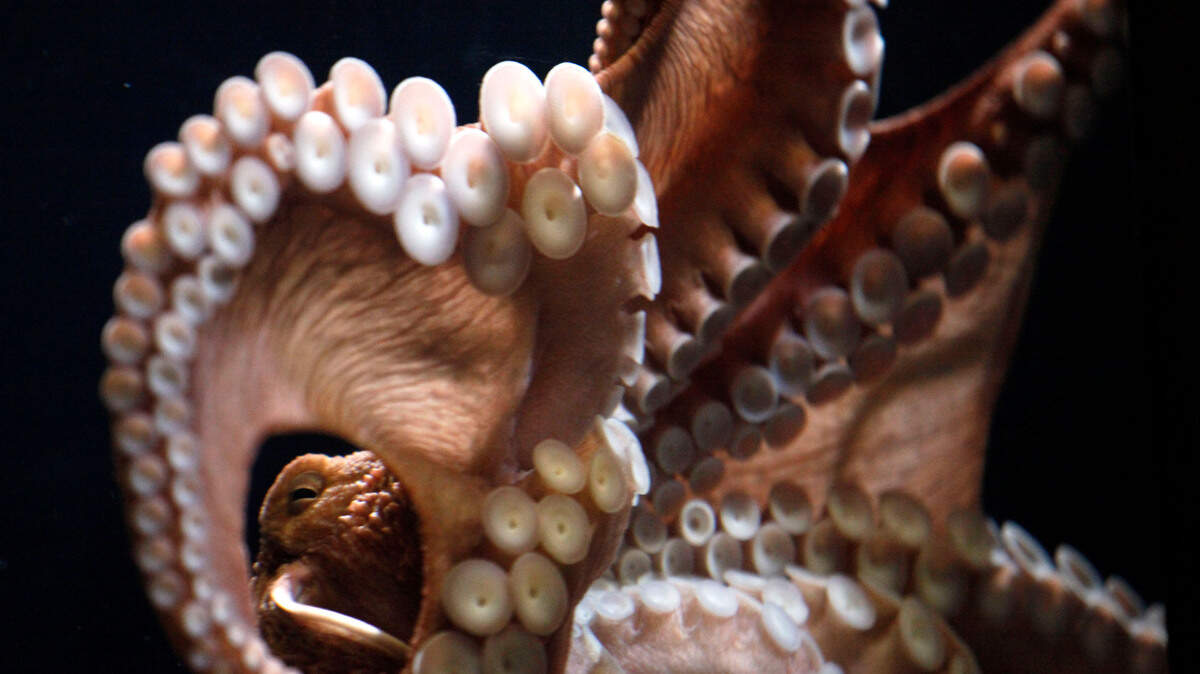
If you’ve ever wondered what an octopus on ecstasy would act like, today is your lucky day.
That’s because a just-released study published in the journal Current Biology examined how the critters would react to a dose of the drug, often referred to as MDMA and molly. Researchers say they discovered that octopuses on the drug react quite like humans, even though we are separated by more than 500 million years of evolution and have different brain structures.
Gül Dölen, a lead author on the study, explained the significance of those findings, according to Gizmodo.
“An octopus doesn’t have a cortex, and doesn’t have a reward circuit,” Dölen told Gizmodo. “And yet it’s able to respond to MDMA and produce the same effects, in an animal with a totally different brain organization.”
She said that finding is surprising because “the brains of octopuses are more similar to those of snails than humans,” Quartz reported.
“What our studies suggest is that certain brain chemicals, or neurotransmitters, that send signals between neurons required for these social behaviors are evolutionarily conserved,” she continued, according to Quartz.
But let’s be honest: You’re probably here for a description of how octopuses act when they’re tripping on ecstasy.
And the study has some answers for you.
To get the octopuses high, researchers exposed the aquatic animals to seawater and ecstasy. They were then put in a three-chamber tank that had an empty room, a room with a toy and another room with a (sober) octopus inside, the study’s authors noted.
At first, the dosage of ecstasy appeared to be too high — and frightened octopuses turned white.
“They really didn’t like it,” Dölen said, according to NPR. “They looked like they were freaked out. They were just taking these postures of super hypervigilance.
“They would sit in the corner of the tank and stare at everything.”
But once the dosage was lowered, scientists say they noticed some really interesting changes in how the octopuses acted.
Octopuses on ecstasy sought out the room with the other octopus — despite appearing to be tense in the room when they weren’t high on the drug, the study’s authors noted.
In an interview with The Atlantic, Dölen explained the differences in how they acted.
“They mashed themselves against one wall, very slowly extended one arm, touched the [other animal], and went back to the other side (before taking the drug),” Dölen said, according to The Atlantic. “But when they had MDMA, they had this very relaxed posture. They floated around, they wrapped their arms around the chamber, and they interacted with the other octopus in a much more fluid and generous way.
“They even exposed their (underside), where their mouth is, which is not something octopuses usually do.”
As noted by the study, octopuses are “predominately asocial and solitary” — so the sudden change of heart stood out.
But Eric Edsinger, who also worked on the study, said it isn’t fair to completely write off octopuses as lonesome beings.
“Octopuses aren’t 100 percent asocial; they have some tolerance for each other,” Edsinger said in a press release. “The drug probably amplified a low level of tolerance a bit.”
Ecstasy appeared to affect the octopuses in other ways, too. The researchers said some octopuses appeared to be doing “water ballet” or flipping around, Gizmodo reported, while another critter seemed entranced by certain smells that it wouldn’t have been otherwise.
But with a small sample size of just seven octopuses, Dölen cautioned that more research is needed to make sure the findings are accurate, according to Gizmodo.
And neuroscientist Zachary Mainen, from the Champalimaud Centre for the Unknown, said the study is interesting — but he isn’t sure whether it proves that humans and octopuses really do get the same feelings when tripping on ecstasy, according to NPR.
“Is it really affection? How would we know?” Mainen asked NPR. “It’s totally fascinating and super-suggestive, but I am not a hundred percent convinced that this is doing the same thing in octopus and in human.”
This story was originally published September 20, 2018 at 2:57 PM.