
Puerto Rico’s suicide rates spiked after Maria. And the mental health crisis isn’t over.

Puerto Rico:
The Forgotten Island

Puerto Rico’s suicide rates spiked after Maria. And the mental health crisis isn’t over.
SAN JUAN, Puerto Rico (En español)
Even before Hurricane Maria upended life in Puerto Rico, there was an ugly crisis brewing on the picturesque island.
Just months before the storm, the first comprehensive mental health survey of the island found 7.3 percent of the population was suffering from a “serious mental illness” — far higher than the national average of 4 percent.
A decade-long recession, high unemployment, crime and a general feeling of helplessness had gripped La Isla del Encanto. Then came Maria.
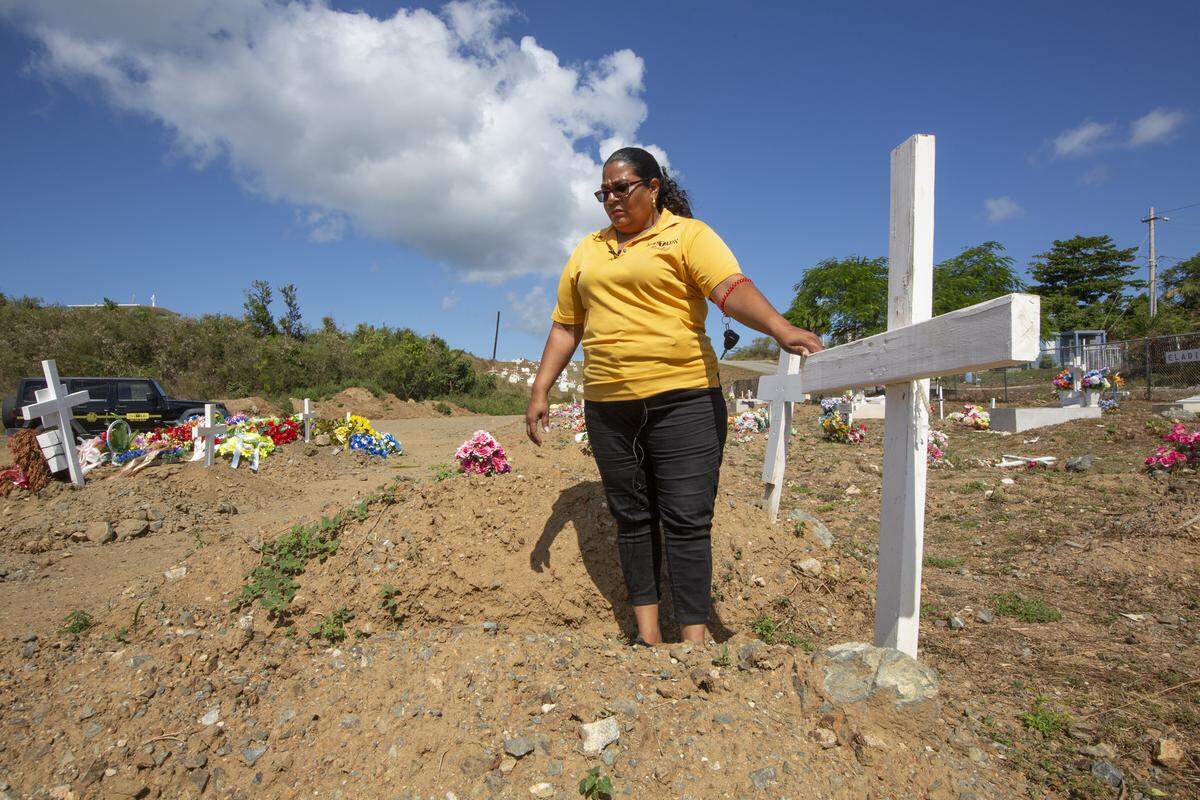
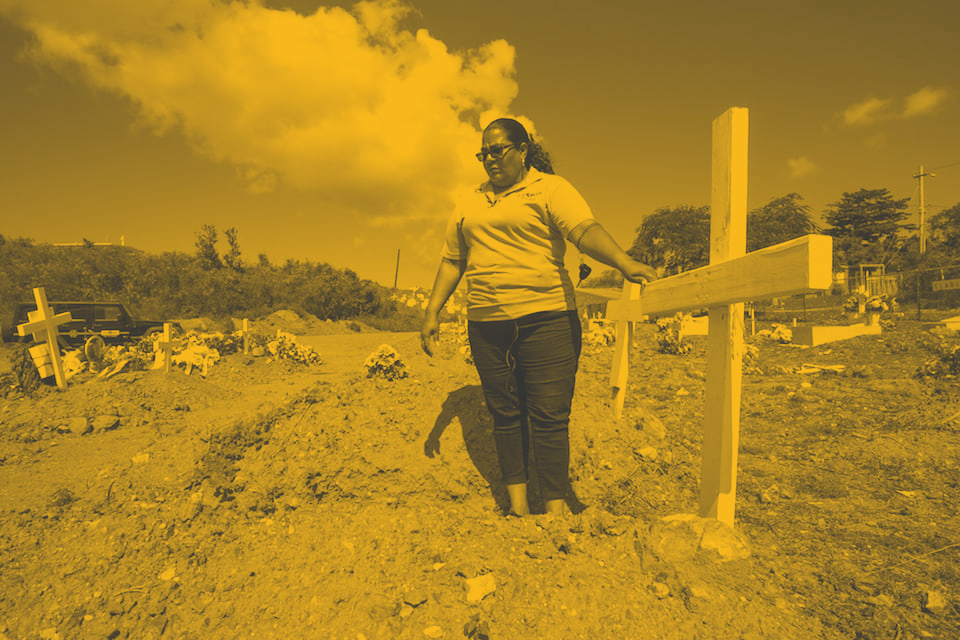
Marilisa Vélez García, a 44-year-old cab driver, said she was already suffering from postpartum depression and struggling to make ends meet when the Category 4 hurricane piled on the pain.
Struggling without electricity, potable water or reliable communications, García’s elderly mother died weeks after the storm due to undiagnosed pneumonia. Then García’s horse died, her pet bird died and she was broke.
“I fell into a deep depression,” García said from her home in Vieques in eastern Puerto Rico. “I cried every single day of my life. And every time I saw my destroyed island, it filled me with so much pain.”
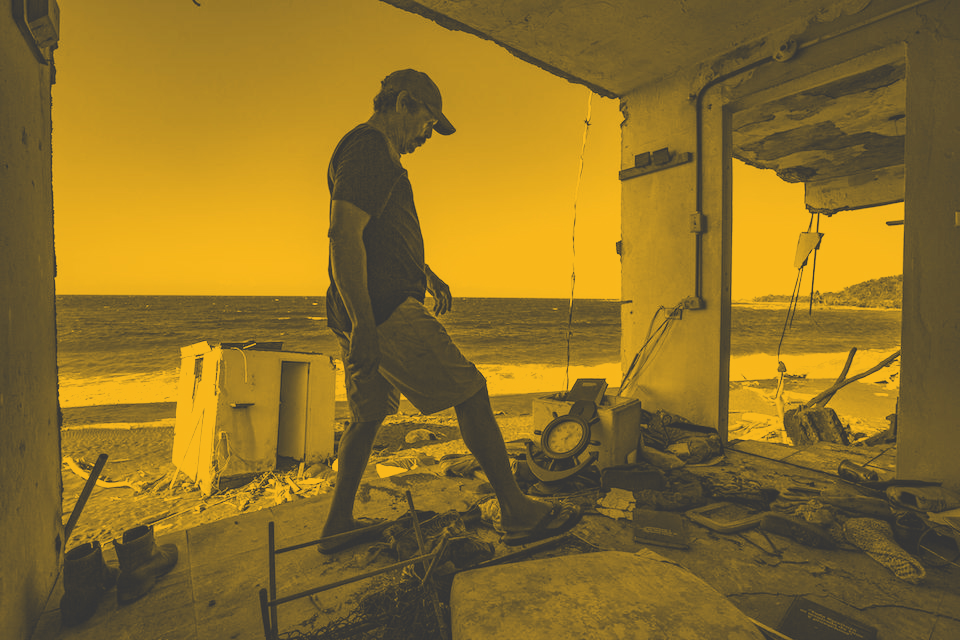
The storm that hit Sept. 20, 2017, killed almost 3,000 people. The island’s roads, bridges and power grid were hammered. A year later, much of the physical damage has been repaired — but experts say the emotional and psychological damage could take longer to heal.
Sonia Santiago, a psychologist and university professor in San Juan, said she’s seen an increase in anxiety, depression and post-traumatic stress disorder in the wake of the storm. Exacerbating the problem is that many local health insurance plans don’t cover mental health therapy, or make it prohibitively expensive, on an island where 43.5 percent are under the federal poverty line.
“People are focused on their immediate needs,” she said. “People are more worried about eating than going to the psychologist.”
Natural disasters can be tough even for people with more resources than many Puerto Ricans. A study conducted by the University of Albany after Hurricane Sandy hit New York in 2012 found “a significant increase in emergency room visits for substance abuse problems, psychosis, mood disorders and suicides throughout the city.”
In Puerto Rico, some households went almost a year without electricity, and even now, power and communication outages aren’t uncommon.
“We’re seeing serious problems of suicide and domestic violence,” Santiago said. “And that wasn’t so common before.”
Puerto Rico recorded 254 suicides last year — up 28 percent versus 2016. And this year is on track to match that level, with 137 suicides from January through July.
Suzanne Roig Fuertes, the head of Puerto Rico’s Mental Health and Anti-Addiction Services Administration, said last year’s suicide spike appears worse than it truly was because the rate in 2016 had been lower than usual. And the island’s overall suicide rate — of about 8 per 100,000 residents — is actually lower than that of the mainland United States, where the average is 13.5 per 100,000.
She said last year’s storms only exacerbated existing problems.
“We’re living through a deep financial crisis that has been with us a long time, and then we had to live through two back-to-back hurricanes,” she said, referring to Hurricane Irma, which scraped the eastern end of the island 20 days before Maria.
The government has responded to the uptick by sending out brigades of social workers to canvass communities and share mental health tips. It has also relaunched its suicide hotline. In the days and weeks after Maria, the line was getting up to 800 calls a day. Now it’s receiving about 500, she said.
“Even one suicide is too many, and while we continue having too many we’re going to continue these efforts,” she said.
Nonprofits are also stepping in. Save the Children, a U.S.-based agency, has been developing a program that helps youth deal with post-traumatic stress caused by natural disasters. The program, called Journey of Hope, was first developed after Hurricane Katrina and has been used after Hurricanes Harvey and Sandy. But after Maria, unlike those earlier disasters, researchers in Puerto Rico noticed the pile-on effect of a devastating storm coupled with years of an economic downward spiral.
“Parents [in Puerto Rico] were already going through incredibly challenging socioeconomic situations prior to the storm,” said Barbara Ammirati, the deputy director of programs with Save the Children Puerto Rico. “That insecurity in their lives, loss of jobs, closure of schools, the exodus from the island of young professionals — Maria really just pushed that over the edge.”
Sometimes children react to the stress by regressing — wetting their beds again, or being unable to sleep alone. In some cases, she said, they found children as young as 8 who had contemplated suicide after the storm because “they were completely desperate and worried about what their family was going through.”
Another vulnerable group — drug abusers — also were among the hardest hit.
On a recent weekday, Daniel Santiago, a doctor with Iniciativa Comunitaria, a San Juan-based nonprofit, was tending the seeping, ulcerated wounds of a heroin addict on the streets of San Juan. The organization, which also provides free healthcare in rural areas, said it’s seen a spike in the homeless population since Maria. And once on the streets, people often end up in the island’s drug underworld.
“Across all of Puerto Rico we’ve seen social problems exacerbated” by Maria, he said. “This is a marginalized population that has been even more marginalized.”
The mental health survey found that 15 percent of those with “serious mental illness” also had substance-abuse problems. And trying to address one issue without addressing the other is often pointless, he said.
But money to treat drug addicts has been hard to come by. Before Maria, Iniciativa Comunitaria ran separate drug-treatment facilities for men and women. Since the storm, it’s had to consolidate them amid cutbacks in private and public funding.
For Maria survivors, the last few weeks have been particularly painful. In the heart of the hurricane season, some view the anniversary with a sense of trepidation.
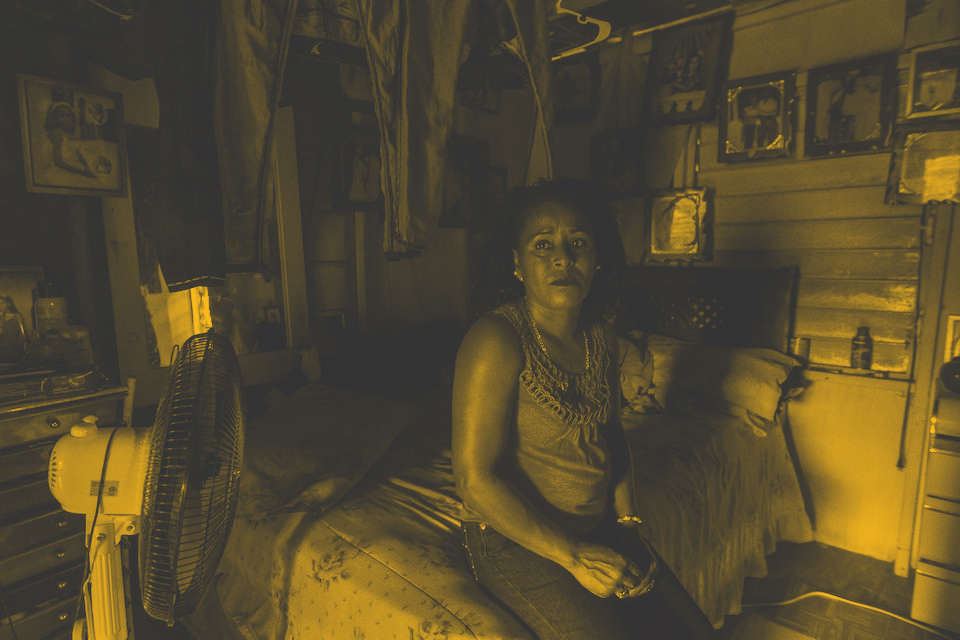
Liz Nazario, a 30-year-old mother of two who lives in the hard-hit and mountainous region of Naranjito, said she recently visited the doctor because she has been battling headaches, lethargy and tightness in her chest. His diagnosis: There were no underlying health issues, but she was carrying around Maria-related stress.
Nazario says one way she’s coping is to try to shut out the world.
“I just can’t watch the news anymore,” she said. “It just makes me so anxious and stressed thinking about everything we’ve been through.”
This story has been corrected from the original.



This story was originally published September 20, 2018 at 7:00 AM.