
Europeans arrived — and America's native dogs disappeared. They left something behind
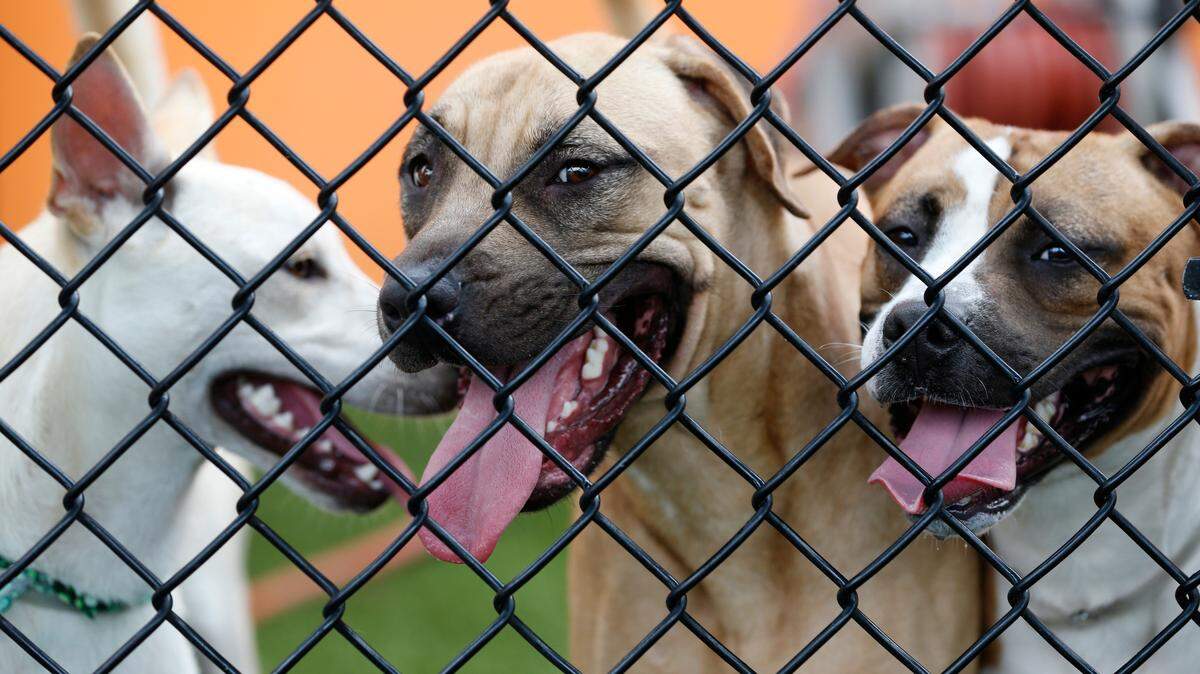
After Europeans arrived to North America, the continent’s native dogs soon became a thing of the past.
But those ill-fated canines left behind a nasty sign of their existence — an infectious cancer, according to a study published in the journal Science.
Ancestors of dogs native to North America are believed to have arrived from Siberia at least 9,000 years ago when crossing the Beringia bridge that once connected Siberia and Alaska, the study found. Those dogs then spent thousands of isolated evolution on the continent.
Now those dogs are all but gone, and few modern dogs have much DNA in common with the ancient ones from America.
To reach this conclusion, the researchers examined the DNA of 71 Siberian, North American and Mexican dogs and compared it to 5,000 dogs that remain today. Out of those thousands of modern dogs, five had DNA in common with the ones native to North America, the study says. That includes a Chihuahua that had trace amounts of its DNA in common with the dogs native to America.
Elinor Karlsson, a geneticist from the University of Massachusetts Medical School, told the Associated Press that the findings are "really surprising."
"There were millions and millions of dogs all over the continent (that) died out after the Europeans arrived," he said. "And the fact that we don't know anything about it is kind of a big hole."
Even though no one really knows why the dogs vanished, scientists have some educated guesses, according to National Geographic.
It could be that Europeans killed the native dogs when they wiped out the native people, or it's possible the European dogs brought over diseases that the American dogs were unable to survive.
Another hypothesis is that Europeans refused to let their dogs breed with American dogs, explaining why there is little cross-breeding.
“There were some really strong rules about not allowing your nice, 'pure' European breed dogs mate with North American dogs,” study author Angela Perri told National Geographic.
Still, those American dogs left something behind: canine transmissible venereal tumors, which can spread from dog to dog, according to a news release obtained by The Detroit Free Press. The disease -- which can spread from biting, smelling and sexual contact with a part of the dog's body infected with the tumor -- had a small amount of DNA in common with American dogs.
"Remarkably, the research revealed that the dog that first spawned CTVT was closely related to American pre-contact dogs," the statement read. "Overall the results indicate that this cancer, now found worldwide, possesses a genome that is the last remaining vestige of the dog population that was once found all across the Americas."
Study co-author Elizabeth Murchison told The Associated Press that the cancer is "the closest remaining vestige of this lost dog lineage."
That led Perri to declare that the now-extinct dogs are actually “living on in giving other dogs, you know, butt cancer."
“It's kind of a sad story," she told National Geographic, "but there it is.”