
Miami community activist Robert Simms dies at 87 in Alabama
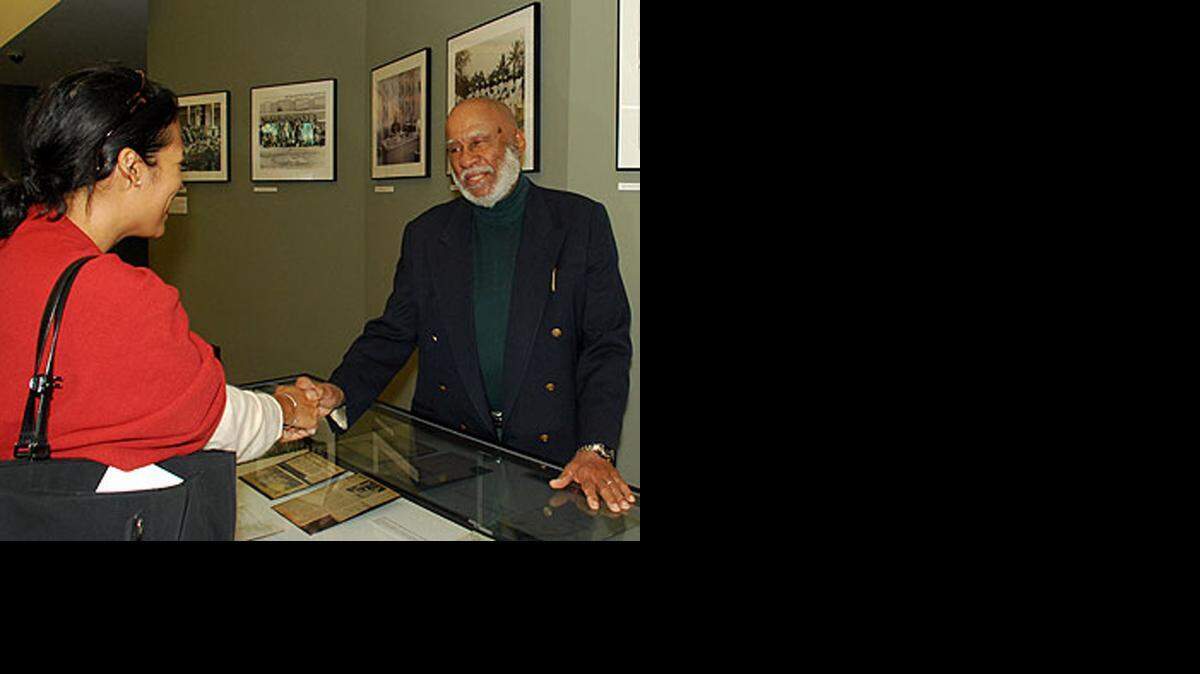
Robert “Bob” Simms once saw his job as executive director of the Metro-Dade Community Relations Board as akin to running a rescue squad at a major hospital.
After all, the CRB, formed to resolve ethnic tensions in Miami-Dade in the tumultuous 1960s, had in Simms a leader, its first black executive, who oversaw Miami’s growing pains in the decade before the McDuffie riots in May 1980 and through its aftermath.
“We were created at the cutting edge,” Simms said in a June 1983 Miami Herald profile on the eve of his resignation after a 15-year run begun in 1968. “I’d rather we were the hospital than the rescue squad, with time to examine the patient, diagnose his problems, see to his recuperation. But we don’t have that luxury.”
The group did have Simms, a Xavier University of Louisiana grad of low-key manner with much substance. He was described in a 1983 Herald editorial as “a racial troubleshooter” who “didn’t just put out fires; he prevented them. He effectively bridged the gap between races, religions, and ethnic groups; between haves and have-nots; between the ins and the outs of an increasingly class-divided society.”
Simms, who died Monday in Tuskegee, Alabama, at 87, played many roles after moving with his family to Miami from Alabama in 1953.
Over the years, Simms served as director of the Small Business Development Center in mid-1960s Miami, developed the Miami Inner-City Minority Experience program for the U.S. Department of Defense in the 1970s and was an early leader in forming the M.A.S.T. Academy.
“He was taken aback when he got here that black people couldn’t swim, with all this water around him. He was the one who developed the prototype for black children to be able to do things on the water and from that came M.A.S.T. Academy,” said historian Doroth Jenkins Fields, founder of the Black Archives, History and Research Foundation of South Florida.
Simms was also an adviser on diversity at Ransom Everglades School in Coconut Grove.
In addition, Simms, with his late wife Aubrey Watkins Simms, was a founding member of the Church of the Open Door in Liberty City. Simms was the first black member of the Orange Bowl Committee, said his friend, Albert Dotson Sr., who served a term as president in the late 1990s.
“Bob was a leading proponent for the naming of the Chappie James Award for scholar athletes,” Dotson said of the Orange Bowl honor named for the late four-star Air Force Gen. Daniel “Chappie” James. “He was the behind-the-scenes person who always pushed others for the award. He was never seeking the limelight for himself and, by virtue of that, many of us are standing on his shoulders.”
Simms, born on Oct. 2, 1927, in Snow Hill, Alabama, spent 12 years as athletic director at George Washington Carver School in Miami before accepting the CRB post.
There, Simms championed strivers. “We’ve got to start doing something for our good kids. One, make sure they succeed. Two, make their success visible as a model for others with potential. Three, bring our winners home to Miami and stop them from draining out to other parts of the country.”
Jenkins Fields calls Simms, “an urban renaissance man” for his work in the community over the years.
“When integeration was coming in he was one who began developing programs where blacks and whites would meet together and have conferences,” she said. “He made opportunities for blacks and whites to work together and plan together for the children.”
After his wife, a retired University of Miami administrator and board trustee of the Fairchild Tropical Botanic Garden, died in 2006, Simms created a living memorial: the Aubrey Watkins Simms Memorial Garden on the grounds of the Church of the Open Door.
“What Aubrey’s garden has done is to give Fairchild an entree into this part of the community,” he said in a 2007 Miami Herald column.
Bringing communities together — that was Simms’ mission. A University of Miami board trustee, Simms donated many of his photographs and memorabilia items to the school for future generations to learn about a significant part of Miami’s history.
“Through the years, Bob Simms was of wise counsel to this community and to me personally on issues of race relations,” said UM President Donna Shalala on Wednesday. “The University of Miami is honored to have acquired the Bob Simms Collection as part of its UM Libraries’ Special Collections, where students and researchers can continue to share his life and legacy in the black communities in Coconut Grove and Miami, dating from the 1950s.”
Simms is survived by his daughter Leah Simms, Florida’s first black female judge, and his son, radiologist David Simms. Details on services were not available.
Follow @HowardCohen on Twitter.
This story was originally published December 17, 2014 at 7:00 AM with the headline "Miami community activist Robert Simms dies at 87 in Alabama."