
Trailblazing Coconut Grove photographer, Klara Farkas, dies at 103
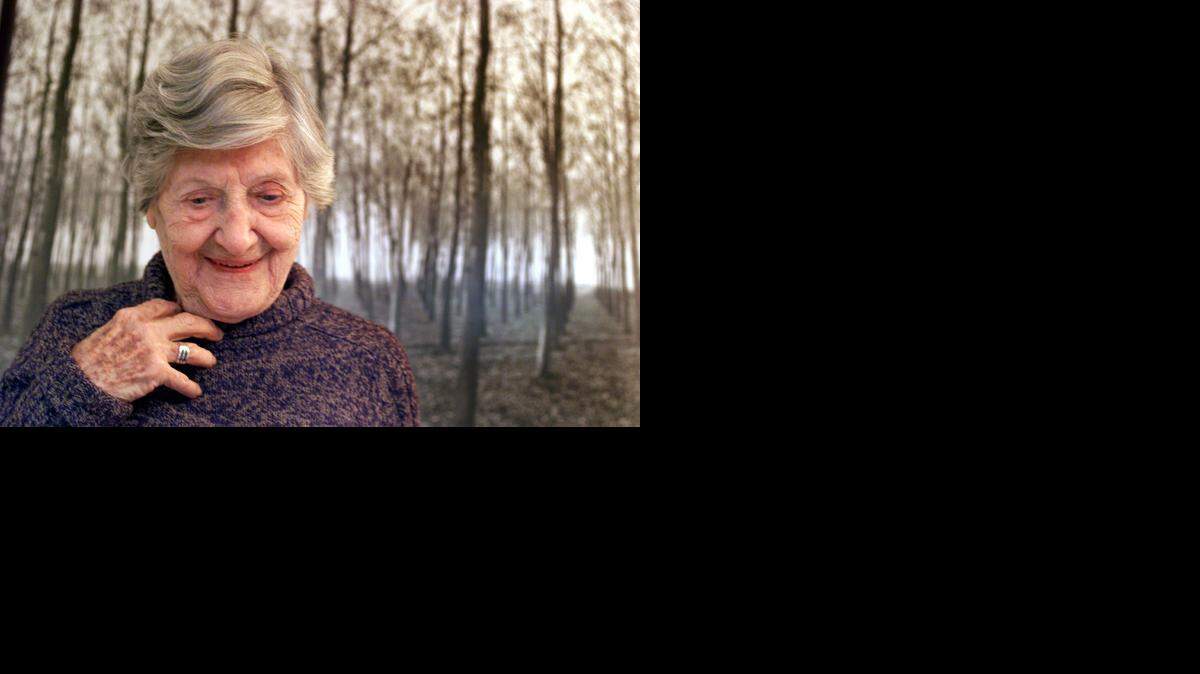
Klara Farkas photographed Miami dignitaries in the environmental world like David Fairchild and Marjory Stoneman Douglas. Commerce leaders Roddy Burdine and Judith Arango Henderson. Civic activists Roxcy Bolton and Elizabeth Virrick.
She captured South Florida’s distinctive surroundings for some 70 years, too, because — like the pioneering people — buildings and natural beauty are also judged by their character, “and I knew how to look at people,” Farkas once said.
Her photographs were a virtual Google resource, “the last word on the origins of Miami’s cultural life from the 1940s to the near present,” art historian Helen Kohen wrote in a 2010 profile in Home magazine. Farkas’ work has been published internationally and exhibited nationally. Her exhibit of 10 notable Coconut Grove women hangs in the permanent collection at the Miami-Dade Public Library.
But Farkas was a work of art herself.
Through her last days, at 103 “six weeks shy of 104,” her daughter Georgette Farkas Ballance said, Farkas, who died Tuesday, was ever on the go. “She was inquisitive throughout her life and prided herself on keeping up with current events and being politically active.”
Farkas, who had season subscriptions to the New World Symphony and Cleveland Orchestra Miami, went to 25 concerts last year with her friend Brenda Williamson. The pair were family friends since Williamson was 7. “She took my wedding photographs in 1966,” Williamson said.
Farkas always sat in the front row so she could see the conductor, owing to macular degeneration, which had robbed much of her sight, a cruel irony for a photographer. Last week, Williamson attended a New World Symphony concert at Miami’s Adrienne Arsht Center for the Performing Arts without Farkas. “It was very moving,” she said. “When we arrived and entered the hall without her, people came up to ask me where she was. She was a legend.”
“She was a pioneering Miami artist. Much beloved and much admired,” Kohen, a former Miami Herald art critic, said.
Born in Budapest, Hungary, on Dec. 2, 1910, Farkas studied piano there at the Royal Academy of Music, but stage fright suggested music was to be a life-long love, not a career. She married famed architect and interior designer George Farkas in 1933 and discovered her future.
“I wanted to work with him, but I didn’t want to be a secretary. So I said I’d take pictures of his work. I went to a studio and studied photography,” she said in a 2003 Miami Herald feature on the eve of the opening of her exhibit, Glimpses of Nature, curated by her daughter, at The Kampong in Coconut Grove.
The couple moved to London in 1937. Two years later, her husband’s posters were exhibited in the New York World’s Fair. With World War II threatening Europe, the couple moved to New York.
South Beach, before it was South Beach, came calling. In 1940, George was offered a chance to design the Modern Age furniture building (later a bank) on Lincoln and Alton roads in Miami Beach. Klara used an office above the Forge restaurant on 41st Street for a studio and developed her portraits in a whiskey storage room turned darkroom.
“She used to say it was like magic, watching those photographs appear in the chemical solution,” Ballance said. Six years later, the family moved from Miami Beach to the Dwight James Baum-designed Coconut Grove home Klara would live in for the rest of her life. The lush foliage of the neighborhood provided the natural light Farkas preferred and also led to all sorts of visitors to the darkroom.
“There were always scorpions,” Ballance said. “You had to make noise before you went in there.”
Farkas’ passion for the arts led to her involvement in the creation of the Lowe Art Museum on the University of Miami grounds and she taught photography at the long-gone artists’ haven, Grove House, in the 1960s.
“To get a job as a photographer was impossible. People would say, ‘I can’t put you in the darkroom with a man.’ So you had to be on your own,” Farkas told the Herald at age 92. She helped form the Women’s Caucus for Art group to promote female artists.
“She had a passion for living and was always ready for an adventure,” Ballance said. Farkas traveled extensively throughout the world with family or friends.
She was well versed in the arts and music — she once quipped to Kohen that the sketchy acoustics in the old Miami High School auditorium were “so generous, you could hear everything twice” — and was also an advisor to Lowe’s Beaux Arts and president of the University of Miami Women’s Guild.
She was a member of the League of Women Voters, Miami Art Museum, Wolfsonian, Fairchild Tropical Botanic Garden and fellow of The Kampong. She supported the research and development of The Institute for EthnoMedicine.
Miami’s cultural roots blossomed in the fertile soil of Farkas’ photographs, and her diminished sight and advancing years did little to stifle her creative impulses.
A decade or so ago, when Williamson worked for Audubon of Florida, the two went to a swamp sanctuary in Naples and came upon a trail, about a mile long. Williamson wanted to explore a bit.
“I thought she would sit there on a bench and wait for me. She wouldn’t have any part of that. She walked the trail,” Williamson said. “Klara had macular degeneration but I still have pictures of her looking for birds through her binoculars. She never gave up.”
In addition to her daughter, Farkas is survived by her son, Tom Farkas, in Utah. There will be no services at Farkas’ request.
Follow @HowardCohen on Twitter.
This story was originally published October 24, 2014 at 8:00 AM with the headline "Trailblazing Coconut Grove photographer, Klara Farkas, dies at 103."