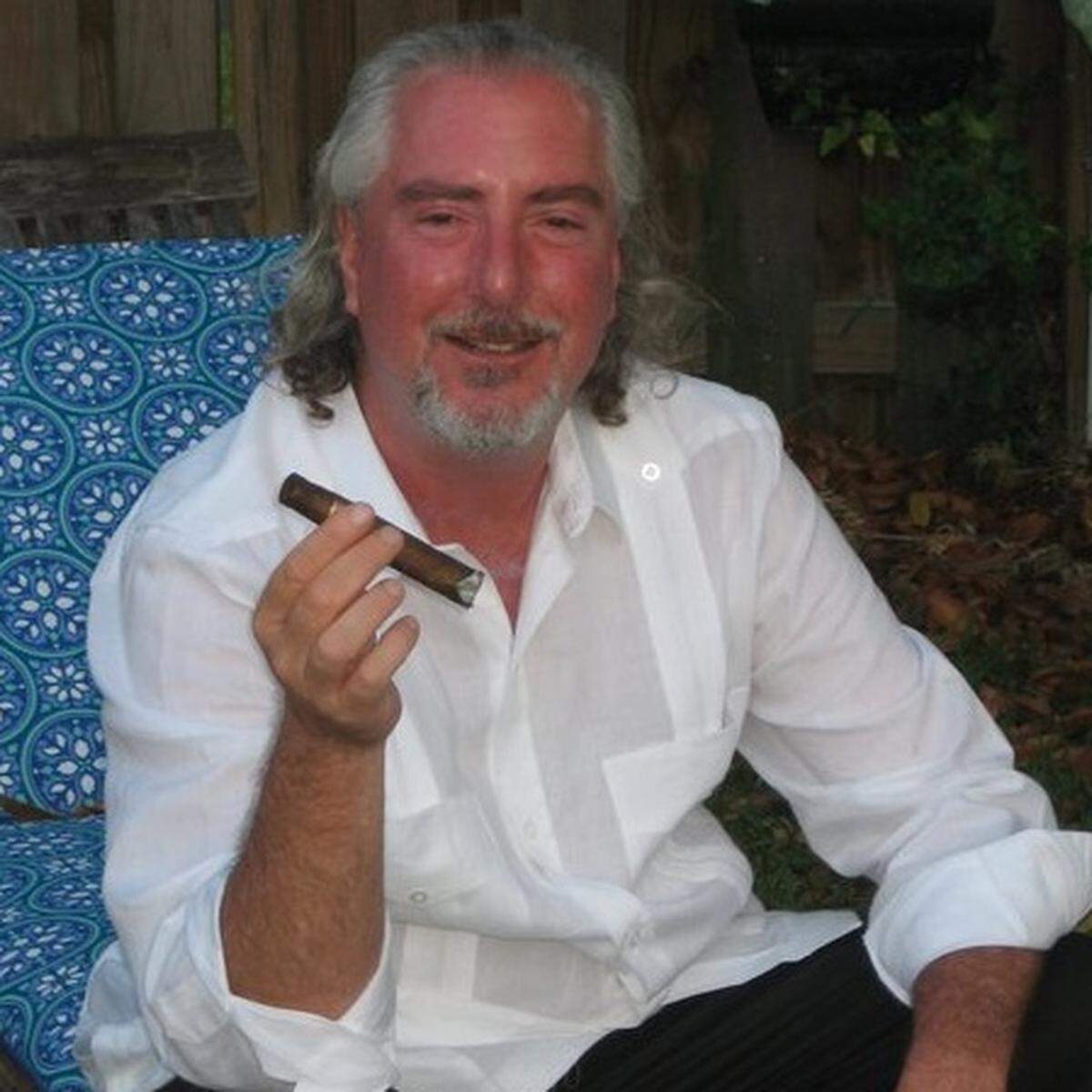
Past ACLU president in Miami who fought for Elián’s rights, First Amendment, dies at 63
John de León, a civil rights crusader and former Miami-Dade assistant public defender who rose to the top of the local chapter of the American Civil Liberties Union and who once protested outside the New York Times over the media’s use of the term “Illegal immigrant,” died last week after a lengthy battle with a debilitating illness.
De León, who co-founded the Miami law office of Chavez & de León with the son of legendary labor rights activist Cesar Chavez, was recognized for his passionate work for immigrant rights and social justice. Even as a child, he had an affinity for wayward animals and those targeted by bullies, his sister said.
He died April 10 at his Miami home from complications from Parkinson’s Syndrome, his spouse at his side. de León was 63.
“He had a tremendous amount of sympathy and empathy for people,” said de Leon’s sister Lidia Maria de León. “There was just something in him that he just understood people and helplessness.”
The son of Hispanic migrants who fled Fidel Castro’s Cuba in 1959, de León’s Catholic upbringing led him to Miami’s Archbishop Curley-Notre Dame High School. He would later attend the University of Miami and receive a law degree from Georgetown University and a master’s from Columbia University in New York City.
By 1987, he was working for the Miami-Dade Public Defender’s Office. That lasted 14 years. When a short stint in corporate law didn’t work out, de León ended up in Bogota, Colombia, working for a USAID-funded project that helped the government with criminal defendants.
Elián Gonzalez case
Most of the next 15 years were spent with the Miami’s ACLU— where de León twice served as president alongside legendary Florida ACLU director Howard Simon — and at de León’s own law firm. During those years, de León and Simon worked on some of the agency’s most significant and groundbreaking cases.
They filed a brief with the courts that argued young Cuban rafter Elián Gonzalez had the right to file for asylum, even though his father had the right to the child’s custody. The case was the forerunner to U.S. Attorney General Janet Reno’s decision to snatch Elián from his cousin’s Little Havana home and reunite him with his dad in Cuba.

They also worked on a case that forced the city of Miami to allow Cuban salsa band Los Van Van to play in the city despite the opposition of elected leaders. And the ACLU successfully fought the city of Miami’s attempt to end the lease of the Cuban Museum of Arts and Culture because it displayed the work of Cuban artists.
Simon said de León was instrumental in teaching him the ins and outs of the byzantine world of Cuban politics. And, he said, de León fought fervently to make certain that local government leaders wouldn’t recreate the kind of political repression in Miami that Cuban nationals faced at home.
“John’s passion was for freedom, freedom to think and speak. We worked together through the many battles with Miami and Miami-Dade officials who censored all things related to Cuba and Castro — but especially speakers, concerts, artists and even museum exhibits,” said Simon.
Accolades for his legal work
Those fights gained de León recognition. In the early 2000s he was named best promoter of social diversity by Miami New Times. The Miami Herald called him one of the “40 to watch” in the new century and he was cited as a top 100 trial lawyer by the National Trial Lawyers organization.
New York Times Latin American and Caribbean reporter Frances Robles was a police reporter with the Miami Herald in the 1990s when she first met de León. They became good friends while both worked in Colombia and they shared a passion for good food and music.
“He was a true defender of human rights who would speak out when someone died in police custody under questionable circumstances. I could always count on him for wise and sharp legal analysis,” said Robles.
de León spent most of past decade dealing with issues related to Parkinson’s. It often left him weak and unable to speak, which hindered his ability to communicate. Still, his sister said, up until the very end, de León and his husband spent a considerable amount of time each summer at their home in Maine overlooking a scenic river.
“That was his soul place,” she said. “There was just a lovely spirituality there.”
de León is survived by spouse Hector Cadena de León, sister Lidia, brother Leon Mario de León and nieces Jacqueline and Lauren de León.
A memorial service open to the public is scheduled for 12:30 p.m. May 3 at St Patrick’s Catholic Church in Miami Beach.
This story was originally published April 14, 2025 at 3:34 PM.