
Joe Fleming, a Miami lawyer with a hand in preservation and environment, dies at 83
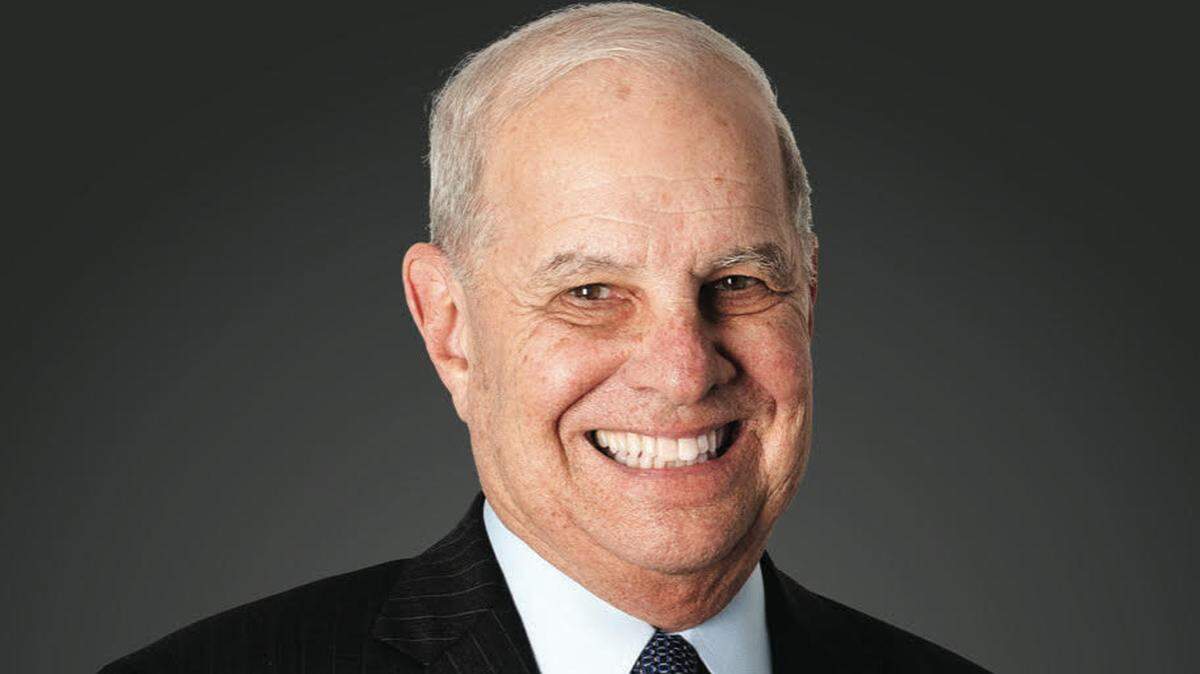
Joseph Z. Fleming, an attorney who played an essential role in preserving Miami’s architectural and environmental resources, died earlier this month. He was 83.
A Miami Beach native, he was known not only for his impressive roster of high-profile clients that ranged from airlines to sports teams but for his profound commitment to responsible stewardship of both nature and architecture. He had a formidable wit and an unstoppable commitment to the truth. He also, at times, wrote humorous poems and songs on topical political subjects. `
As an attorney, Fleming — known to friends and colleagues as Joe — was prominent both locally and nationally for his expertise on a vast range of legal and intellectual subjects including labor, civil rights, employment, sports law, entertainment, environmental and land use and historic preservation law.
“He was truly a ‘Renaissance man,’ ” said Matthew Gorson, senior chairman at the Greenberg Traurig law firm where Fleming was a shareholder. ”Joe was always a gentleman, available to help, give guidance to younger attorneys and be a friend to all. He was a treasure to the local bar and will be greatly missed.”
He was a frequent lecturer and was widely published in legal journals. with articles that were simultaneously witty and wise.
James Redding, a close friend and colleague at Greenberg Traurig recalls a legal filing on a union case where Fleming referenced a character in John Irving’s book “The World According to Garp.” Gorson said Fleming often quoted H.L. Mencken to him in procedural and other conversations. He was also fond of quoting the baseball great Yogi Berra.
For decades, Fleming was listed as one of the top lawyers in America for most of his decades-long career.
“Joe was the best lawyer I’ve ever known,” said Porpoise Evans, managing shareholder at the Littler Mendelson law firm, who as a young attorney at Greenberg Traurig was mentored by Fleming. “So many life lessons.”
Evans recalls that one of those life lessons was advice that” if all else fails, quote Woody Allen,” but on a more serious not cites a sensitive and fraught negotiation the two worked on with the Teamsters Union. ”The more threatening they were, the more esoteric Joe’s arguments became. By the end of the day, we walked out at an impasse. A week later, they called to concede every point he had made.”
Another longtime friend and colleague, Federal Judge Paul Huck, agreed, saying that “Joe Fleming, was one of the finest lawyers and human beings that I have had the pleasure of knowing. Supremely intelligent yet genuinely modest, creative, yet effectively pragmatic, gracious and generous, inevitably with a touch of quirky humor. Joe just made you feel good. If all lawyers were more like Joe Fleming, there would be no lawyer jokes.”
If the law was his vocation, using the law for the greater good was his all-consuming passion. As a civic activist he used his legal acumen to guide Barbara Capitman and the Miami Design Preservation League to the designation of the Miami Beach Art Deco District as the nation’s first 20th Century National Historic District. He further successfully sued the City of Miami Beach to force the adoption of meaningful protections of its historic buildings.
“This would never have happened without Joe’s skill and determination,” said Andrew Capitman, who along with his mother Barbara, led the creation of the district. All his work on behalf of historic preservation or the environment was pro bono.
He long acted on behalf of the Tropical Audubon Society, and the list of his victories over the course of more than four decades is lengthy.
“He effectively leveraged the successful fight against the Everglades Jetport; prevented the creation of a drainage district that would have destroyed thousands of acres just north of the boundary of Everglades National Park, and took action to prevent the creation of a ‘bulkhead line’ along South Biscayne Bay, avoiding the destruction of thousands of acres of vital coastal wetlands in what would eventually become Biscayne National Park,” said Charles Lee, who is director of advocacy for Audubon Florida.
Fleming’s legal intervention prevented the expansion of the Munisport Landfill in northern Biscayne Bay, and his legal expertise was instrumental in blocking a large development project in Southwest Florida’s Keewaydin Island that would have threatened the Rookery Bay National Estuarine Sanctuary.
Said Lee: “Joe left an indelible mark on South Florida, ensuring the preservation of important natural areas that otherwise would have been lost to development.”
Fleming also worked with the 1000 Friends of Florida to create environmental protections for Cross Creek, the home of Marjorie Kinnan Rawlings, the Pulitzer Prize winning author of The Yearling.
Starting in the early 1980s, Fleming represented the artists Christo and Jeanne-Claude, deftly guiding them through what the Miami Herald termed “the labyrinthine slog” of the approval process that led to one of the major art events of that decade — Surrounded Islands — an environmental artwork that in 1983 elevated Miami’s stature in the world of contemporary art and simultaneously called attention to the beauty and the peril of Biscayne Bay.
The designation and protection of Biscayne Bay was his last, largest and most ambitious project. Along the way, Fleming enlisted the support of both local and national leaders in preservation and conservation, as well as engendering wide admiration.
“His dedication and commitment serve as a living memorial to those who follow in his footsteps,” said the Miami-born and New York-based artist Michele Oka Doner.
“My father was a remarkable man who had a steadfast commitment to truth and civic duty and a unique talent for making people laugh,” said his daughter, Kate Fleming, founder of Bridge Initiative, an organization that brings artists and scientist together to create public art for environmental advocacy. In recent years, father and daughter had worked side by side spearheading an ambitious ongoing effort to designate Biscayne Bay as a National Heritage Area, honoring and protecting the bay’s “hundreds of iconic structures and historic ecological and cultural sites, that are not usually seen or understood as part of a larger interconnected network of national heritage treasures.“
The Biscayne Bay project was one that instantly earned support and attention from national leaders in the fields of preservation and conservation. Thomas Mayes, general counsel of the National Trust for Historic Preservation and a longtime colleague of Flemings, who called him passionate and energetic,\adding that “Joe pushed to expand the capacity of legal tools to recognize broader landscapes and layers of geographical and cultural history, as exemplified in his innovative advocacy for the recognition of Biscayne Bay as a National Heritage Area.”
“A ‘no that can’t be done’ was always ‘maybe’ for Joe,” said Charles Birnbaum, president and CEO of The Cultural Landscape Foundation.” In his advocacy work for the built environment Joe blurred the lines between historic preservation, design and public art; pushed the envelope on federal regulations, moved the needle on public attitudes and values, and served as a protector and promoter for Miami’s unique history and cultural resources. He infected many with a love of art to excite us in the public realm, including his daughter Kate.”
Fleming was born in Miami Beach in 1941 and grew up on Di Lido Island in a family that regarded civic duty, culture and community as essential. His father was Coleman Zwitman, the highly regarded rabbi of Miami’s Temple Israel, who became a chaplain in the Pacific Basin during World War II but returned to Miami with an incurable form of cancer and lived only until 1949. Lenore Fleming, his mother, was to remarry Richard Fleming, a physician and renowned cancer specialist.
A graduate from Miami Beach High Class of 1958, Fleming received his undergraduate education at the University of Florida. Over the ensuing years, he remained close to many of his classmates from both schools, as well as his UF fraternity brothers. He attained his law degree from the University of Virginia and a master’s degree in labor law from New York University. He returned to Miami to practice law, at first with such prominent firms as Paul and Thompson until he opened his own firm in 1974. He joined Greenberg Traurig in 2001.
In 1972, a former law partner, Aviva Neuman, introduced him to Betty Corcoran who at the time owned the contemporary art gallery, Corcoran and Corcoran, in Coconut Grove. By his own account he went to the gallery numerous times intending to invite her out but got cold feet and instead bought a painting each time; eventually he gained courage to ask her, and thus ended up with a wife of almost 50 years and an art collection.
The two were to celebrate their 50th wedding anniversary in early October.
Along with his wife and daughter, he is survived by his sister, Susan Fleming, a niece Alyson Fleming, brother-in-law James Corcoran, sister-in-law Charlotte Wilshire, niece CC Wilshire, nephew Van Wilshire and Winnie Fleming (beloved dog). A brother, Michael Fleming, died in 2013.
The family will have a private memorial. Instead of flowers, people can make a donation in Joe Fleming’s name to Fractured Atlas, the nonprofit that funds the Biscayne Bay National Heritage Area initiative.