Miccosukee rocker and Miami ecotourism pioneer Lee Tiger dies at 72
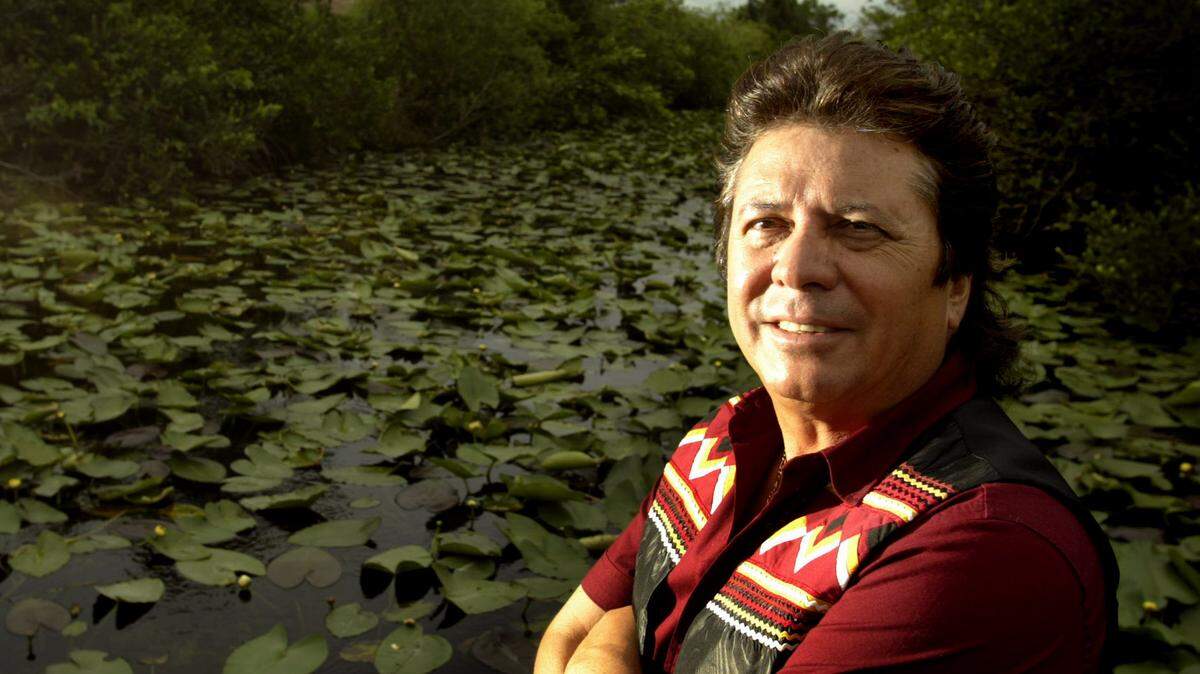
Calvin Lee Tiger, son of a Miccosukee chief, was given a plastic guitar 12 years after he was born at Jackson Memorial Hospital in Miami.
That guitar propelled the young man to bridge his Native American culture with American rock ‘n’ roll for the next 60 years. He also pioneered ecotourism and spotlighted Florida’s environmental struggles.
Tiger, known by most as Lee Tiger and by Miami music fans who go way back to the 1970s as one-half of Tiger Tiger — the act he formed with his late brother Stephen — died Jan. 5, according to Curtis Osceola, chief of staff for the Miccosukee Tribe.
Tiger died under hospice care in Davie. He was 72.
In a statement provided to Indian Country Today (ITC), Osceola called Tiger “a Miccosukee patriot” whose “love of country, culture and identity is one that we should all aspire to have.”
Early musical beginnings
Tiger, born to longtime Miccosukee chieftain William Buffalo Tiger and his wife, Anne Marie Winslow, on May 12, 1950, shared his roots early.
As boys watching their cousins sing and play guitar around toasty campfires in the villages along the Miami River and Everglades where they grew up, the Tigers wanted others to experience what brought them such joy.
“We’d be little boys, kind of running around, checking it out because it sounded so cool,” Lee Tiger told the Miami Herald for an obituary of his brother Stephen, who died at 57 from a reported fall at his Southwest Miami-Dade home in 2006.
Lee Tiger formed his first band, The Renegades, in 1964 — the same year the Beatles conquered America with their second performance on “The Ed Sullivan Show” taped at The Deauville Hotel in Miami Beach. Tiger was just 14.
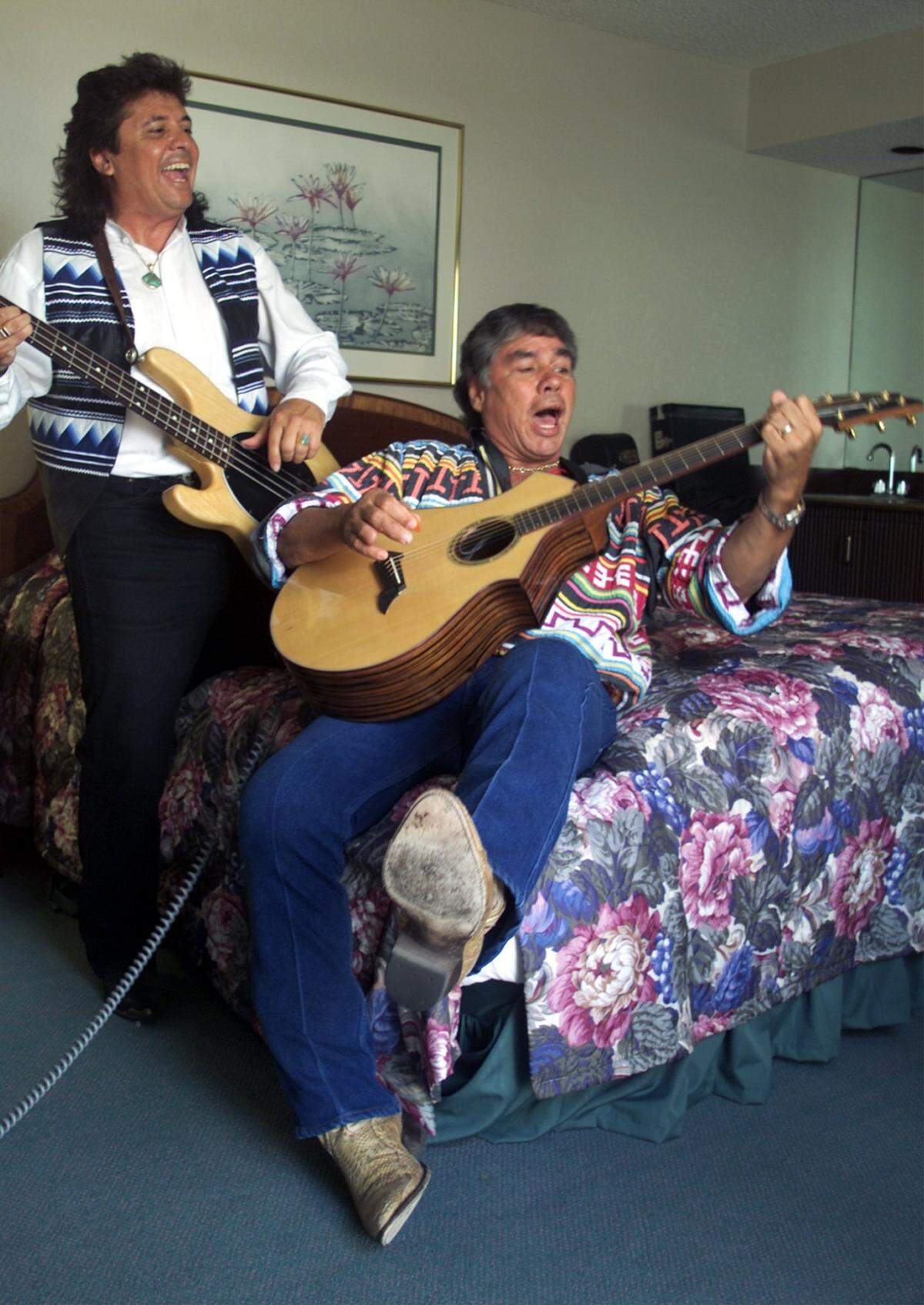
By the late 1960s, still a teenager, he and his brother formed Tiger Tiger. The band’s music celebrated their rich Miccosukee culture merged with zesty American rock ‘n’ roll.
South Florida music publicist Woody Graber, a longtime friend of the Tiger brothers, attended Lee’s service on Tuesday. He told the Herald how Tiger’s daughter Summer Tiger had closed her eulogy for her father with an apt directive. “She said, ‘I want you to sit down, have a nice drink. And listen to ‘Mustang Sally’’ — because her dad always played ‘Mustang Sally.’”
The Tigers toured extensively playing their distinctive brew that could take in the 24-bar rhythm and blues of “Mustang Sally,” that was popularized by Wilson Pickett in 1966, but adding their cultural flavor. The Tigers’ last album, “Southern Exposure,” in 2000, earned a Grammy nomination. The Tigers received a lifetime achievement award in 2006 from the Native American Music Association, just before Stephen’s death. Tiger also performed solo and, in 2017, released his last album, “One Earth One People Come Together Chapter II.”
“We were musicians working nightclubs, concerts, wherever we could get work,” Tiger told the Miami Herald in 2006. “We were American rock ‘n’ rollers who just happened to be Native Americans. Or we were Native Americans who just happened to be playing rock ‘n’ roll.”
Roots in two cultures
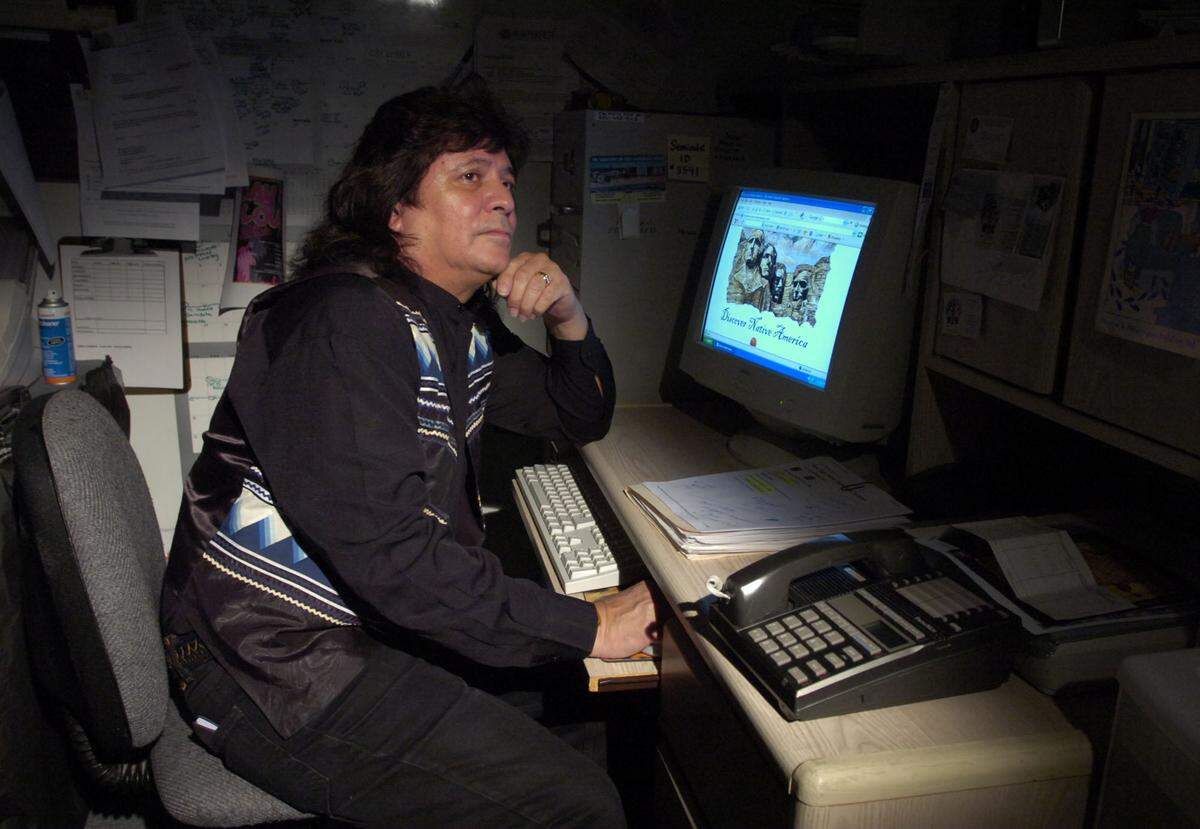
By 26, Tiger started nature tours for his Miccosukee Tribe with his father, Buffalo Tiger, in South Florida in 1976.
READ MORE: Buffalo Tiger, longtime chairman of the Miccosukee Tribe, dies at 94
The younger Tiger felt showcasing the Miccosukees’ way of life in the international market was the next step. Tiger was struck by how well other countries promoted their indigenous cultures at trade shows. “South America, Asia and China and other parts of the world were going gung-ho promoting their unique cultural and natural sites. It inspired me back then,” Tiger told the Miami Herald in 2002.
But Tiger soon realized he was the only Native American at these world travel shows. Tour operators’ vision of Florida seemed limited to Disney and the beaches, he noticed. “I started doing surveys at the [trade show] booth,” Tiger told the Herald. “Eight out of 10 people didn’t know Florida had Indians. So I said, ‘We’ve got a job to do.’”
Tiger consulted with other tribes, worked with the Seminoles to promote tours to Big Cypress National Preserve, spoke of conservationism and protection for the Everglades, and even schooled Hollywood director Paul Michael Glaser as an on-site ombudsman on how to properly detail Miami Indian culture in the locally shot film, “Band of the Hand,” in 1986.
Tiger led the revitalization of the Miccosukee Indian Arts and Crafts Festival each December on the village’s festival grounds off Tamiami Trail.
Native American arts writer and former Sun Sentinel music critic Sandra Hale Schulman chuckled when she recalled another way in which Tiger brought a taste of Florida to outsiders.
“I remember one year at the Native American Music Awards in Albuquerque, Lee and then Seminole Chief James Billie, who was a folk singer, flew to New Mexico in a private plane with a 10-foot alligator. They brought it onstage and everyone gasped. ‘Just bringing some Florida ambassadors!’ they said.”
Ecotourism advocate
She and others admired Tiger for his role in promoting ecotourism.
“Lee was a powerhouse in the Native community, a pioneer in Native rock and in ecotourism,” Schulman said. “From growing up in a chickee hut to earning a Grammy nomination and working with the multibillion-dollar Seminole tribe, he had an easy way about him as a musician on the piano and as an advocate for the Everglades.”
Graber also saw Tiger as a peacemaker.
“He was very much into the environment and making peace with the Earth was very important to him,” Graber said. “He was just someone who gave back and didn’t just take. He gave back to the community that he was born into and his music was something that made a difference. In it was a voice for change and improvement.”
Survivors and services
Lee’s survivors include his children Summer Tiger and Calvin Tiger Jr. and grandchildren and half-siblings Heather Martin and Timothy Stone. He was predeceased by his son Eric.
Services were held.
An earlier version of this story incorrectly identified Lee Tiger’s mother’s name.
This story was originally published January 10, 2023 at 5:50 PM.