Jean Pugh, who died at 100 in Miami, served aboard a WWII ship after a first lady intervened
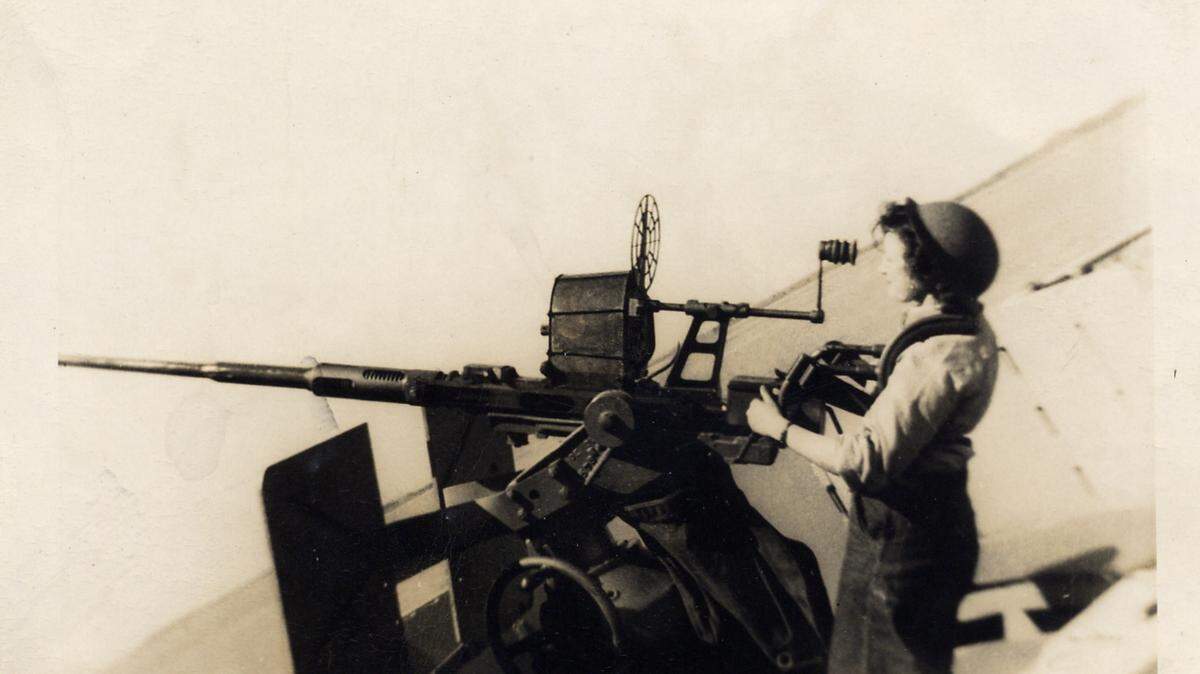
Jean Pugh wasn’t one to leave things unsettled.
When she and a childhood girlfriend wanted to join the war effort and serve aboard a merchant marine ship during World War II, she was denied not once but twice by the Department of State and Congress, because women were not allowed to serve on war ships. A personal plea to then-First Lady Eleanor Roosevelt may well have altered history for women.
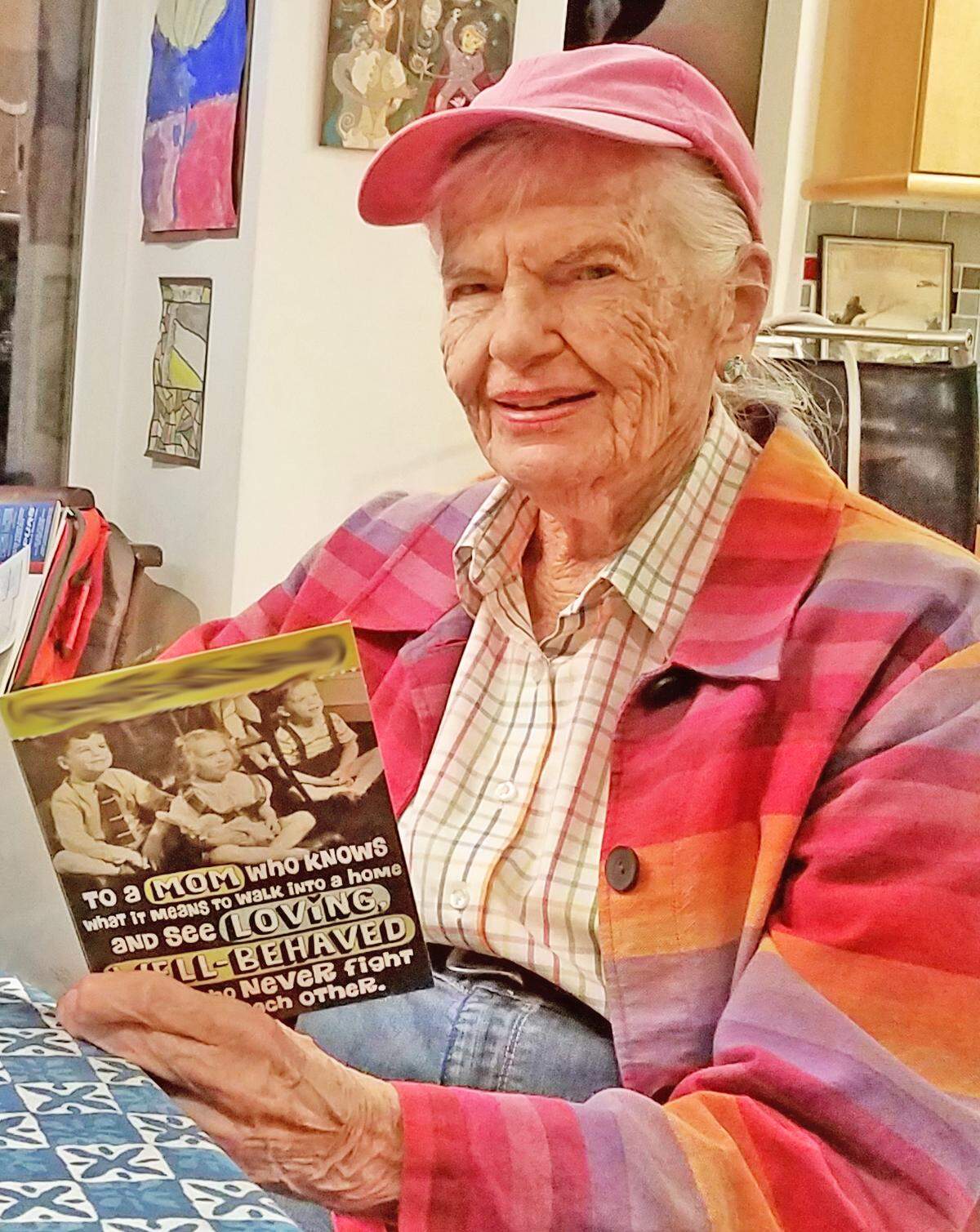
When her son Carl had nightmares more than 60 years ago that his mom could die — what little kid never had that common fear? — she bet him she’d live to 100.
After Pugh died at her Pinecrest home on April 27, with her beloved poodle Buddy at her side — more than a month after her 100th birthday — her daughter Carla found a sealed envelope addressed to Carl that had a $100 bill tucked inside.
All these years later, Pugh, who was also a school teacher, a real estate broker, an avid Scrabble champ and a tennis player in the more than 60 years she called the Pinecrest neighborhood home, was determined to honor what she felt were commitments.
A letter to her son
Carl Pugh, now 67, chokes up a bit as he shares a beloved memory and a recent discovery.
“When I was a little kid in Baldwin, Long Island, for whatever reason, like little kids, I was worried about my mother dying. My biggest fear was that she would die, something would happen to my mom, and I’d have nightmares about her, like melting. She bet her 5-year-old son decades ago that she would live to 100. Last week, as she was dying, my sister found a sealed envelope tucked away in her desk addressed ‘To Goosey,’ which was my nickname. In it was a $100 bill and a note that simply said, ‘You won!’ No idea when she left that envelope. But what she doesn’t know is that, actually, she won and I owe her the $100 since she did make it to 100,” Carl Pugh said.
He suspects his mom placed that envelope in her desk drawer a few years ago when she may have realized her health was declining and perhaps believed that she was not going to make it to 100, thus losing the bet.
“In the end we all won,” her son said. “She did make it to 100 and her kids got the world’s best mom. That note is also a last testament to her persistent good humor.”
Joining the war effort
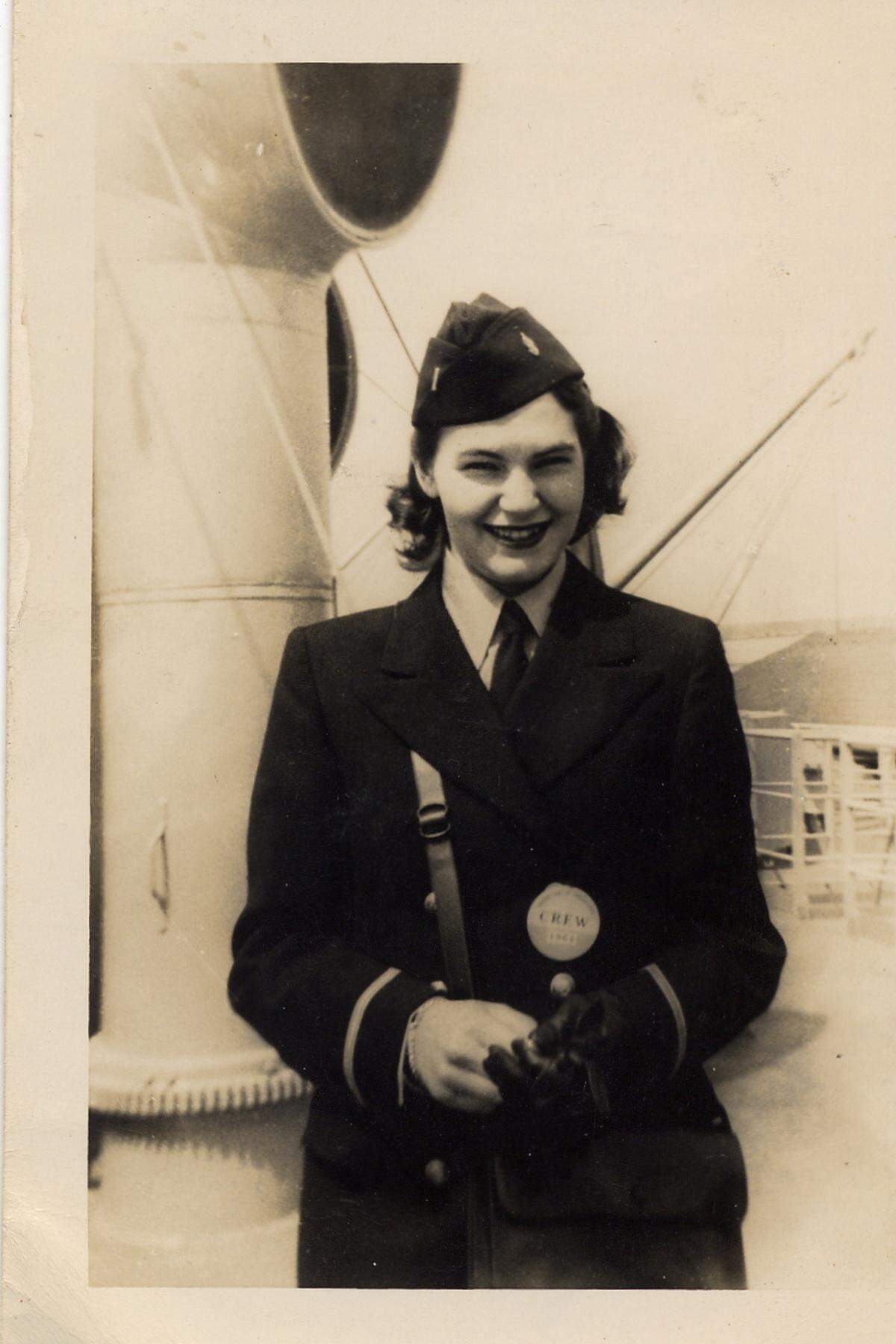
Jean Pugh was born Jean Haydock on March 4, 1922, in Plainfield, New Jersey. As a child in those carefree years she sailed Barnegat Bay off New Jersey in her sailboat and then dropped out of Vassar College in her senior year to join the war effort in 1943 by working at a Piper aircraft factory making bomb sights.
However, the young Haydock wanted to play a greater role during World War II. So she and her girlfriend Joan Quinn spent six months earning their first class radio operator’s licenses.
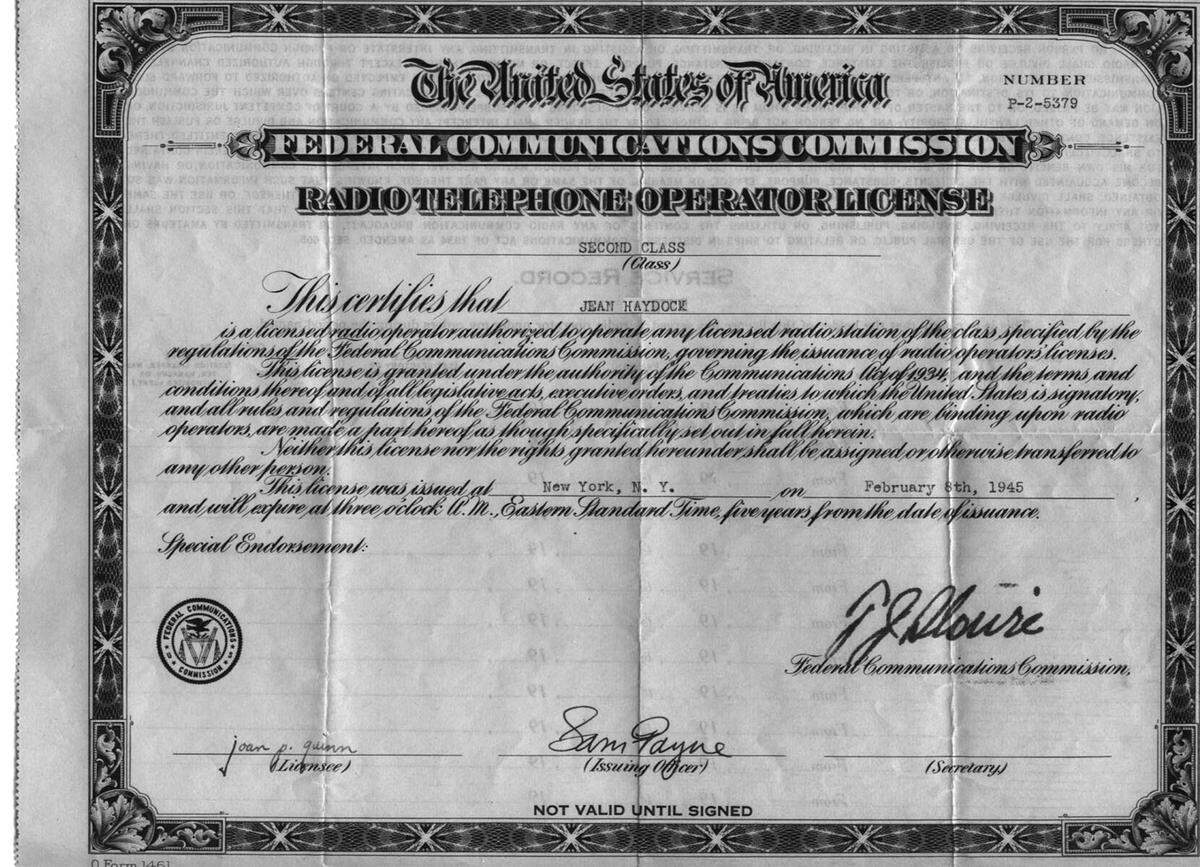
The pair were hired by The Norwegian Shipping and Trade Mission. As Pugh wrote in a letter to her son to document her history, “many Norwegian ships were at sea when Norway was invaded and most of them found a safe harbor in the United States. These ships were under contract to the U.S. Army to carry supplies to our troops overseas.”
Haydock, then 22, and Quinn, then 20, wanted to ship out, too.
There was just this one thing. Their sex. Jean Haydock Pugh saved the rejection letters for more than 77 years.
A May 1944 letter addressed to Haydock from the Department of State said, “it is contrary to the practice of the Department to issue a seaman passport to an American woman for service on a foreign vessel. Your application must, therefore, be disapproved.”
A February 1945 letter from Congress was no more encouraging.
“I find that the State Department has an inflexible rule against permitting women to serve on foreign merchant ships and that this is in line with the policy of our Merchant Marine service in refusing to employ women workers.”
Apparently, the rule was due to a lack of sleeping quarters.
Roosevelt administration intervenes
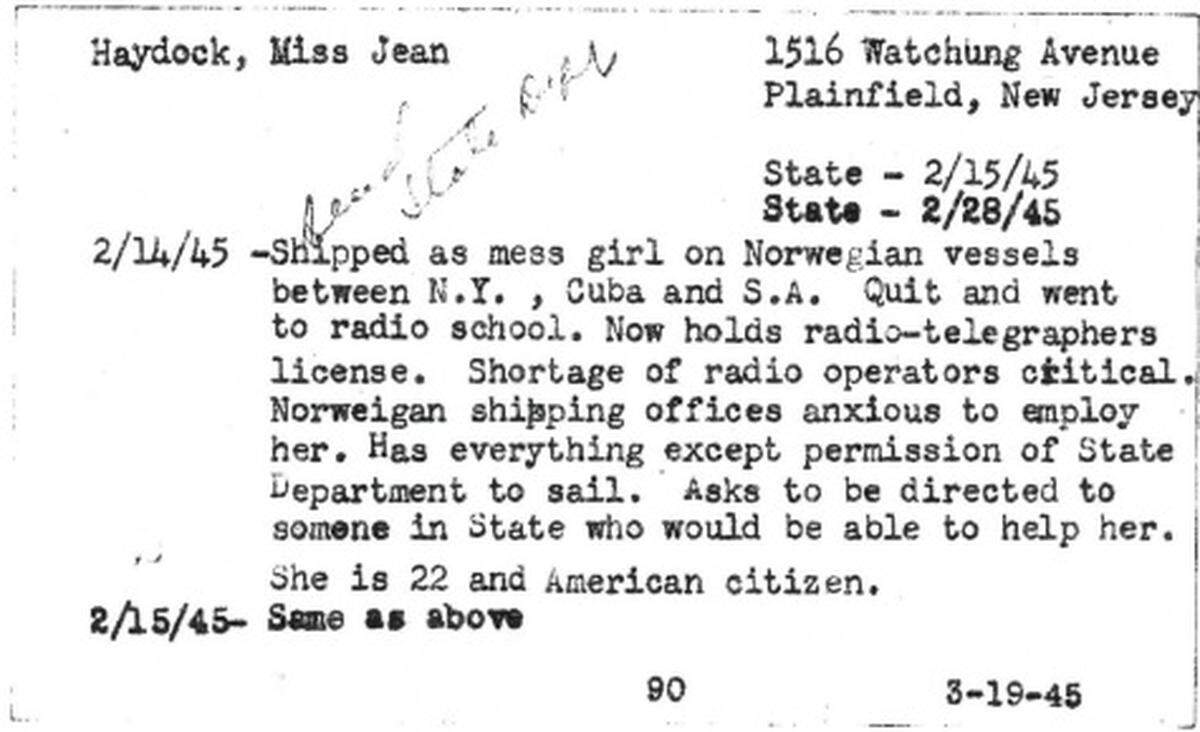
“As a last resort, I wrote of our plight to Eleanor Roosevelt and asked if she could help. A few weeks later I received a letter from the passport bureau saying, ‘By reference from the White House, we have been directed to issue you seamen’s passports.’ Sure enough, we applied immediately and were issued the valuable documents!” Pugh wrote.
The letter she had received from the Roosevelt White House came as a card. The notation dated Feb. 14, 1945, referenced that a “shortage of radio operators was critical.”
A week later the two women were on their way to a ship docked in Searsport, Maine.
“We were alarmed to discover that our cargo was 500-pound bombs!” Pugh wrote. “I remember that first night aboard ship, lying in my bunk and listening to the bombs rolling down into the hold. Scary!”
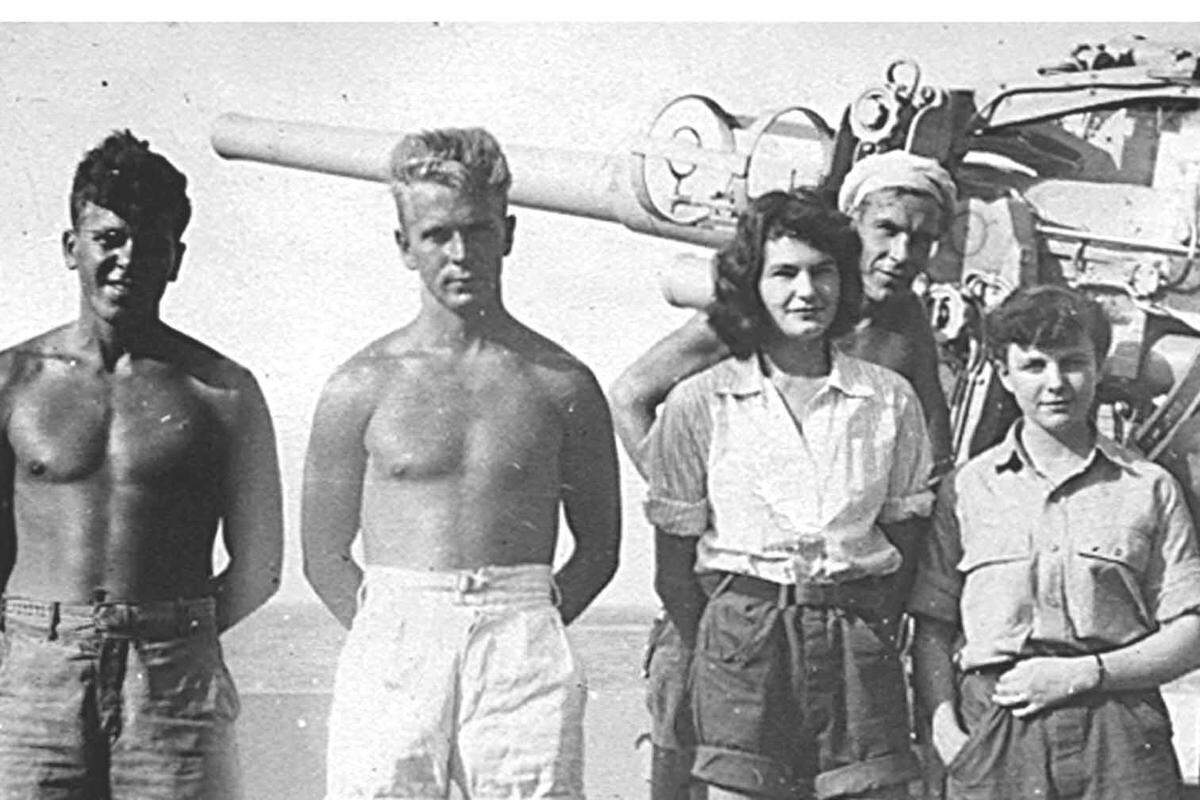
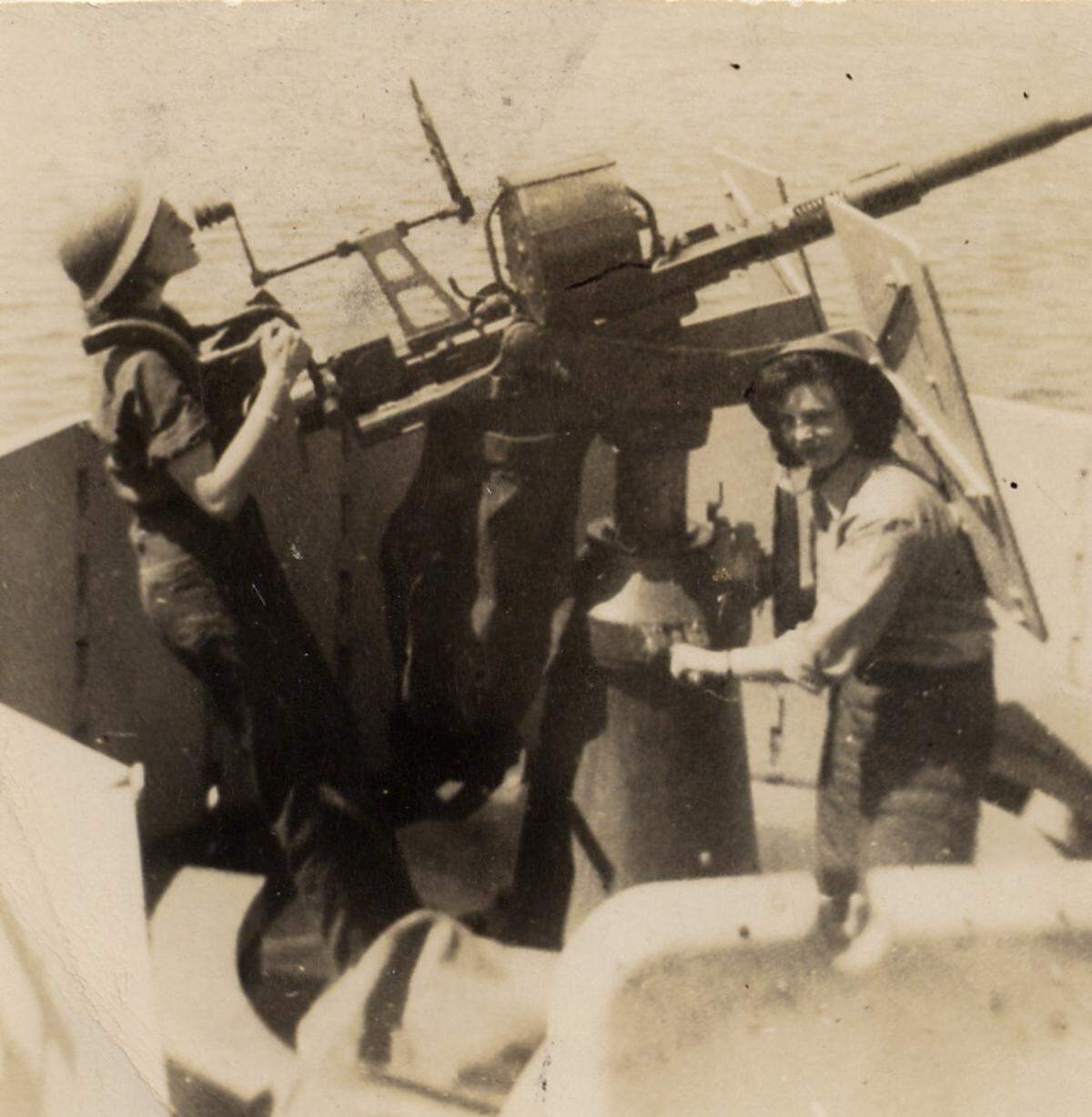
According to her son, Jean and her friend Quinn, who has since died, became the first women permitted to sail on a merchant ship. Both served as radio operators on The Carl Oftedal, delivering bombs to the Philippines.
Pugh loved to share a war time memory of the time their ship rescued survivors of a sinking Navy vessel. “Once aboard, the sailors asked, ‘Is this the ship with the girls?’” Pugh recalled.
Life after World War II
After the war ended in September 1945, Pugh stayed on in Manilla as a USO club director for awhile and witnessed the war crimes trial of General Tomoyuki Yamashita, her son said. The trial by the U.S. Military Commission was held from October to December 1945.
When she returned to the States, she first settled in Miami and earned her seaplane rating, flying Piper float planes out of Embry Riddle on Biscayne Bay by day and driving a cab on Miami Beach at night.
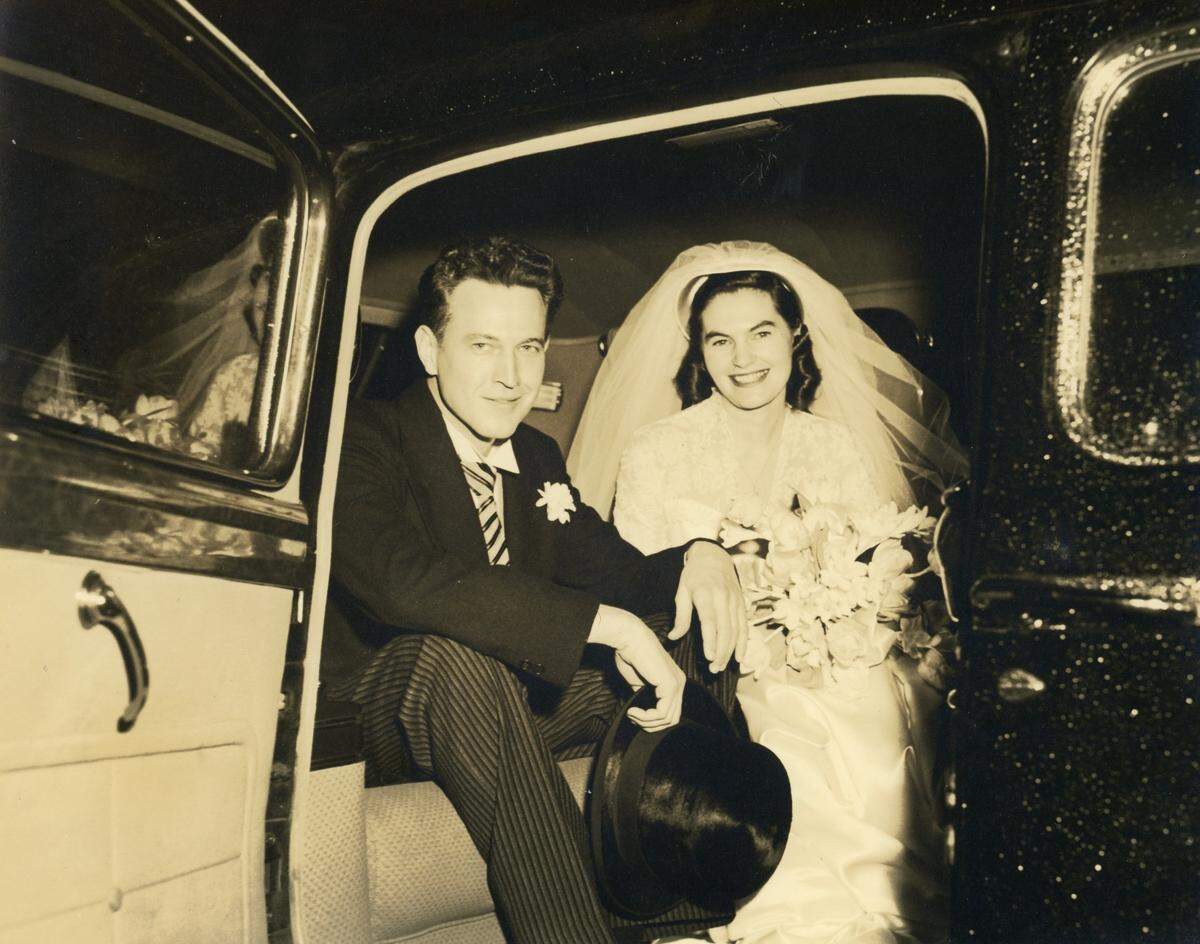
Haydock moved to Greenwich Village in Manhattan where she met her husband, the late Carl Pugh, Jr. After they wed in February 1951, the couple moved to Baldwin, Long Island, and had three children, Carla, Carl and the youngest, Jackson, who predeceased her in 2005 at age 49.
Pugh earned her teaching degree from Columbia University and, with her family in 1962, escaped the cold New York winters to settle in the South Miami-Dade suburb that would later become incorporated as Pinecrest.
Pugh taught fifth grade at David Fairchild Elementary from 1962 to 1967. She went on to a career as a real estate broker starting with Dooley Realty, Casey Cousins and later Caldwell Banker.
Pugh loved writing letters, many of them often published in the Miami Herald’s editorial pages. She was an avid tennis player well into her 80s.
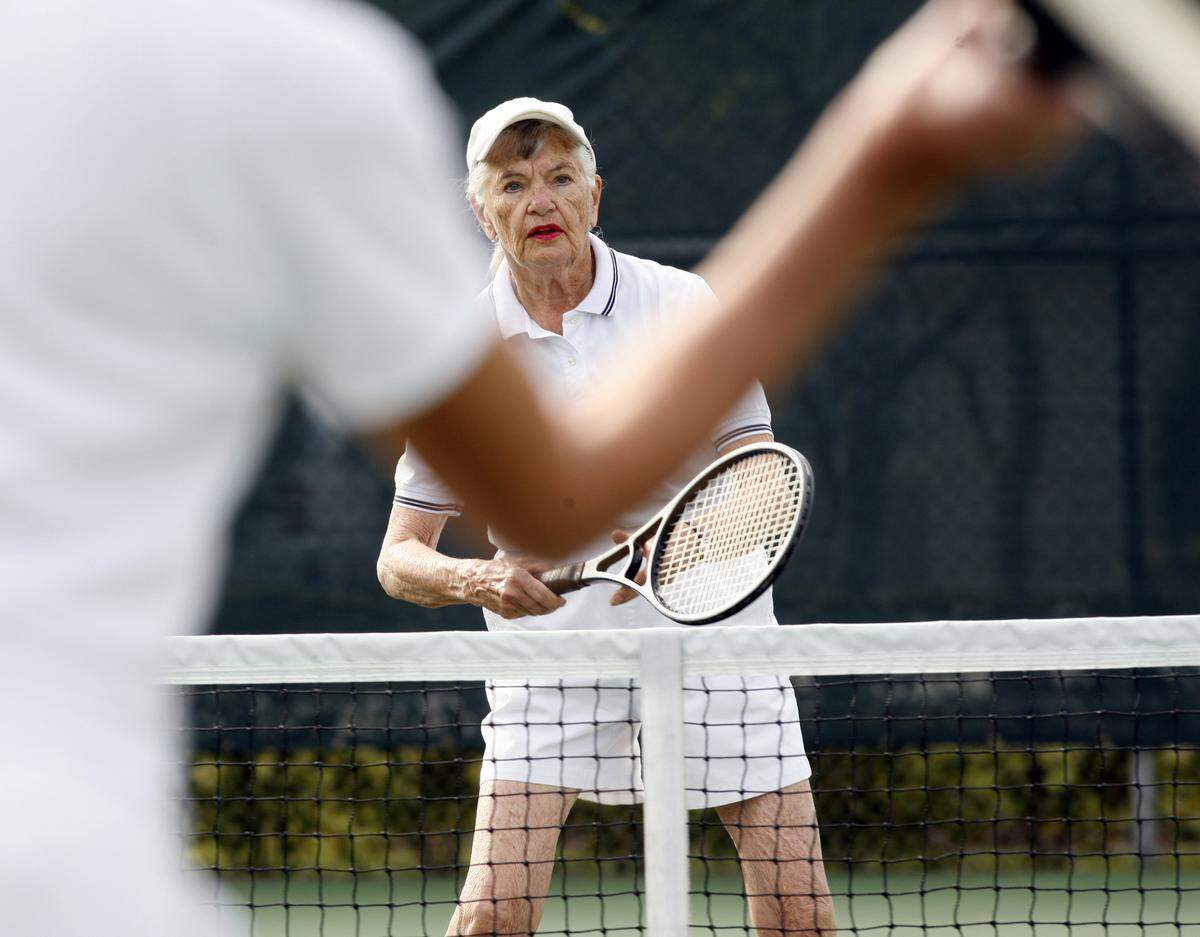
In February 2007, as the subject of an Aging Well feature in the Herald’s Tropical Life section, Pugh joked, “I’ve been playing tennis since I was in high school, but that doesn’t mean I’m good. I just enjoy the game.”
Her tips for longevity? Among them were a healthy diet. She told the Herald she cut out butter and pizza. Opted for whole wheat bread. Peanut butter but no jelly. A typical lunch in her 80s? Peanut butter and a banana and a glass of milk.
Pugh also served on the advisory board of the University of Miami’s Osher Lifelong Learning Institute and was a devoted Scrabble player who occasionally won regional tournaments. She often joined friends at local games “and [was] endlessly playing with family members online until her last days,” her son said.
“Perhaps our mom will be remembered most for her calm sunny disposition. Most questions received a burst of song. ‘Mommy, what are you doing tonight?’ invariably prompted a lyrical ‘Tonight! Tonight! There’s only you tonight!’ Such spirit has an enduring legacy.”
Survivors, services
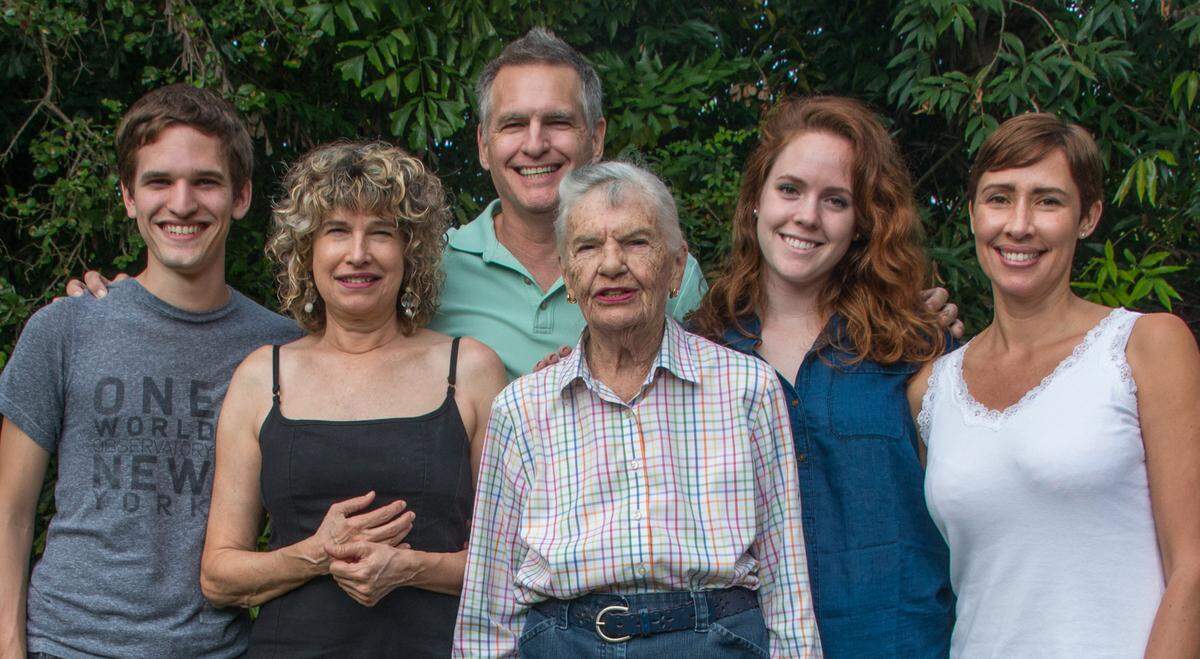
Pugh’s survivors include her children Carla and Carl, and grandchildren Grant and Jennifer. Services will be private.
This story was originally published April 30, 2022 at 1:19 PM.