
Lawyer Louis Casuso, who represented Miami’s most notorious criminals, dies at 75
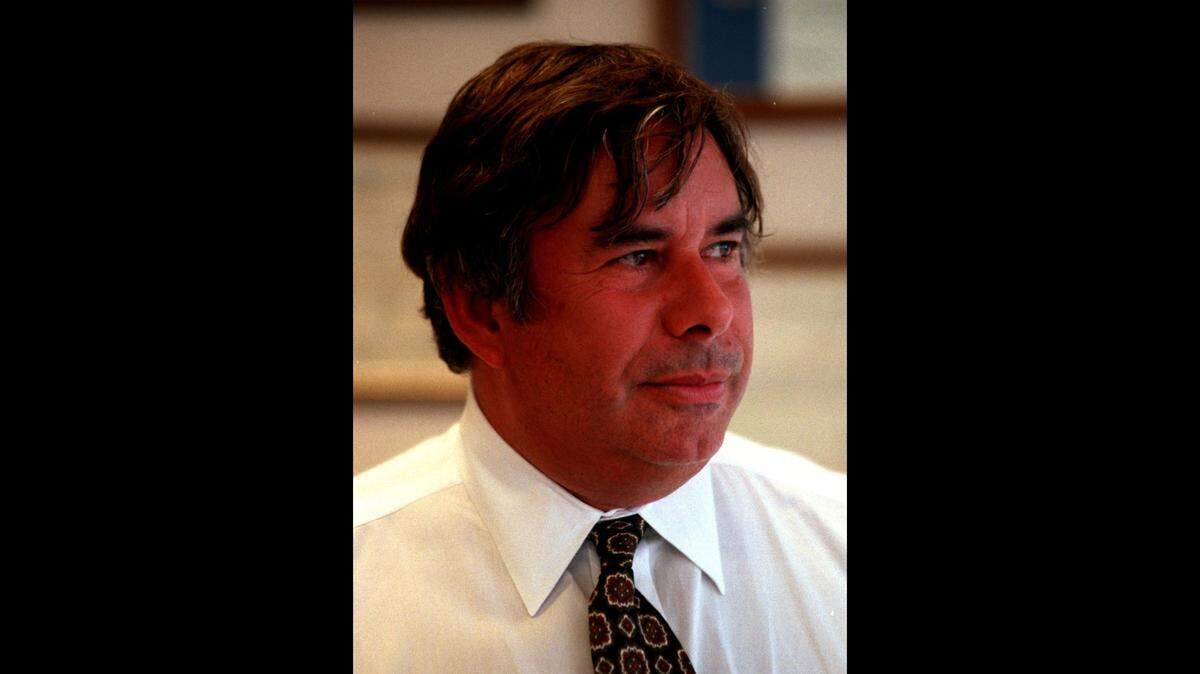
Over the decades, defense attorney Louis Casuso represented the most Miami of clients: international cocaine kingpins, an infamous cartel hit man, a Cuban spy, a man accused in a notorious terrorism case, a robber who preyed on visitors during the heyday of the city’s tourist robberies.
But for all his adventures — and the colorful yarns he told friends over coffee — Casuso wasn’t a flashy guy.
“He was a simple man. He wasn’t a social one. He didn’t like crowds,” said his wife, Daisy Casuso. “The most favorite thing he could do was sit by the water and read a book.”
Casuso died Tuesday at age 75 of heart and kidney failure. His death stunned the South Florida legal community, which gathered Wednesday night at his wake in Miami to honor the veteran defense lawyer, known for his clever stories, wry sense of humor and dogged representation of clients charged with the most serious of crimes.
“Louie was aggressive but kind. Outspoken but yet reserved. To me, Louis was the total package,” said Miami-Dade Circuit Judge Reemberto Diaz, a longtime friend who once worked with Casuso when in private practice. “Louie had an amazing sense of the world. He was humble and honest — and never thought too highly of himself.”
Casuso was born on Aug. 19, 1946, in Havana, Cuba. He came to the United States as a child, under Operation Pedro Pan, a program that brought thousands of children from Cuba.
His mother and siblings eventually arrived too. Casuso eventually attended the University of Miami, and then the John Marshall Law School in Chicago, where he helped pay the bills by selling women’s shoes and working at a liquor store and as a security guard.
Casuso became a Florida lawyer in 1974, and was hired as prosecutor by then-Dade State Attorney Janet Reno. He soon went into private practice, where he cut his teeth during the days of the Cocaine Cowboys, when drugs were flooding Miami and the government began aggressively targeting traffickers.
Diaz worked his first federal case in 1983 with Casuso. Their clients: two Colombian drug traffickers. Jurors came back at 9:30 p.m., convicting the pair, devastating Diaz. Walking out of the old federal courthouse, Casuso shrugged. “I’m hungry, let’s go to dinner,” he said.
Casuso treated him to dinner at the old Everglades Hotel in downtown Miami. “Never celebrate an acquittal, never cry over guilty verdicts,” Casuso told him. “Do the best job you can and be done with it.”
His cases back then frequently made the news. Among them:
▪ Raul Puig, a Miami police detective who became a cocaine dealer and sold law-enforcement secrets to traffickers. Puig got four years in prison after his conviction at trial in 1983.
▪ Huber Matos, the former Cuban revolutionary who turned into a fierce crusader against Fidel Castro, who was charged with possessing an unregistered machine gun aboard a yacht in 1986. The charge was later dismissed.
▪ David Harrell, one of 12 men who went to trial for robbing tourists in the late 1990s, one of a spate of crimes against visitors that plagued Miami’s tourism industry. He was convicted.
▪ Marisol Gari, an Orlando woman convicted of spying for the Cuban government in 2005 as part of the spy ring known as the Wasp Network.
“He didn’t look at them as drug traffickers or murderers. He looked at them as human beings who got dealt a bad card in life,” his wife said.
More recently, Casuso garnered the spotlight after he appeared in the seminal documentary “Cocaine Cowboys” — he’d represented Jorge “Rivi” Ayala, the Miami hit man featured in the film. He also represented one of the defendants at trial in the case of the Liberty City Seven, the terrorism case that has recently been featured in a pair of documentaries examining federal tactics after the terrorist attacks of Sept. 11, 2001.
His bread and butter, especially most recently, were cases involving the extradition of drug kingpins — work that took him from Miami to the plazas of Puerto Rico, the mountains of Colombia or the steamy underbelly of Honduras.
“Casuso would trek through the jungles to meet with these people,” said his friend, lawyer Rick Hermida.
Casuso never took himself too seriously either, despite the gravity of his cases.
Attorney Bill Clay remembered seeing Casuso, as a prosecutor, get into a fistfight with a lawyer outside a courtroom in the 1970s. Clay dubbed him “Louie the K” — for knockout punch.
“Ever since then, literally every single time I saw him I would raise my fist and say, ‘Louie the K show me your knockout punch,’ and he would,” Clay said. “I would even text him when we were in Fed court together on Zoom and ask him to show me his knockout punch and he would cleverly raise it for me to see on the video and smile. He had a great sense of humor.”
In state court, at Miami’s Richard E. Gerstein Justice Building, his early morning tales in the first-floor cafeteria were stuff of legal lore.
“In a world of charming story tellers, Louie was royalty,” said defense lawyer Juan Gonzalez. “What a loss. One of the things I most missed during the pandemic was Louie’s enthralling war stories over coffee or drinks.”
Casuso is survived by his wife, Daisy, sons Antonio and Joey Casuso, stepson Luis Martin, daughter Lisa Casuso, and siblings Maria Teresa Casuso and Tony Casuso.
This story was originally published March 17, 2022 at 7:33 AM.