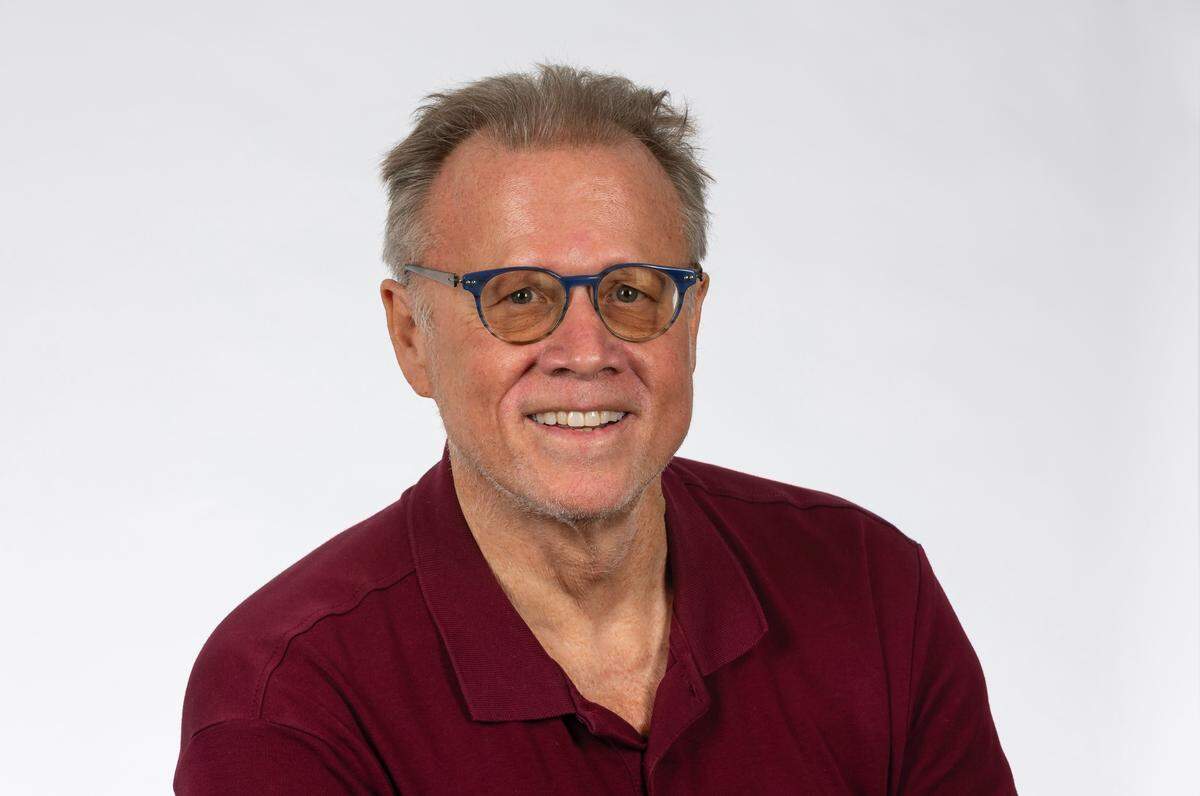
Miami Beach gay rights activist and one of Nader’s Raiders, Joe Tom Easley, dies at 81
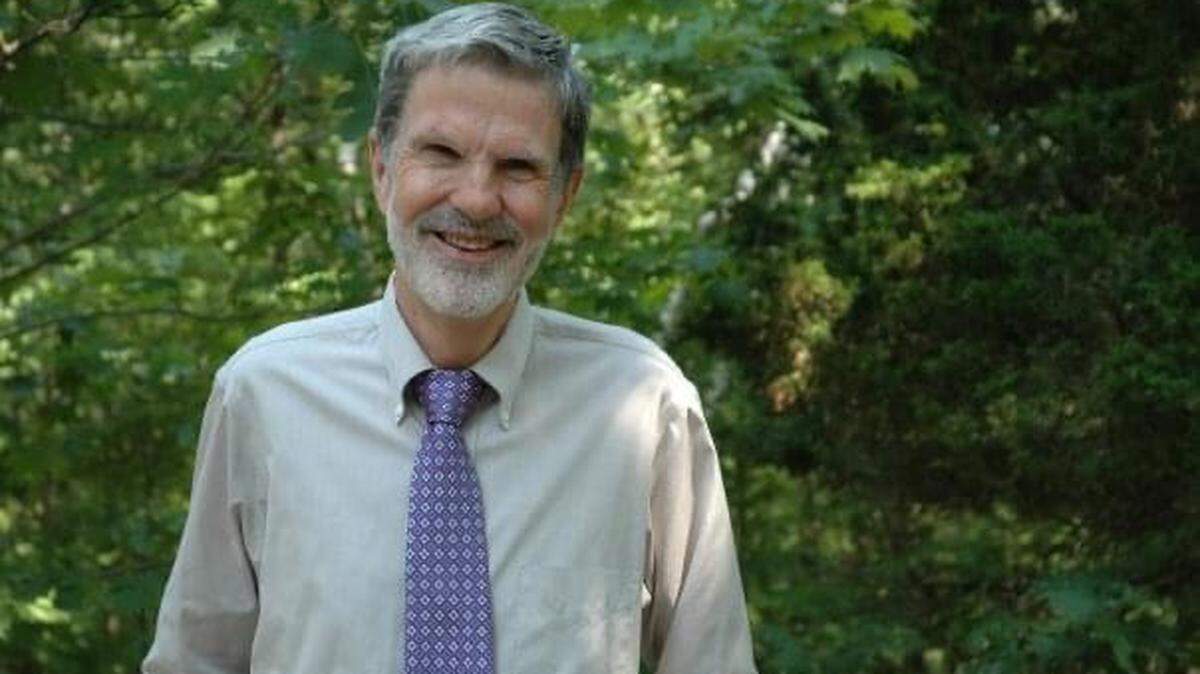
Joe Tom Easley “was a fighter for the underdog,” his husband Peter Freiberg said.
“He was empathetic with the groups that have a tougher time and he wanted to leave this world having done good — that was his whole aim in life.”
The towering Easley — he stood six-four and was always properly addressed using his first and middle names, Joe Tom — died Feb. 13 in Miami Beach at age 81 from complications of lung disease, according to Freiberg.
Easley, who lived the last 31 years of his life in Miami Beach with Freiberg, and who fought to protect their Palm View neighborhood’s historic designation, had continued a life’s journey that had begun in earnest decades earlier. Easley’s work and social justice activities took place where he lived in Washington, New York and South Florida. But the impact of his actions reverberated nationally.
For three years, from 1969 to 1972, Easley was a trusted associate of consumer rights advocate Ralph Nader and one of the earliest of the young public interest lawyers known as “Nader’s Raiders.”
Working with Nader, Easley helped conduct a comprehensive public interest review of the U.S. Agriculture Department to examine the influence of chemical and agribusiness companies in shaping pesticide regulation and other agency decisions that affected public health, according to the Washington Post. In 1986, Easley earned his master’s in public health from Yale.
“We were going to make the country what it ought to be by working and pressing the system to work,” Easley said in the 2006 Nader documentary film, “An Unreasonable Man.”
“He was a real networker and outreacher, a great forensic speaking talent,” consumer activist Ralph Nader told the Washington Post for Easley’s obituary.
‘Don’t ask’ but he told
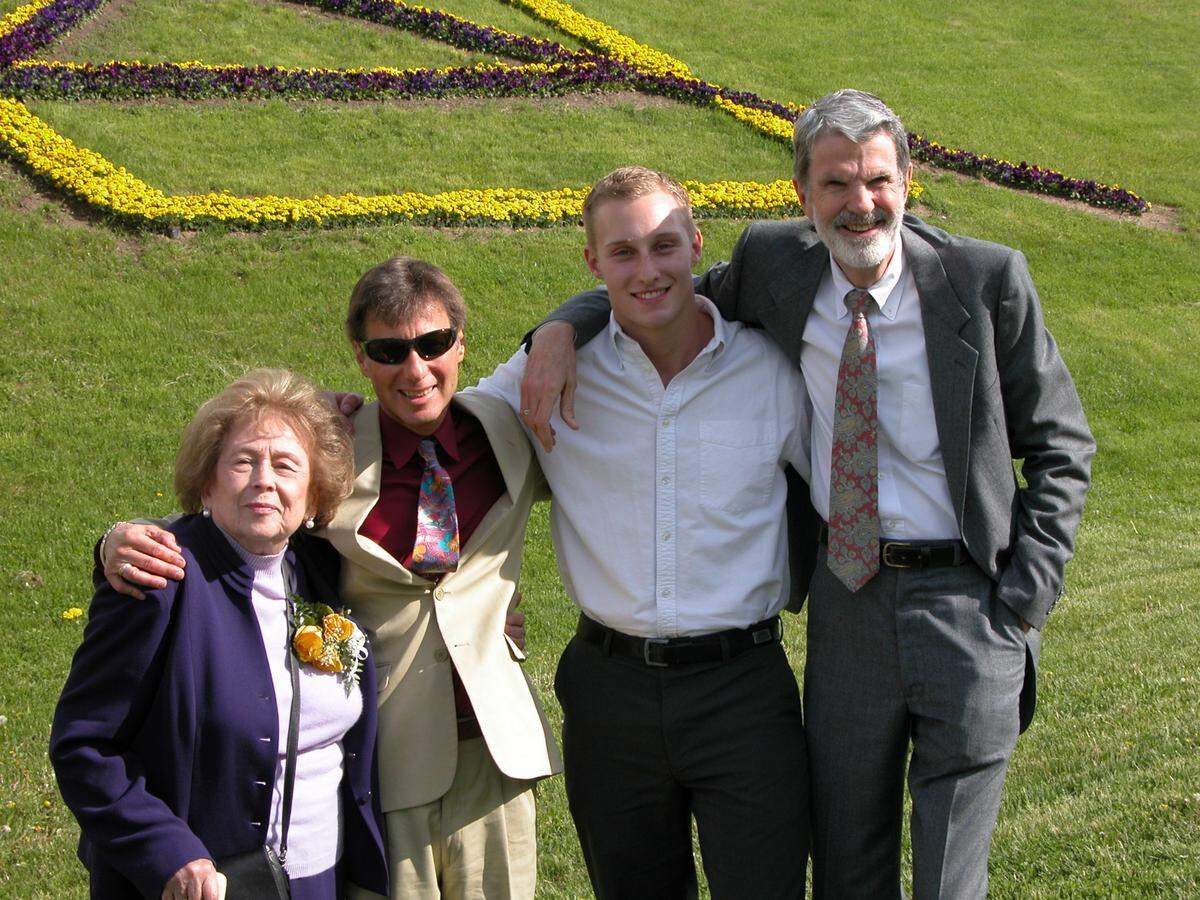
Easley served as a nationally recognized gay rights activist and lawyer who worked to help repeal the military’s “don’t ask, don’t tell” policy during the Clinton administration in the early 1990s.
His August 2003 wedding was among the first same-sex unions announced in the New York Times.
By that point, Easley and Freiberg had been living in their adopted Miami Beach since moving from New York in 1991. But they had to first establish a civil union in Vermont in 2000 and then marry in Toronto in 2003 soon after same-sex marriages were legalized in Ontario. That’s when the Times printed the wedding announcement.
“We went up there just because we wanted to affirm our relationship. We felt it was important for gay people to get married everywhere we could,” Easley told the Miami Herald in 2004 from the couple’s Miami Beach home.
“All these activities were aimed towards making this world a better place,” Freiberg said. “A fair amount of it was with LGBTQ groups because we both grew up in the ‘50s and it took us many years to come out. And he wanted to make things easier for LGBT kids growing up and and that also applied to the military.”
Soulmates meet
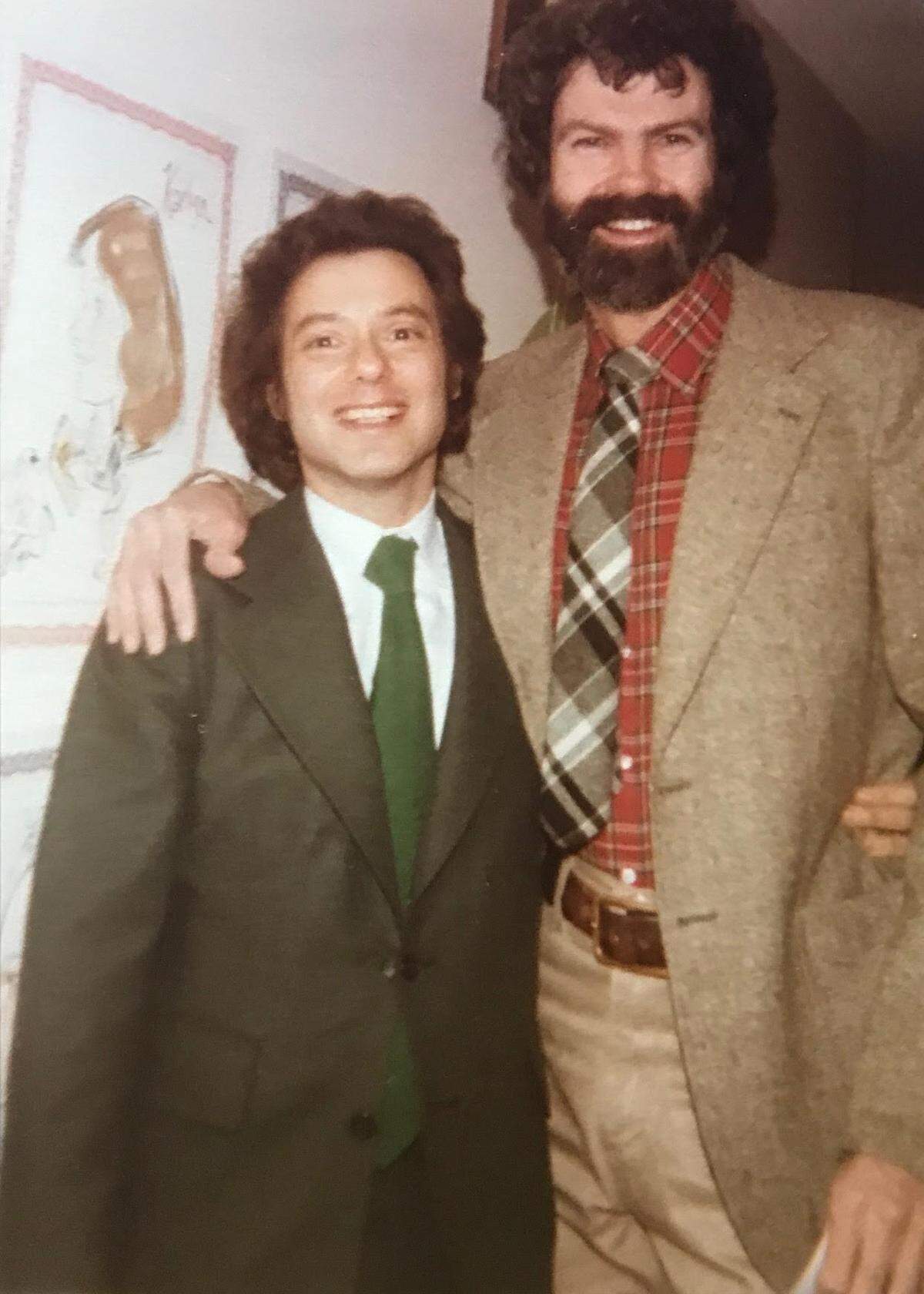
Both men came out at age 38, separately, in 1978.
“We were fixed up by a straight woman friend,” Freiberg said of their meeting. They were both 42 near the end of 1982 when their mutual friend, Marcy Benstock, visited Easley at his Washington office.
Easley was then a tenured professor at Antioch School of Law and Frieberg was a journalist in Manhattan. Easley had worked alongside their eventual matchmaker when he was a Nader Raider in D.C. Freiberg met Benstock through their shared environmental work in New York City.
When Benstock strolled into Easley’s office and saw all the gay rights posters on his walls and learned he was not seeing anyone she said, “Well, I have just the man to see you,” Freiberg recounted.
A few weeks after Christmas, the couple met in New York in January 1983.
“We decided the day we met that we each had met the man our our dreams,” Freiberg said, his voice breaking. “We were very blessed.”
Military service
Much of Easley’s social activism efforts began about a year after he was drafted during the Vietnam War in 1966.
Born in rural Robstown, Texas, on Sept. 28, 1940, to an elementary school teacher mother and a father working as a county agricultural agent, Easley later earned his bachelor’s degree in 1963 from Texas A&M University. He was an eighth grade English teacher and then assistant school superintendent in Eagle Pass, Texas, when he joined the Navy.
In the Navy, Easley was conducting national security work at an intelligence base in Alaska. He was outed as gay to the FBI by a former friend, and word reached his commanding officers.
Easley was honorably discharged.
“Only thanks to a compassionate commanding officer — by most accounts, a rare act of mercy at the time,” the Washington Post reported.
Decades later, the “don’t ask, don’t tell” policy toward gays serving in the military, so long as their sexual orientation wasn’t discussed, couldn’t pass muster with Easley.
“Anyone who was eligible to serve in the military should have that opportunity — and do it openly,” Freiberg said of his husband’s efforts to banish that policy. (President Obama signed away the policy in 2010.)
“His having been kicked out of the military certainly contributed to his becoming active, which led the fight to repeal ‘don’t ask, don’t tell.’ But frankly, he would have done it anyway. Because it was a cause that was close to his heart. ... Here was someone who always had the underdog in mind,” Freiberg said.
After the Navy experience, Easley earned his law degree from the University of Texas.
Career
Among his career and civic roles, Easley worked in Europe for three years at a consumer watchdog organization that investigated price-fixing by pharmaceutical companies, taught law at American University, was a chairman of the Lambda Legal Defense and Education Fund, and served as president of the Human Rights Campaign Foundation, according to the New York Times.
He also spent 30 years from 1983 to 2013 as a lecturer in contract and property law for Barbri, a bar-exam prep course company.
Though the weather played a part in the couple’s decision to move from New York to Miami Beach in 1991, the community’s Art Deco architecture was the biggest lure, Freiberg said.
“We loved those buildings. They were so playful and joyful and you can see why they were built during the Depression.” (The couple did keep a home in Elizaville, New York, too).
Not surprisingly, Easley joined the board of the Miami Design Preservation League, which he served on until the end of his life. When there was a movement to strip his Palm View neighborhood of its historic designation in 2019, Easley turned his communication skills into a voice for preservationists.
“Joe Tom brought his years of nonprofit leadership experience to MDPL during a critical time in our organization’s history. His contributions to the board and his advocacy for the preservation of the Palm View historic district have made a lasting impact on MDPL and the city of Miami Beach,” Daniel Ciraldo, executive director at Miami Design Preservation League, said in an email to the Miami Herald.
Says Freiberg, Easley’s sole immediate survivor: “His aim was to do good. And I think he did.”
Memorials
Freiberg said there will be memorial services in Washington and New York at a date to be announced later. According to Easley’s Legacy obituary, contributions in Easley’s memory can be made to Lambda Legal, the U.S. Holocaust Memorial Museum or the National Parks Foundation.
This story was originally published February 24, 2022 at 4:16 PM.