Shirley Henderson, whose courtroom art captured Miami’s most iconic cases, dies at 77
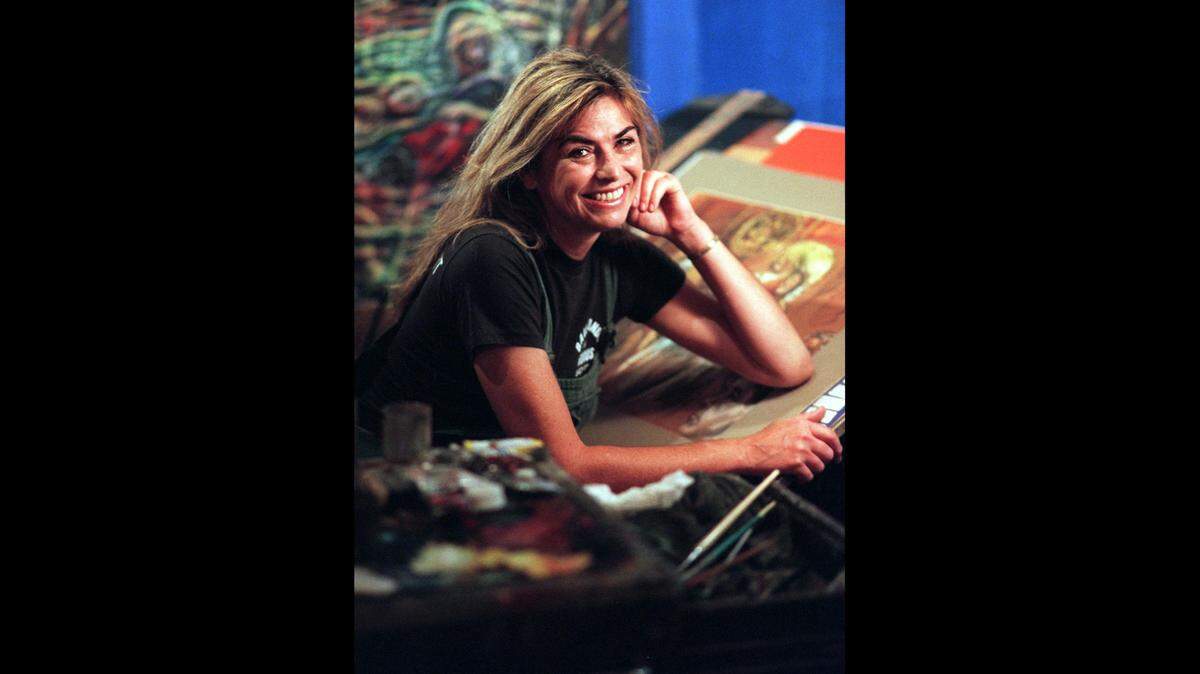
Sometimes the most compelling images come from courtroom illustrators and can define a community.
Shirley Henderson, described by the Miami Herald as “Miami’s primary courtroom sketch artist,” died Wednesday, Oct. 13, in Savannah, Georgia where she had retired in 2015. She was 77.
“The last of the Mohicans,” Henderson called herself in a 2015 Herald story about the display of nine of her images on a hallway on the fourth floor of Miami’s Richard E. Gerstein Justice Building.
“Like many, I came to know Shirley’s work through her courtroom drawings as she was in the courtroom during some of the most iconic cases in the history of Miami,” said art historian Dennis Scholl, president and CEO of Oolite Arts. “She put faces to the headlines, and was our eyes during the proceedings.”
‘That’s Miami’
She once said the cast of characters she captured in her renderings — the cops, terrorists, judges, lawyers, drug smugglers, exiles and everyday folk — was just so Miami.
“This is about our mix — this is the socio-political and economical history of Miami.”
Henderson’s bold pastel strokes have also been exhibited at HistoryMiami Museum in a popular exhibit in 2010, and are on permanent display at the University of Miami School of Law, the Museum of Art of Fort Lauderdale, the Polk Museum of Art in Lakeland and nationally at museums in Michigan and Ohio.
Her courtroom work even hangs on the walls of South Beach’s Joe’s Stone Crab after Jo Ann Bass bought 10 of her pieces in 1995 to hang on permanent exhibit at the landmark restaurant.
“I have done every major trial in federal court for the last 35 years. These are historical documents. I think it’s very important to record the trials,” Henderson told the Herald in 2015.
From Noriega to Bosch
Henderson documented scores of characters who faced Miami court judges. Among them: Panamanian dictator Manuel Noriega in 1991, Elian Gonzalez in 2000, the lawyers at the Florida hearings for the contested 2000 presidential election, and cult leader Yahweh Ben Yahweh’s trials in 1992.
Henderson’ also sketched Anthony Bosch in connection with the steroid scandal that rocked Major League Baseball in 2013 and which was the subject of Billy Corben’s 2019 film, “Screwball.”
Henderson’s background
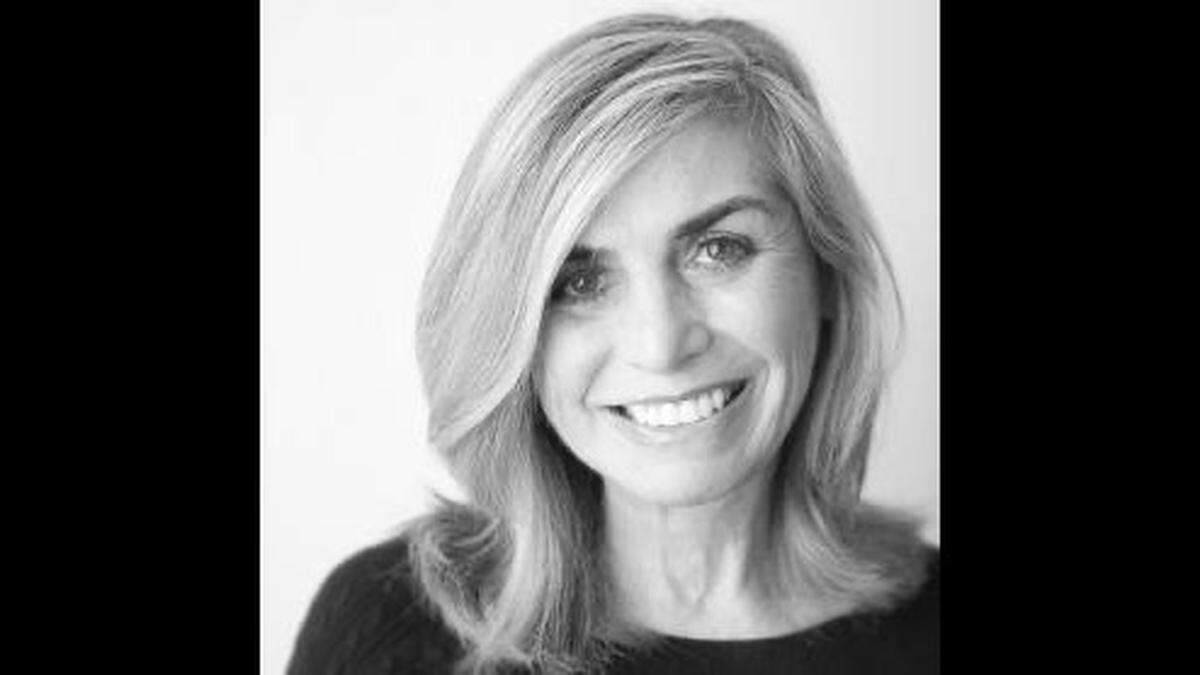
According to her family’s obituary, Henderson was born in Newcastle, Pennsylvania, on Dec. 9, 1943. She earned her bachelor’s degree and then her master’s in fine arts from Kent State University in 1966.
As a newlywed, Henderson and her then-husband Robert Thiele moved to Miami from Ohio in 1966. She quickly distinguished herself among a group of teaching artists that made colorful Miami a base in the 1960s and ‘70s.
By 1980, she was a courtroom artist whose work was relied on by the local CBS and NBC news affiliates, as well as CNN.
She taught at Miami Dade College and the University of Miami and was an early supporter of the South Florida Arts Center, which grew into the Oolite Arts organization.
Arts pioneer, the late Ellie Schneiderman, who founded the South Florida Arts Center in 1983 after convincing the Miami Beach Commission to let her convert three blocks of deserted storefronts on Lincoln Road Mall into an arts oasis, was sold on Henderson’s talents, too.
Schneiderman collected Henderson’s courtroom art that the artist crafted in her small Miami Beach studio.
“It’s an art form as much as portraiture is,” Schneiderman told the Herald in 1997. “Before television, artists were the chroniclers of their time and that kind of art is just about gone. Courtroom artists are our historians, even more so than the media.”
Adds Oolite’s President Scholl, who had also served as the Knight Foundation’s vice president of arts for seven years, “Her fine art practice was equally strong and she remained committed and excited to art making every day of her life. We are proud to claim her as one of our earliest Oolite Arts alums.”
Henderson’s style
The Herald once described Henderson’s paintings as “experiences in themselves.” She used her whole canvas, swathed with dense pigmentation to reference “both a lyrical figuration and her own personal landscape.”
That viewpoint probably pleased the painter.
“I like to think of myself as an artist, but in this capacity I feel I’m a visual journalist,” Henderson told the Herald when her work was displayed at the Main Library in downtown Miami in 1997.
“Essentially I had to learn journalism,” she said. “Some say that my drawings show compassion. I don’t have time to think about it. I simply record what I see, try to be accurate and, most important, I’ve got to produce. I gotta have it. It has to hit air and it’s now, there is no later. It’s a tremendous discipline.”
Survivors, services
Henderson’s survivors include her children Kristen and Kyle Thiele and her sister, Sandra Frank.
A memorial service will be held at a later date.