Rabbi Solomon Schiff, who led interfaith efforts in Miami for decades, dies at 91
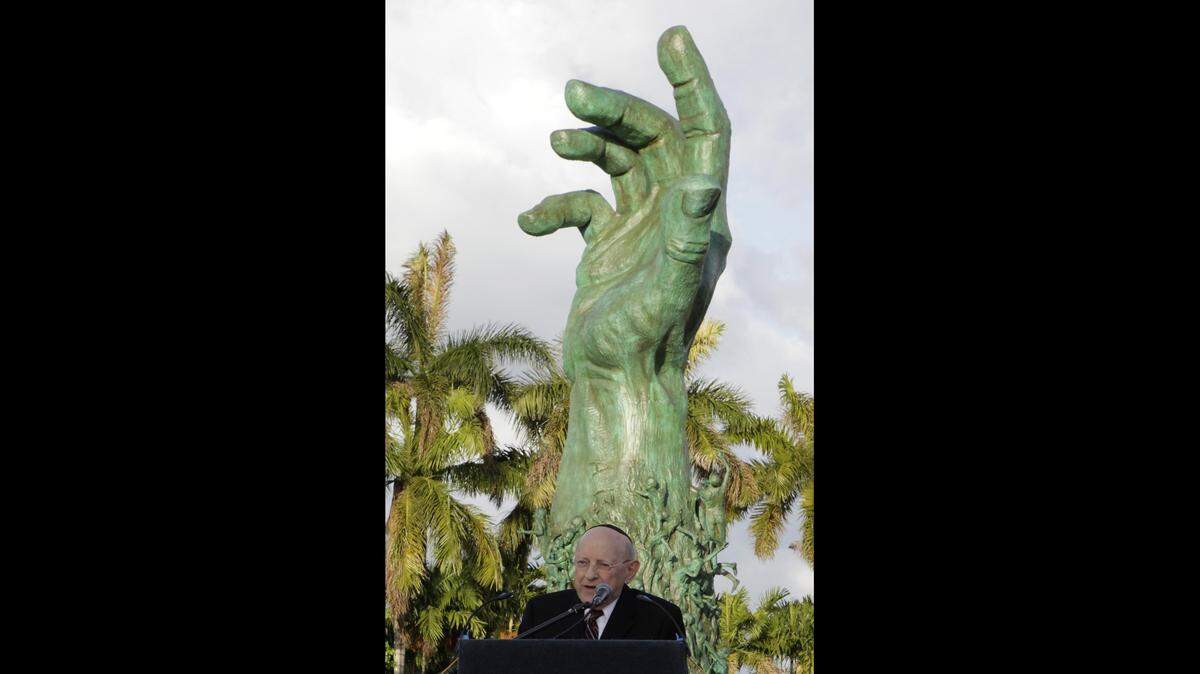
Rabbi Solomon Schiff, a pivotal force in building South Florida’s Jewish community who advocated for racial justice and built interfaith relationships locally and around the world, died Thursday from illness. He was 91.
Schiff, who played a central role in the creation of the Holocaust Memorial in Miami Beach, always had a fine-told story and a well-timed joke. He was raised in an Orthodox Jewish immigrant household on the Lower East Side of New York City, but his wisdom and empathy transcended experiences and faiths.
For over 40 years, he served as the executive vice president of the Rabbinical Association of Greater Miami. He was also the director of the Greater Miami Jewish Federation’s Community Chaplaincy Service since 1966. He led the South Florida Interfaith Workers Justice as the chairman and was instrumental in the county’s Community Relations Board, helping to heal racial divisions that cut deep when Miami’s political leaders snubbed Nelson Mandela in 1990.
Every single day with Schiff was sunny, says auto dealer executive and philanthropist Norman Braman.
“He was a dear friend,” said Braman, who worked closely with Schiff in building the Holocaust Memorial in Miami Beach in the late 1980s. “It’s really more than just the memorial with Rabbi Schiff. It’s the inspiration and the outreach to all of us who built the memorial and seeing it prosper in the manner that it did.”
Meeting with Pope John Paul II
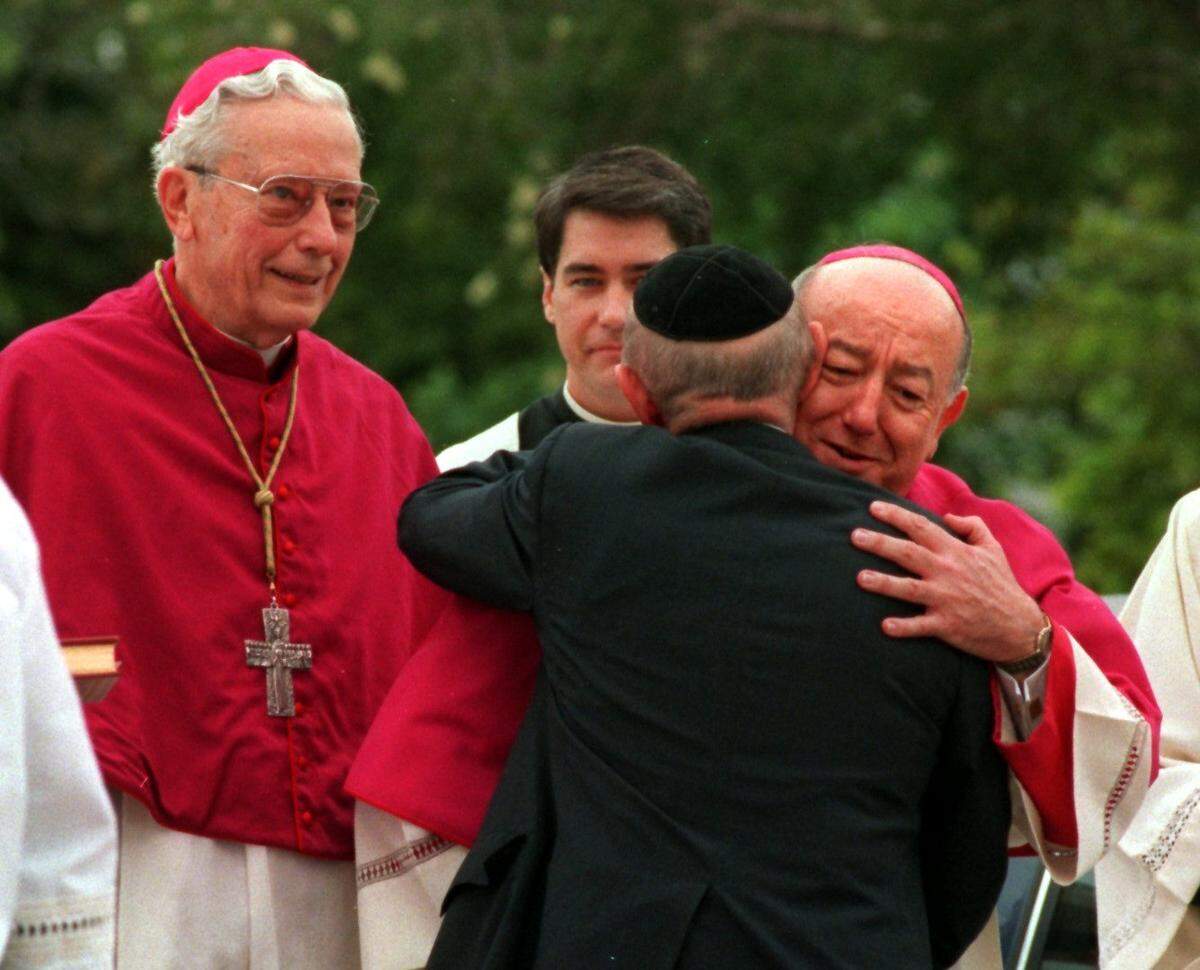
Schiff extended his outreach to all faiths and people, perhaps none greater than in welcoming Pope John Paul II to Miami in September 1987. The pope preached unity against anti-Semitism, while sheltering from a thunderstorm before the Mass was cut short.
Behind the Jewish community’s effort to get the pope to partly recognize the church’s role in the persecution of Jews was Schiff, who faced Jewish protesters at his home, upset with the Catholic Church not doing enough to help Jews during the Holocaust.
Schiff saw the pope differently.
“He did all those things over time,” Schiff told the Miami Herald in 2005, recalling his meeting with the pope years earlier. “I don’t think you could expect him to act immediately.”
And that’s who Schiff was — patient but steadfast in what he believed was right, in both big and small ways. In one of his many letters to the editor published in the Miami Herald, Schiff suggested last April that maybe post office workers could help encourage mask-wearing by dropping a mask in every mailbox on their routes.

“He was a deeply religious and pious Jew, but he spent so much of his time and his efforts reaching out to people of other faiths, to build a community in the name of the one God, in which we were all dedicated to the same principles, to the same values and to the same priorities,” said Jacob Solomon, president and CEO of the Greater Miami Jewish Federation.
Solomon said the pope’s visit was a “watershed moment” for Miami’s Jewish community.
“That was a really big deal. He saw that as an opportunity to kind of create a reset in the relationship between Catholic and Jewish communities,” Solomon said.
Similarly, he often spoke up against racial injustice. In 1963, during the civil rights battles, he helped author an unequivocal statement of equal rights as part of an interfaith action to denounce segregation and racial discrimination. The group then distributed the statement to all priests, rabbis and ministers in Greater Miami.
Stepping up during tourism boycott over Nelson Mandela snub
It was during the most controversial events that Schiff’s presence was felt the most. In 1990, Miami-Dade County and the city of Miami retracted a proclamation to memorialize a visit from anti-apartheid leader Mandela, after former Miami Mayor Xavier Suarez faced pressure from the Cuban-American community over Mandela’s relationship with Fidel Castro.
The move, which was ultimately reversed, led to a tourism boycott of Miami from Black organizations around the country that demanded a public apology. Schiff was chairing the Metro-Dade Community Relations Board at the time and supported an openness to dialogue.
Under his leadership, the board became the first organization that was not part of the Black community to publicly support the demands from those pursuing the boycott. H.T. Smith, a Miami attorney who led the boycott, praised Schiff at the time.
.JPG "1-11202012-10000434AA (1).JPG")
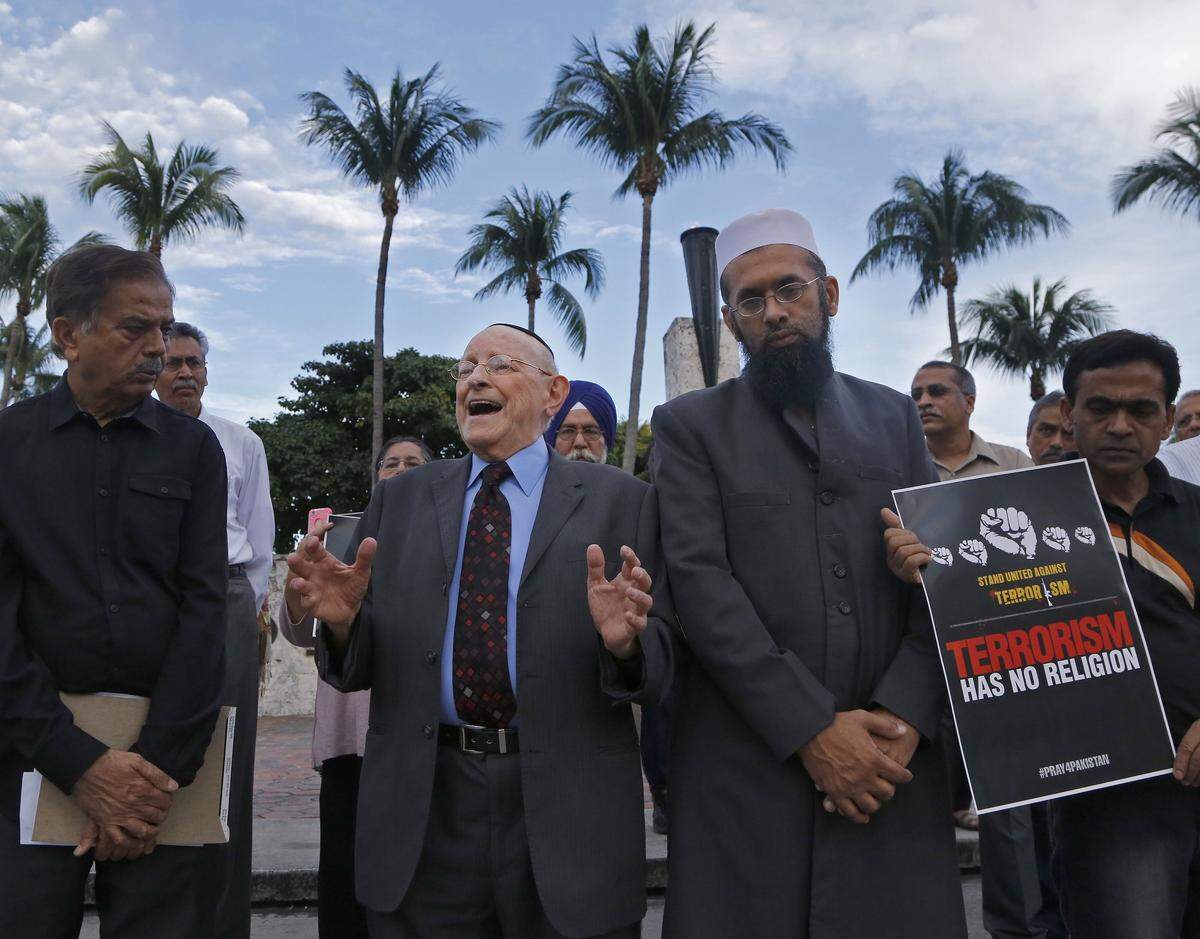
Schiff’s leadership earned him respect across the faiths. Over the years, Schiff always sided against injustice, from protesting the treatment of Haitian refugees at the Krome detention center in the 1980s, to working with the Miami-Dade County Homeless Trust to standing in solidarity with members of the Islamic faith at a downtown Miami rally in 2014.
“South Florida‘s Muslim community always relied on his friendship and compassionate support during the difficult times,” Shabbir Motorwala of the Coalition of South Florida Muslim Organizations said in a statement. “He stood up and led the vigils when Muslim places of worships as well as the community was targeted by hate crimes.”
Miami Archbishop Thomas Wenski said Rabbi Schiff “helped make Miami the vibrant and diverse city it is today. He was a leader in forging interfaith alliances. In the ‘60s with Archbishop Coleman Carroll, he helped establish the Community Relations Board that helped bridge racial divides in our community,” Wenski recalled in a statement.
It was Schiff’s passion for social justice that led him to become a rabbi, a path that started in Brooklyn, led him to the Midwest before coming to Miami Beach, where he became spiritual leader of the Orthodox Congregation Beth El in 1958.
Over the years, Schiff counseled U.S. presidents and Israeli prime ministers, prayed with a Polish pope and became a lifelong friend of former Miami Dolphins owner Joe Robbie, who flew Schiff and his son to the 1985 Super Bowl on his plane.
“He came from a very Orthodox traditional background. He’s a person who is able to transcend that background and is able to relate to people from all walks of life,” said Rabbi Fred Klein, director of Mishkan Miami at the Greater Miami Jewish Federation and current executive vice president of the Rabbinical Association of Greater Miami.
Said David Lawrence, a former Herald publisher and a leader in early childhood education: “One of God’s extra special people. A rabbi who taught us all so much, and did so with love and warmth and humor.”
Schiff is survived by his wife, Shirley, and their three sons. Funeral services will be at 11 a.m. Friday, April 2, at Mount Sinai Memorial Park Cemetery. After Sunday at sundown, his family will be receiving visitors in their home in the Shiva tradition.
Miami Herald staff writers Joan Chrissos and Rick Hirsch contributed to this report as did former Miami Herald staff writer Elinor J. Brecher.
This story was originally published April 1, 2021 at 11:14 PM.