
‘Prince of a human being’. Influential South Florida doctor, educator dies from heart failure
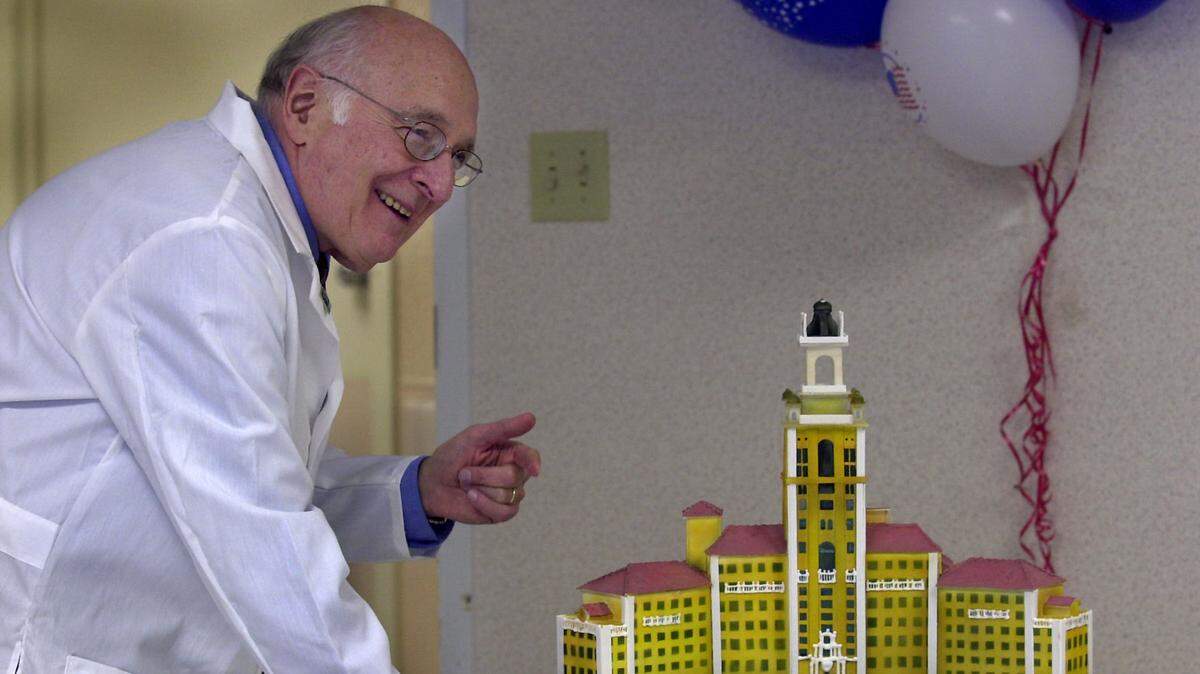
Dr. Lawrence M. Fishman was a bastion of the medical field in life. An educator. A lifesaver. A mentor. All things that come to mind for Fishman’s friends and family when remembering his legacy.
“He was a prince of a human being that could always look out for someone’s interests and work to let that person grow in the mindset that they had wanted to develop,” said Dr. Robert Sackstein, dean of the Herbert Wertheim College of Medicine at Florida International University.
On Wednesday, Fishman, 87, passed from heart failure. He had been in a rehabilitation hospital for four weeks, his son Charles Fishman said.
During more than 40 years of practicing and teaching medicine, Dr. Fishman had brought his talents to the National Cancer Institute, Miami Veteran Affairs Medical Center and the University of Miami.
It all began from humble roots back in Brooklyn, New York in December 1933. Fishman’s love for medicine started early as he grew-up with his father who was a doctor.
That spark for medicine grew stronger when at 12-years-old he lost his father and sister due to natural causes, Charles said. With a loving community at his back and an ambitious intellect, Fishman attended and graduated Harvard University and Harvard Medical School.
“People helped him and he was able to take advantage of those opportunities,” Charles said. “He never wanted to miss an opportunity to do the same, and that’s why he was such a great teacher, I think.”
After completing his internship and residency at Peter Bent Brigham Hospital in Boston, he joined the endocrinology branch at the National Cancer Institute.
One of his then-colleagues at the NCI recalled their work curing “terribly sick people.”
“Larry has a real clinical gift,” the colleague said. “ I thought at the time, ‘If I were ever sick, I would want him to take care of me.’”
Working with Fishman was one reason they eventually became a scientist, which is a common theme in those that Fishman had worked or mentored through the years.
After a few years of working for the NCI, Fishman and his family moved to Miami-Dade County in 1967 where he became a faculty member at the University of Miami and chief of Endocrinology at the Miami VA Medical Center.
During his years at the VA, Fishman touched another life.
Sackstein had spent his high school summers working in a lab at the VA with Dr. Murray Epstein. His father was a veteran, serving during WWII, and Sackstein saw “the best physicians that [he] ever knew” work first hand at the medical center.
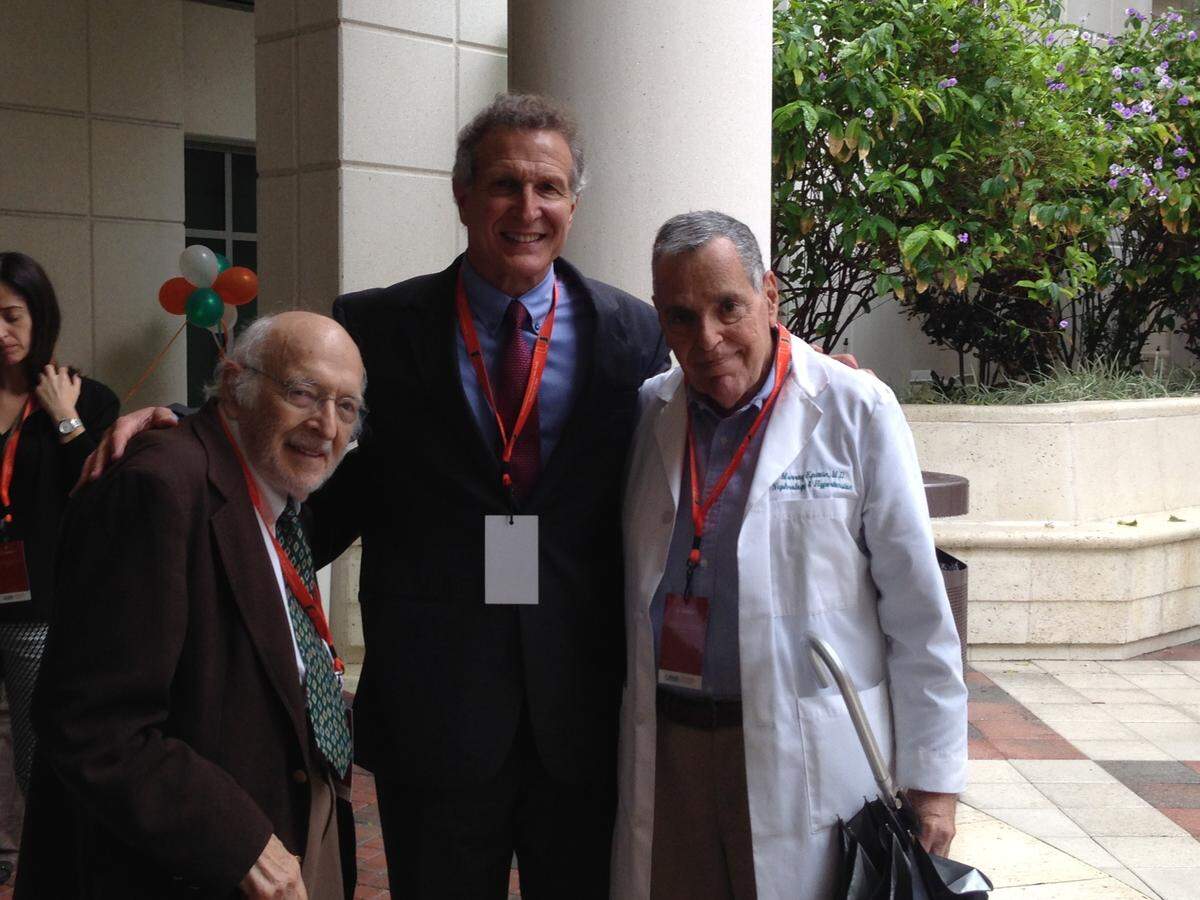
One of those physicians was Fishman, who took young Sackstein under his wing.
“I was a little boy, literally a high school kid, when I first got to know him and he was always very supportive of my intellectual growth,” Sackstein said.
After graduating from Harvard College and Medical School himself, Sackstein’s relationship with Fishman grew as they shared an alma mater. As Sackstein continued his career he knew he had Fishman by his side and did ask him for advice on occasion.
“Had I not had Dr. Fishman in my life, I cannot tell you that I would have been as successful in my career as I have been,” Sackstein said. “This was a gentleman. A person that was willing to build programs around himself rather than for himself.”
In the academic arena, Fishman was just as caring. A colleague of his during his time as a clinical professor of medicine at UM described him as a level-headed, caring man.
“Larry is always very forgiving of his patients,” they said. “He doesn’t discriminate against people because of their station in life. He has said to me, ‘We should not make moral judgments about our patients. We should take care of them.”
Charles said that while Fishman worked simultaneously at the VA and UM, his father was actively involved in recruiting young doctors to be come faculty members.
“He brought a lot of people in an impressive way,” he said.
After teaching for more than 40 years and becoming a professor emeritus, UM celebrated Fishman’s achievements at the Miller School of Medicine by creating the Suzanne R. and Dr. Lawrence M. Fishman Endowment Fund and Lawrence M. Fishman/Jay S. Skyler Visiting Professor Program.
“He was a great physician, scientist, teacher and administrator,” Charles said. “It is rare to find a person who is good at walking into a patient’s room and connecting with them, asking questions and trying to understand them.”
%20Cropped%20(2).jpg)