Lloyd Miller, who fought to create and protect Biscayne National Park, dies at 100
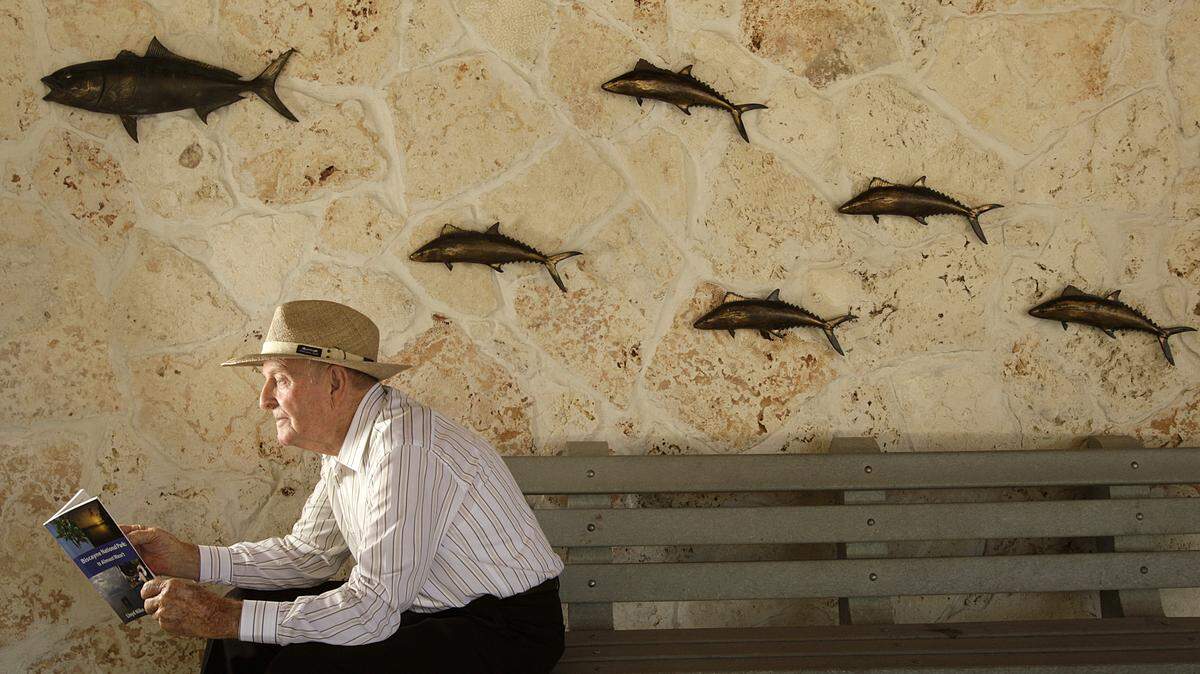
Without Lloyd Miller, Miami-Dade — especially Biscayne Bay — would be a much different, decidedly grayer place.
When developers in the 1960s wanted to build an oil port and refinery along the southern coast of the bay and turn unspoiled Elliott Key into “Islandia,” a city of high-rises envisioned to rival Miami Beach, the scrappy fisherman was there to fight them. He helped lead a band of everyday environmentalists to rally public opposition against twin projects that were backed by powerful political and big business interests.
The little guys won.
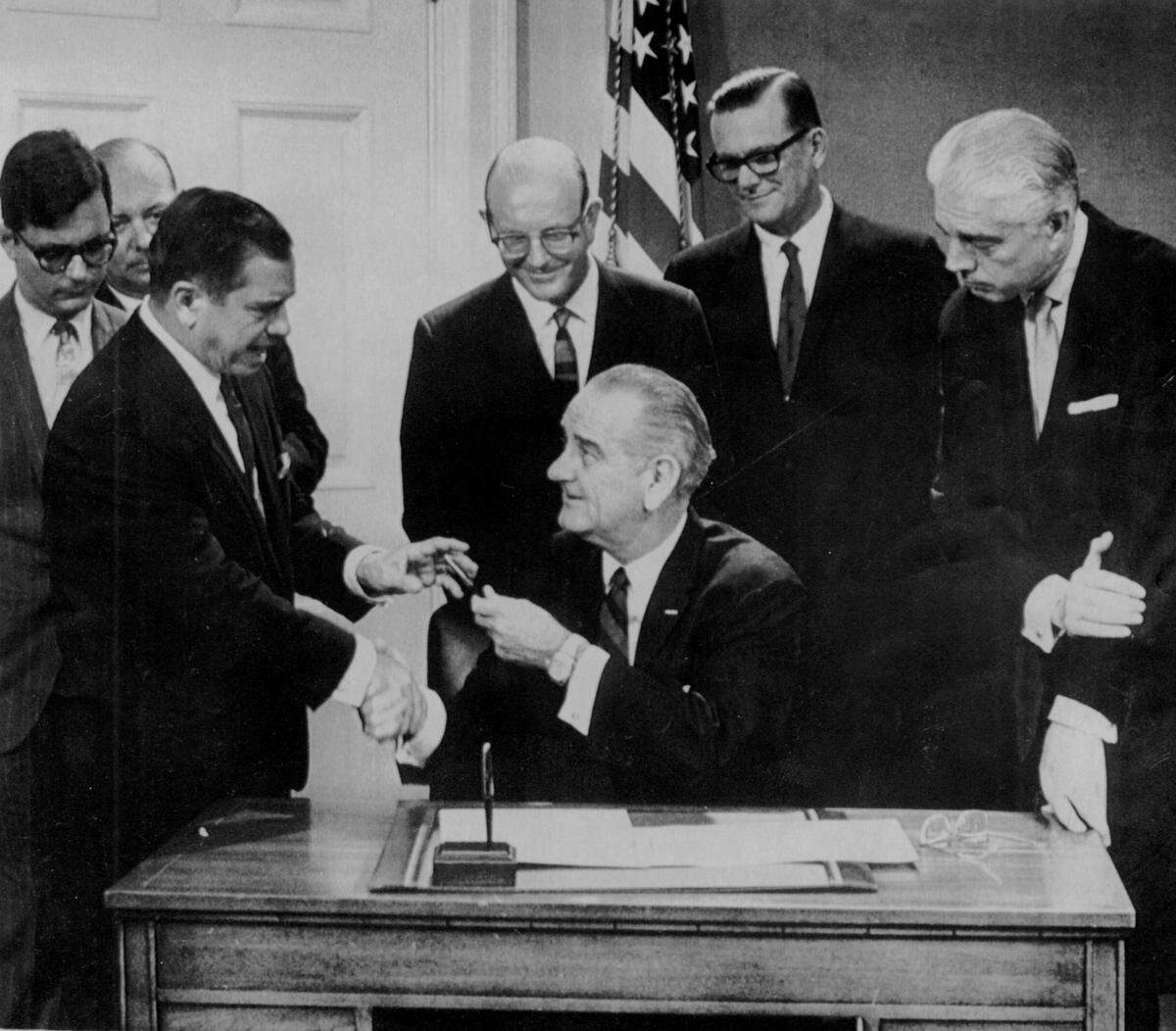
Thanks in large part to Miller’s unstoppable determination, President Lyndon Johnson established a national monument in Biscayne Bay in 1968 and halted development that threatened to pave over the barrier islands. That protection was expanded in 1980 into even larger Biscayne National Park.
Miller died Sunday at age 100. Until his last days, the man known as the “father” of Biscayne National Park remained a mentor and inspiration for activists still fighting to protect Biscayne Bay.
“It just shows you that an individual or a group of individuals acting on their own, convinced that they were right, can go up against big money and government and through a grassroots effort turn things around,” said Don Finefrock, former executive director of the South Florida National Parks Trust, which Miller helped found. “It’s really inspiring.”
Miller celebrated his 100th birthday in July with a pandemic-approved car caravan of well-wishers waving signs and blue streamers. “We didn’t do the balloon thing because we’re environmentalists,” said Gary Bremen, a ranger at Biscayne National Park and close friend of Miller’s.
Miami-Dade Commissioner Daniella Levine Cava presented Miller with a plaque and declared it “Lloyd Miller Day.” There was even dulce de leche birthday cake.
A few people wore buttons with “Lloyd Miller fan club” superimposed over a picture of the Earth, a souvenir from a 2008 boat trip celebrating the 40th anniversary of the park.
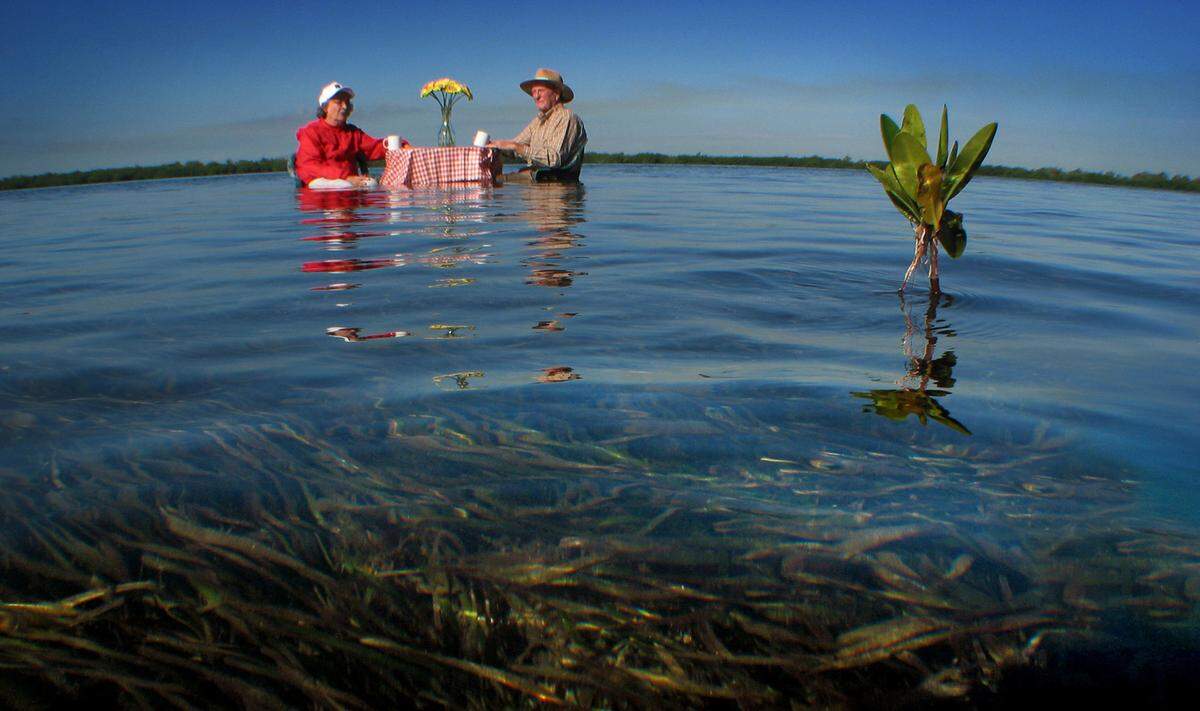
Miller didn’t set out to become an environmentalist, he just liked to fish. Born in Pennsylvania Dutch Country, he moved to Fort Lauderdale in 1944 and took a job at Pan Am, where he worked for 36 years. It was there he met Dottie, his second wife. They celebrated their 50th wedding anniversary in April.
Miller’s passion for sport fishing led him to start a Miami chapter of the Izaak Walton League, a conservation club of anglers, hunters and outdoor enthusiasts. When he heard about developers’ plans to ruin his fishing paradise, Miller couldn’t let it be.
“He’s a determined person, and when he doesn’t think something is as it should be, he’s persistent in trying to do what he can to make things better on this earth,” said his 95-year-old wife, Dottie.
The first threat was Seadade, an oil port and refinery near the Homestead Air Force Base that would have gouged a 40-foot channel across the bay to make way for oil tankers.
The second was Islandia, which would have turned the barrier islands north of Key Largo into an interconnected set of high-rise condominium communities connected to the mainland by giant causeways.
At the time, politicians, the business community and even the Miami Herald supported the projects.
“They all thought it would bring in more jobs. It would have destroyed the people’s bay,” Dottie said.
So Miller arranged a dinner at an Italian restaurant to drum up support. Most of the people who sat at that table, like author Philip Wylie, writer Polly Redford and her husband Jim, garden club leader Belle Scheffel and many others, are gone, but the fruit of their decade-long battle lives on. The Miami Herald’s Juanita Greene, one of the state’s first environmental reporters, also played a key role, writing stories detailing potential damage to the bay from projects that the paper’s editorial board initially backed. Greene has also passed away, in 2017.
Miller’s job and family were threatened, his car vandalized and his dog poisoned in the ugly fight against the pro-development side. But his side had tricks too. Then-Gov. Claude Kirk went on a guided boating trip of the bay that somehow turned into a boozy afternoon on a sandbar with a wildlife officer waxing poetic about the beauty of the bay.
When he ended up on land again, Kirk was a firm supporter of giving the bay monument status.
In the end, some property owners on Elliot Key bulldozed a six-lane highway down the spine of Elliot Key in a desperate bid to stop the government from establishing a monument. The remains of “Spite Highway” still exist on the key.
“It’s hard to say no to Lloyd,” said Bob Skinner, longtime president of the Izaac Walton League’s Miami chapter that Miller founded. “After a while he became famous, or notorious, depending on who you worked for.”
In the 1990s, when Biscayne Bay was once again under threat — this time from a push to convert the Homestead Air Force Base into a commercial jetport that would have sent noisy air traffic directly over the peaceful bay — Miller stayed vocal.
After hearing his powerful speech to the county commissioner, Bremen the park ranger chased Miller into the hall to say thank you. The two developed a fast friendship, and Miller called the younger man sport. Bremen said it was always a delight to end his tours of the park by introducing tourists to the “living legend” sitting in a rocking chair on the second-floor veranda.
Miller and Dottie would often come by the park’s visitor center to meet the new rangers and drop off avocados grown on their Redland farm, their new career after Pan Am dissolved.
“The rangers at Yosemite would give their eye teeth to meet John Muir... none of those guys ever made it to 100,” Bremen said.
In 2008, he published a book about the battles that led to the creation of the park, “Biscayne National Park: It Almost Wasn’t.” It was characteristically modest, with Miller being sure to share credit with many people who helped turn the tide.
Miller never lost his fire for protecting the environment. Five years ago, in a meeting about potentially creating a no-fishing zone in part of Biscayne National Park, he made his voice heard, despite not being on the list of approved speakers.
“Lloyd pushed his way to the front. He must have been 95, this cranky old man, and they told him ‘I’m sorry you can’t speak. He said, the hell with that, I’m speaking’.” Finefrock said.
His passionate message about the importance of protecting the park was met with a standing ovation.
“Hopefully, normal people will speak up to defend the bay and realize we could lose this gem if we don’t protect it,” Finefrock said.
Dottie said her husband was an excellent cook and a staunch supporter of everything she wanted to do. For decades, whenever the South Dade Garden Club ran a booth at a festival, he was there to set up the tent and grill the hot dogs and hamburgers they sold.
“We counted on him, all the time,” she said.
This story was originally published August 28, 2020 at 6:00 AM.