A champion for the poor, one of two women to lead the Public Health Trust, dies at 90
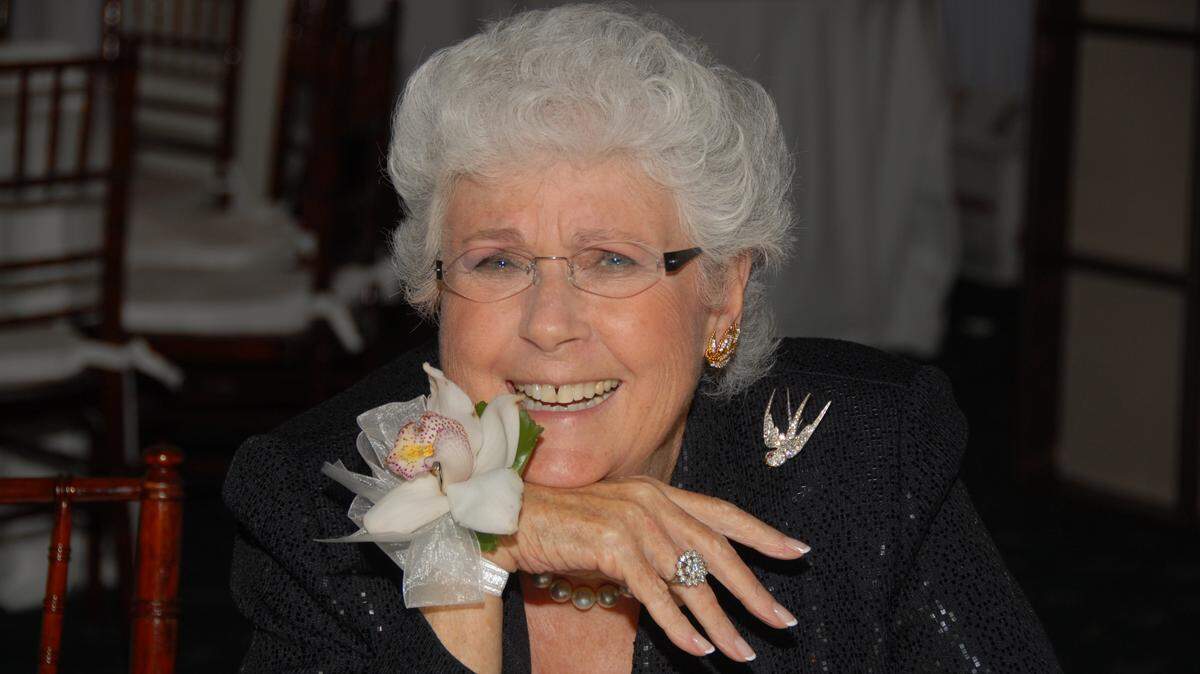
Sue Rose Samuels’ guiding principles as the second — and the last — woman to chair the Public Health Trust overseeing Jackson Memorial Hospital were borne out of her time serving one of the city’s toughest neighborhoods: Liberty City.
It was there that Samuels saw how poverty and squalid living conditions could affect people’s health in profound ways, and it was there where she formulated her belief that Jackson could help.
After nine years on the health trust, Samuels retired, describing in a 1985 interview with the Miami Herald how her time as an anti-poverty lawyer shaped her view of Miami’s vast safety-net hospital. She recalled visiting an apartment building where the septic tank had backed up into the living room despite the tenant’s asking for repairs.
“Can you imagine what that smelled like? And they were raising babies in there,” Samuels said. “That’s when you begin to realize what a struggle it is for some people just to survive.”
Experiences like that informed Samuels’ advocacy for the poor in the boardroom of the little-known but powerful citizen oversight board, where she opposed brewing efforts to open a private wing that would attract more affluent patients.
“This community is big enough and wealthy enough to take care of its lowliest in the most elementary of their needs,” Samuels said at the time. “This is the richest country in the world. If we can’t do that, then what is it all about?”
Samuels took that compassion for others with her everywhere she went, her family said.
“Almost everything she did was pro bono, helping people,” said Nikki Baron, her daughter. “She touched people everywhere.”
She was first appointed to the health trust in 1976, two years after her time at the Liberty City clinic and three years after it was established by the Miami-Dade County Commission.
As chair of the trust, Samuels advocated for a “single standard of care” for all patients, regardless of income.
She called attention to the hospital’s maternity ward, where there were beds for 55 women and only three showers.
“Can you imagine what that is like?” Samuels said when she was chair. “You are in the hospital. You have no bathroom, no telephone, no place to change your clothes?”
Beyond her altruistic work, Samuels was no stranger to tragedy in her own life. Her only son died in a car accident in 1981 at 29 years old, and her husband of 36 years, David Samuels, died from cancer three years later. He was treated at Jackson.
Despite her willingness to loudly call attention to the hospital’s deficiencies, Samuels had the respect of her colleagues.
Joe Robbie, who owned the Miami Dolphins and was a fellow member of the trust, called her “one of the most dedicated public servants I have observed in my time on the Public Health Trust or during my career in public life.”
A late-blooming attorney
Samuels was a first-generation American born to a Polish mother and a Romanian father, who came to America at the age of 14 and ended up in St. Louis, where Samuels grew up through the Great Depression.
When she was 18, Samuels married David, then dropped out of college in her freshman year.
By the time she was 25, she had three children.
As the kids grew older, David Samuels encouraged Sue to go back to school, telling her, “you’d make a great lawyer,” said Nikki Baron, their daughter.
David was the fifth of his parents’ children, and all his siblings were girls, Baron said.
“He was struck by the fact that his sisters could not take care of themselves, and he wanted my mother to be totally educated and to support herself, because in his family, none of the men lived past 60,” Baron said.
When Baron was in college at 17, her mother was in law school at 37.
Sue Samuels described her husband, who was the vice president of an industrial laundry firm, as “her best friend.”
After his death, when she was 55, Samuels leaned more heavily into public service — specifically the county’s Public Health Trust.
“You know, when you are so ineffectual in your life, it is so nice to find a place where you’re effectual,” Samuels told the Herald in 1983, shortly before her husband passed away. “I can’t improve my husband’s health; I can’t bring my son back. I can’t handle ‘out of control’ anymore.”
On the Public Health Trust, Baron said, Samuels dealt with some of the most powerful men in the city, but she liked all of them.
“As kids, I think we resented some of the times that we were making dinner and we were cleaning up, but in the end, I realize now how incredible it was and how many things she accomplished during those years,” Baron said.
In Samuels’ nine years on the health trust, Jackson Memorial built a west wing, an east tower to house maternity and child care units, a new emergency room and a parking garage.
A prison advocate
After retiring from the health trust, Samuels went on to advocate for prisoners.
By the late 1980s, AIDS had become Florida’s leading killer of state inmates, so much so that the prison hospital’s medical director described it as “growing like wildfire.”
Many public officials said there was little they could do, and in 1987, the Florida Department of Corrections’ general counsel, Louis Vargas, told reporters that segregating and testing inmates for AIDS could “violate their civil rights.”
But one Miami attorney pushed back against the idea that there was nothing corrections officials could do. She urged the state to respond more forcefully. Her name was Sue Rose Samuels.
“I think those prisoners that don’t have [AIDS] have civil rights too,” Samuels, who was then a 58-year-old member of the state’s Correctional Medical Authority, told the Miami Herald in 1987.
At the time, prisoners with AIDS were a stigmatized group within a stigmatized group. But that was hardly new territory for Samuels.
“It was never about making a name for herself or making a living,” Baron said. “It was really all about helping people.”
Samuels, who lived in Pincecrest, died peacefully Friday morning. She was 90.
Her survivors include her daughters Natalie “Nikki” Baron and Randa Richter, four grandchildren and four great-grandchildren. Funeral services will be held Sunday, Jan. 26, at 12:30 p.m. at Temple Judea, 5500 Granada Blvd in Coral Gables.
This story was originally published January 24, 2020 at 9:25 AM.