
Len Firestone, a pioneer in television syndication, dies at 93
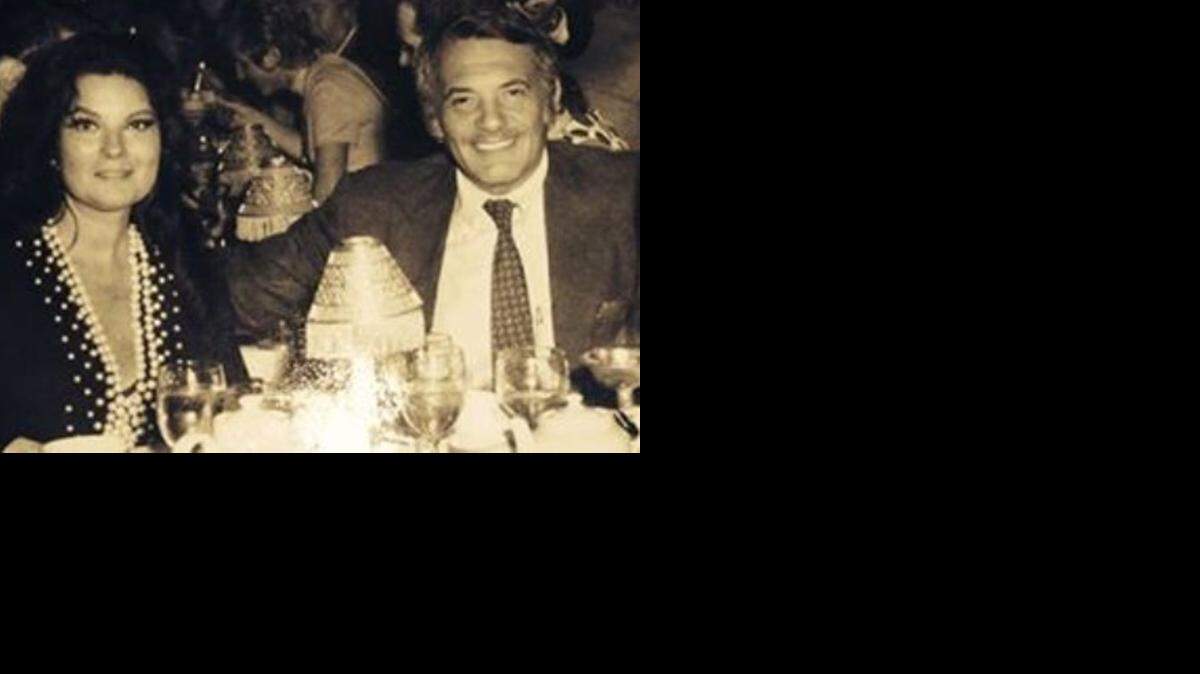
Decades before networks kept low-rated programs like Nashville on the air long enough to build up enough episodes to sell into lucrative syndication, Len Firestone was a pioneer.
Among the shows that syndication executive Firestone helped sell when TV was in its infancy: Sea Hunt, starring Lloyd Bridges, and The Rifleman with Chuck Connors. After he founded his own company, he was distributing first-run talk shows like The New Steve Allen Show and game shows To Tell the Truth, Beat the Clock and The Gong Show.
For Firestone, born to immigrant parents in 1921 in Pittsburgh, “he was the business part of show business,” his son, actor Jack Firestone, said from his home in Hilton Head, South Carolina, where his father died at age 93 on March 4. He bought a home in Aventura in 1993.
“He was such a great promoter of the TV shows he produced and distributed, the business portion of him was so much that people mistook him for a lawyer,” his son said. “That’s the legacy he left me and my siblings.”
So much so, author Telly Davidson (TV’s Grooviest Variety Shows of the ’60s and ’70s) wrote in an email to Firestone’s other son, Brian: “I remember talking with another old-school exec covering NATPE (National Association of Television Executives) about 10 years ago, and Len’s name came up. He laughed that while Mr. Firestone had quite the ego, I guess he was entitled. He was sort of the Blake Carrington of the syndication biz — he knew it, and so did everyone else!”
His son Jack chuckles at the Dynasty reference.
“He would always say a good business deal was one that worked for you and for me … and had to be fair and square.”
But, at the same time, “he had a lot of humility,” his son added. Firestone, by the mid-1960s, had founded his company, Firestone Films. His biggest sell into first-run syndication: the 1960s game show To Tell the Truth.
A young Jack appeared on the program in 1968 and attempted to fool the panel, which included host Garry Moore, radio and TV personality Bill Cullen, and singer-actress Kitty Carlisle.
“At the reveal at the end of the show, I only got one vote out of the four and Garry said to me, ‘What is your real name?’ I stood up and said, ‘My name is Jack Firestone, and my father is the syndicator of this show.’ Kitty Carlisle and Bill Cullen said, ‘We should have voted for him.’”
Firestone started his broadcasting career as a radio DJ for WPGH-AM in Pittsburgh, where he attended Duquesne University before serving overseas as a pilot in Japan with the U.S. Army Air Forces during World War II.
After the war, he moved to New York and met and married Carole Greenfield after an eight-week courtship. The couple were married 59 years until her death in 2009.
His wife’s brother was songwriter Howard Greenfield, who, with Neil Sedaka, wrote Breaking Up Is Hard to Do, Calendar Girl and Love Will Keep Us Together, the No. 1 song of 1975 for the Captain & Tennille. Greenfield also wrote Crying in the Rain, a 1962 hit for the Everly Brothers, with Carole King.
Greenfield finally took his brother-in-law’s advice to form his own publishing company in the late 1960s rather than splitting his profits with his Brill Building publisher.
“My father’s persuasion made Uncle Howie have a different thought process about how to run his song business so he wasn’t giving his profits away,” Jack Firestone said.
Firestone’s first TV gig was with Unity Television in 1950, where he distributed theatrical films to television stations. “In 1950, the only programming available to the new fledgling television stations were pre-1948 movies, so we met that need,” Firestone said in a Variety profile.
By the early 1960s, Firestone was hired to run Four Star Television Distribution, a company founded by Hollywood screen stars Dick Powell, Charles Boyer, Ida Lupino and David Niven. Subsequently, he served as senior vice president at Filmways and was in charge of off-network syndication for The Addams Family and Green Acres sitcoms.
At his own Firestone Films, later renamed Firestone Program Syndication Company, he worked closely with Allen Funt to sell Candid Camera and persuaded Chuck Barris to create first-run episodes of The Gong Show exclusively for the syndication market in 1977.
After these hits, Firestone retired in 1980 and made his home on Williams Island permanent in 1993. He embraced South Florida culture with the same fervor he devoted to television: boating, tennis, reading the local paper.
“He was living the lifestyle without worrying about the New York winters,” his son said. “He was a gigantic fan of the Miami Heat. He spent the last year of his life in Hilton Head to be near me, so we ordered the NBA package so he could watch all the games. When Lebron [James] left, I won’t say he was devastated, but he threw his hands up in the air. That was one of the things that kept him going, watching the Heat.”
Media consolidations have changed the television industry, but, according to Davidson, the author, “that doesn’t change the importance of what [Firestone] did in his time. Indeed, given all those shows, plus The Dating Game, Steve Allen, etc. if he’d written his memoirs, he could’ve probably titled them Anything for a Laugh.”
In addition to his sons Jack and Brian, Firestone is survived by his daughter, Pattie Posner, grandchildren Errol, Brandon, Sean, Mac, Alec and Jhanna, and great-grandson Noah. Services were held in Hollywood, Florida.
Follow @HowardCohen on Twitter.
This story was originally published April 14, 2015 at 8:00 AM with the headline "Len Firestone, a pioneer in television syndication, dies at 93."